
1.Where did you grow up and where do you currently live and create? I grew up in a small town in Virginia called Berryville. It was as idyllic as the name might suggest. My family then moved to West Virginia when I was nine. We landed in a town called Martinsburg where I spent my formative years, attended high school and did most of my “growing up” as it were. As soon as I graduated, I moved to New York City. I currently live and maintain a studio in Brooklyn.
2.Did your childhood shape your artistic sensibilities, if so, how? I had a fairly free-wheeling childhood, especially in comparison to the overly structured existence of most children nowadays. The only screen in my house was a single television that I ignored for the most part (except Saturday mornings). We lived in a small town and my brother rode our bikes around town without adult supervision. We would take dumb risks and often pay the price. We were left to our own devices and had to create situations and worlds to play in. I have no doubt that this shaped and drove my love for making. My brother and I would build weapons (think broomsticks, metal hooks, black tape and cat food cans) and then would “battle” each other in the backyard. My next door neighbor and I started a comic book together called Ack the Cat. I remember drawing all the time. My mom tells a story that when my brother (who is three years older) started having homework, I wanted to sit with him at the table and “work” as well. So, she gave me a stack full of paper and I would draw. My brother would finish his assignment and would then join my parents in the living room. After awhile, my mom would wonder where I was and go looking for me. She would find me sitting alone at the kitchen table happily drawing.
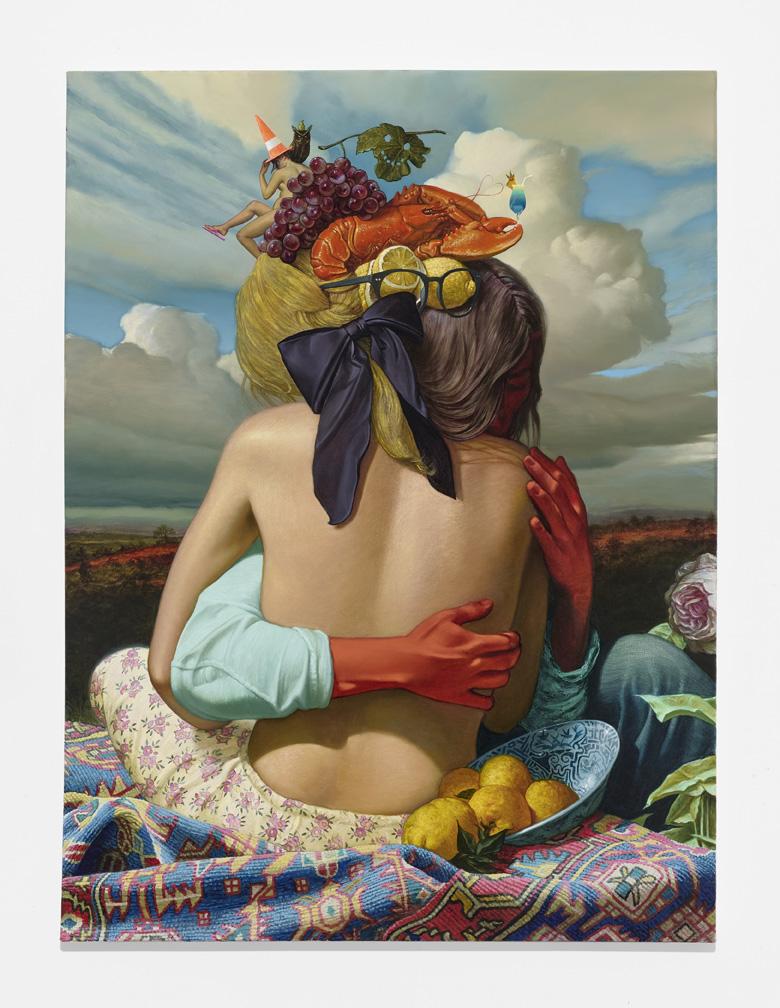
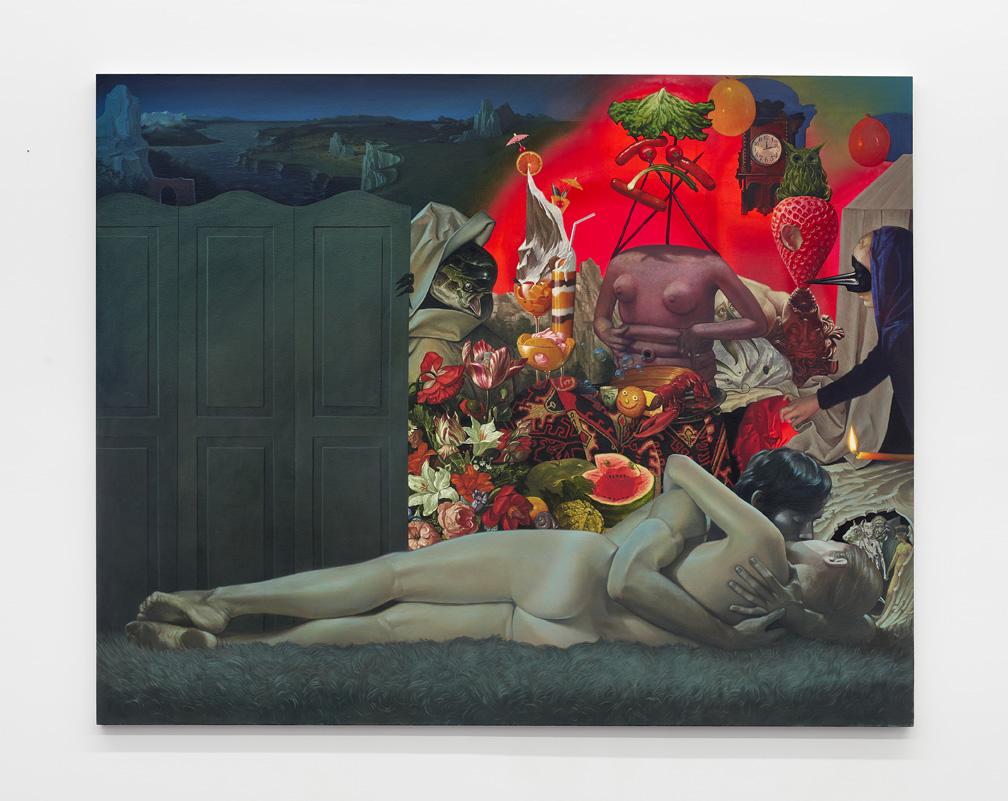
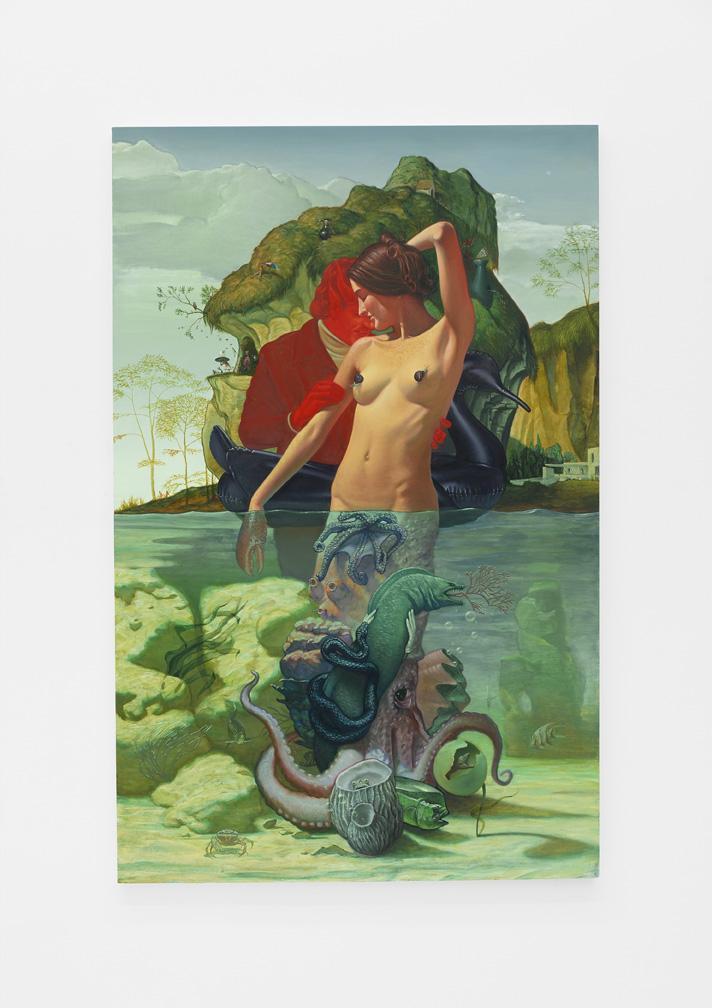
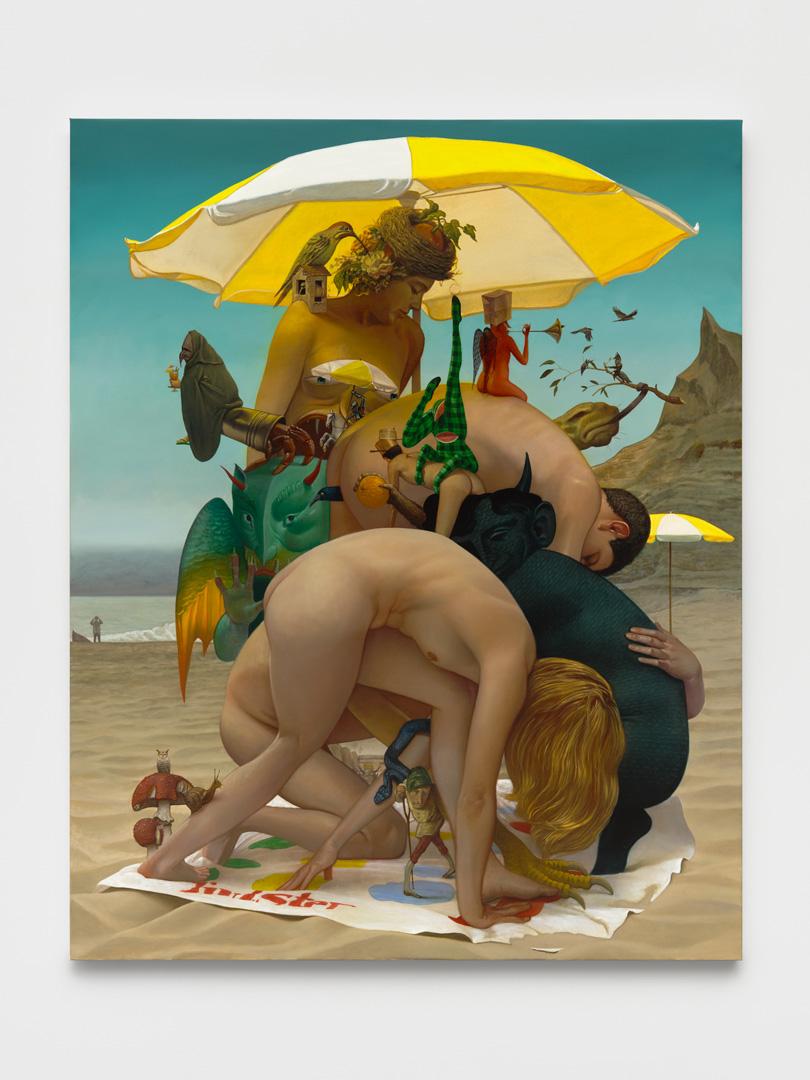
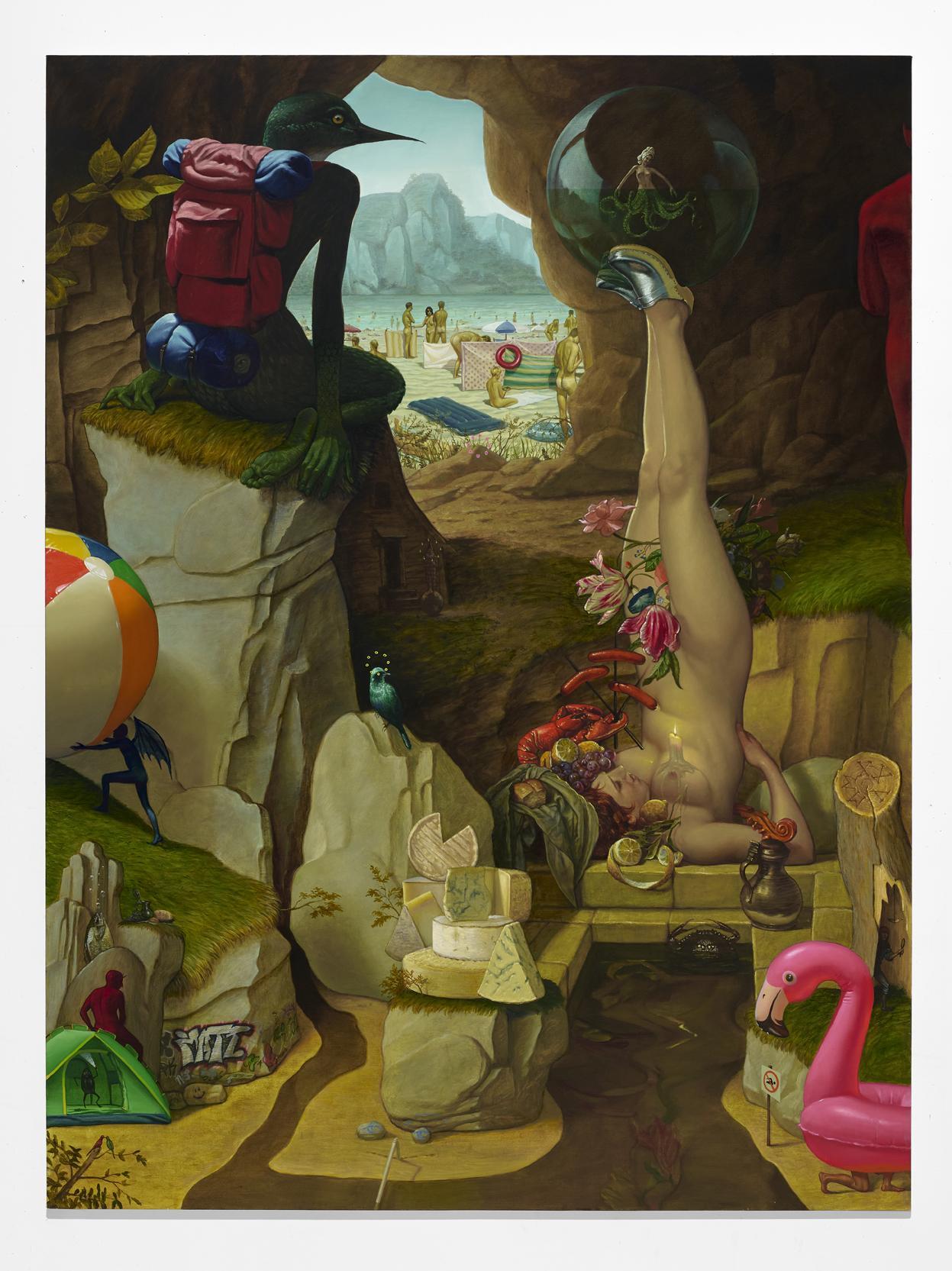
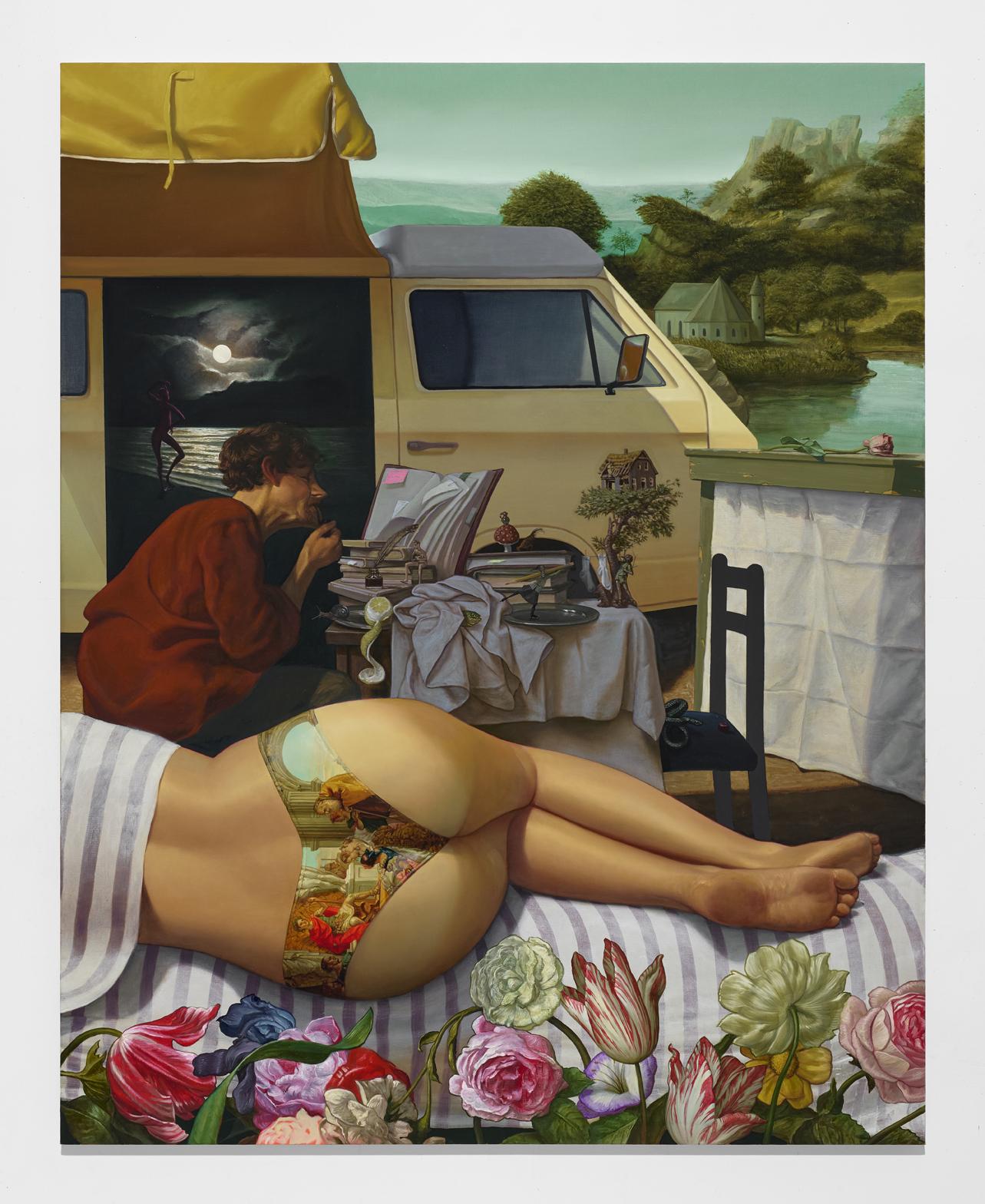
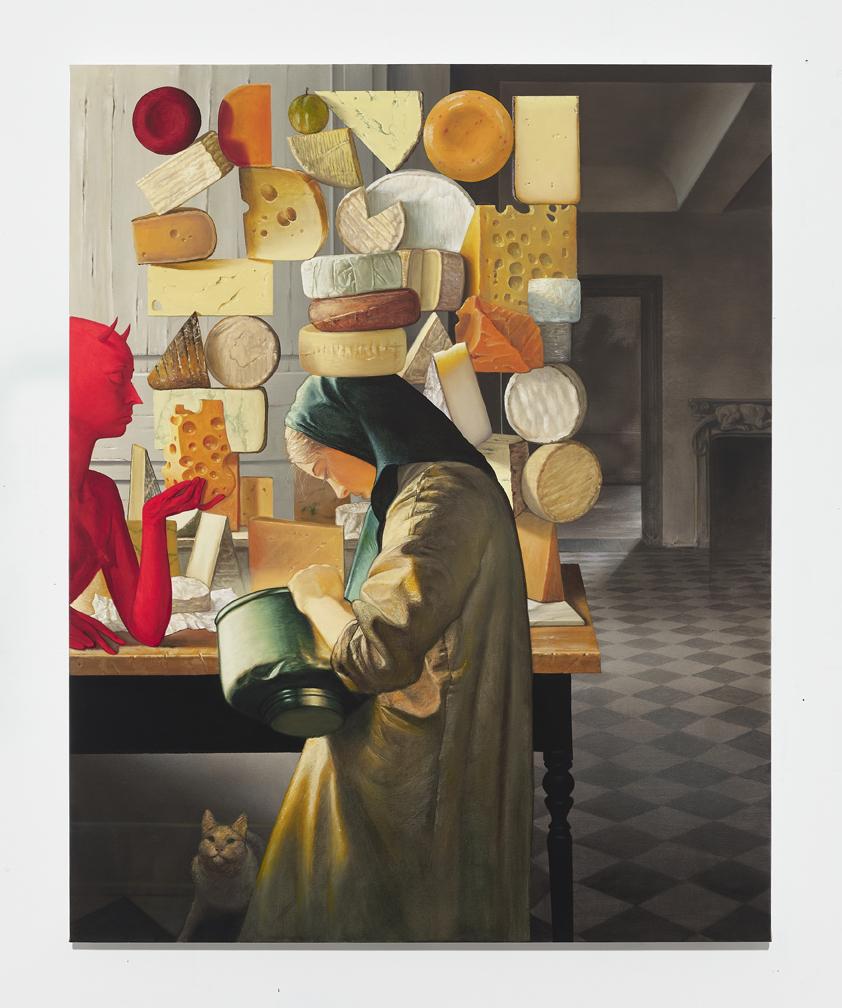
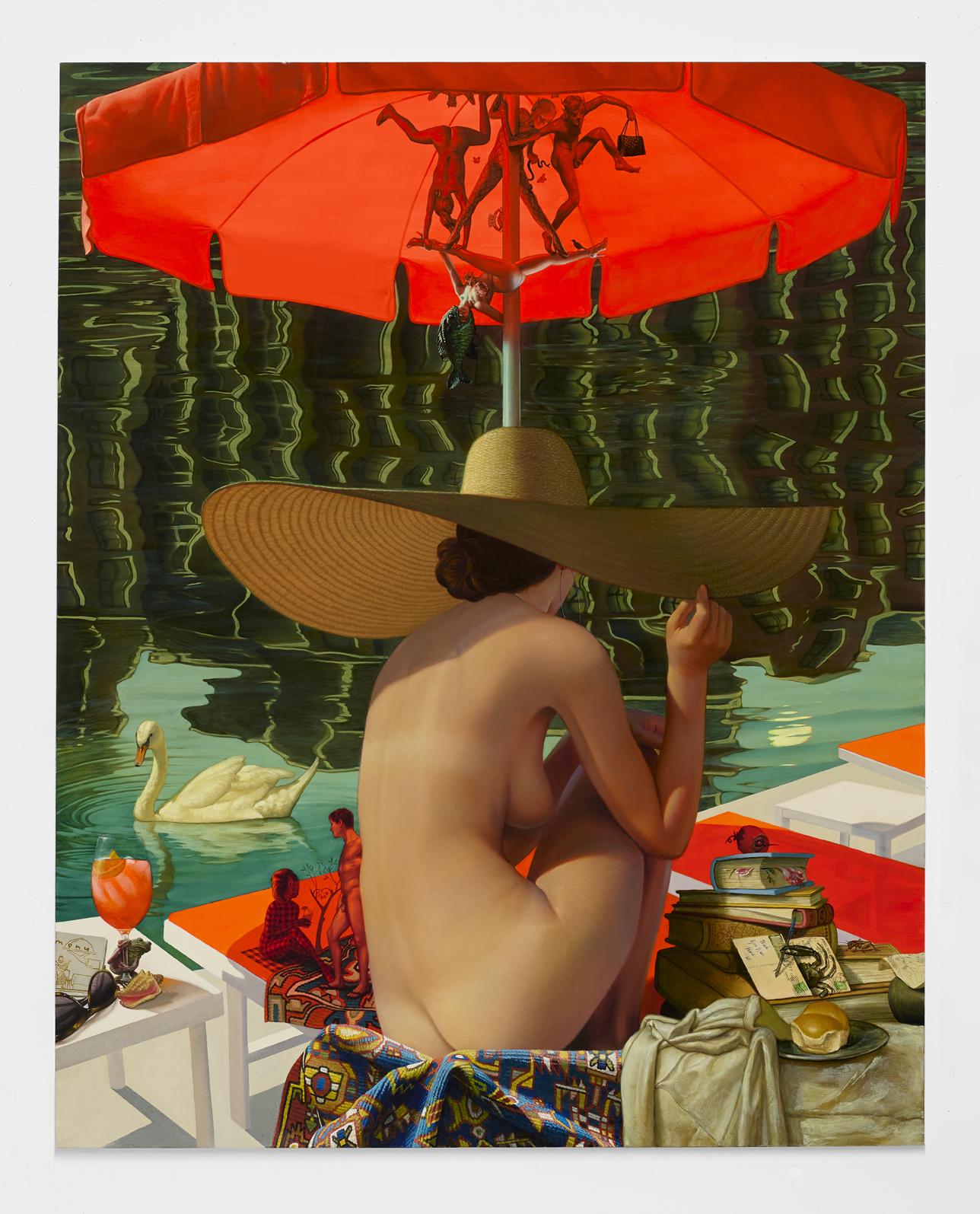
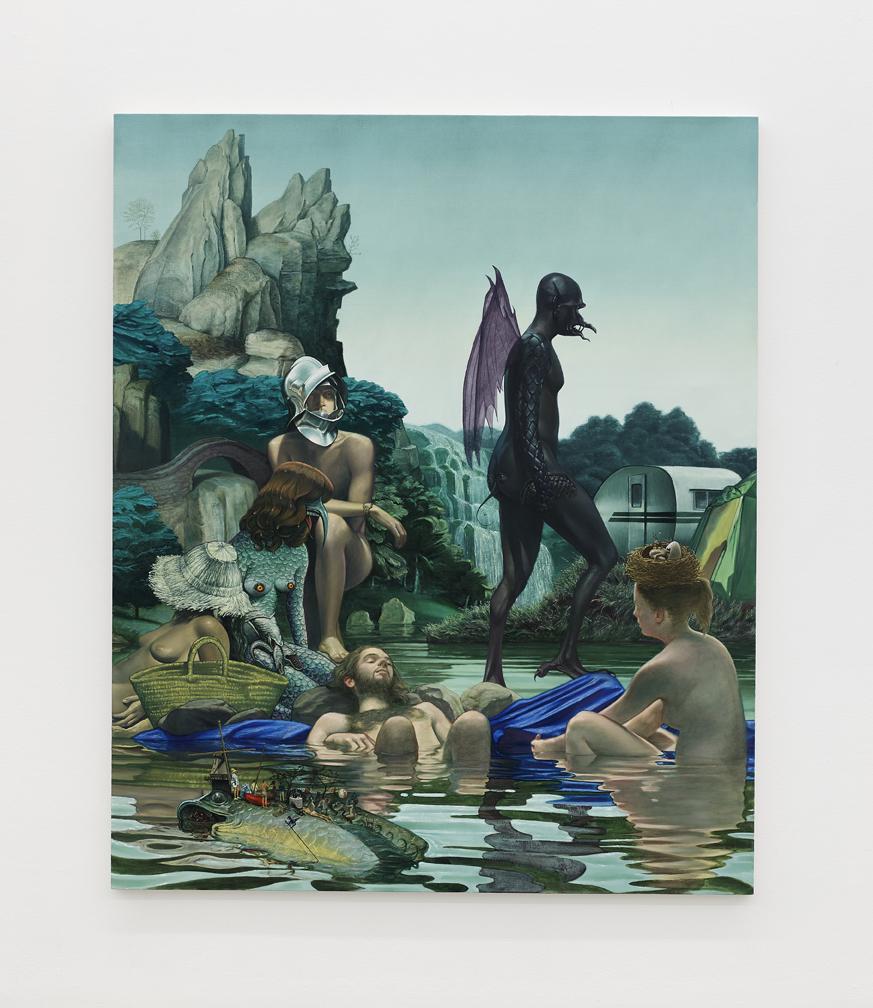
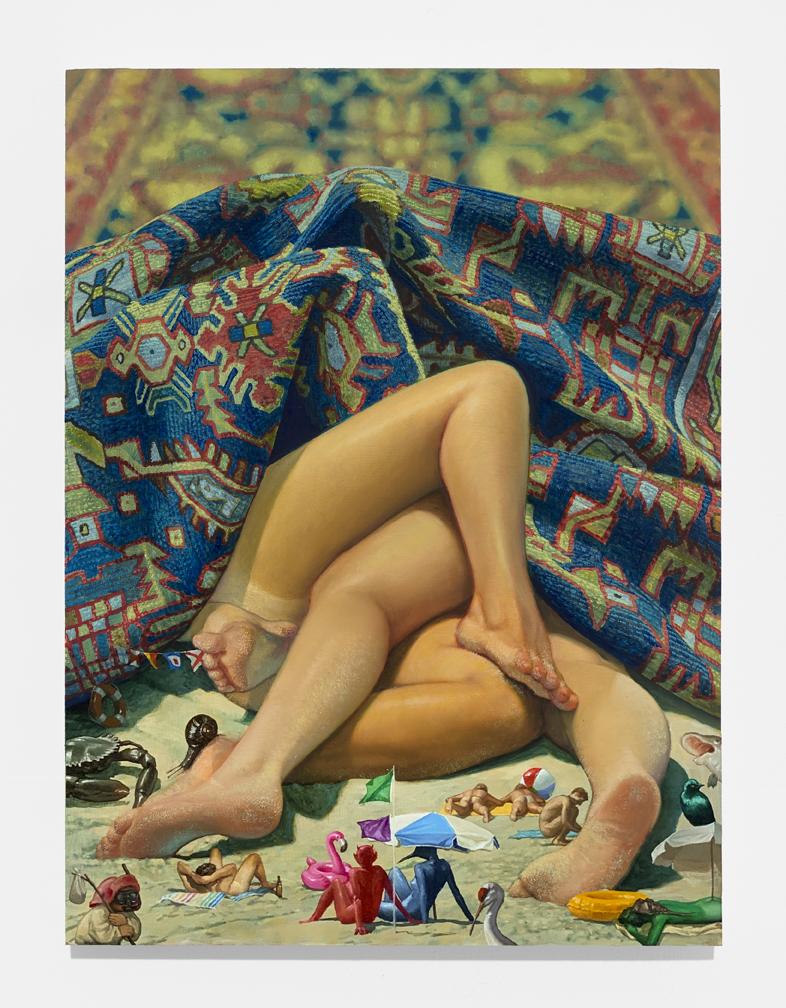
3.You worked successfully in entertainment for 15 years, what was the transition like, dedicating yourself fully to your fine art practice? I worked for many years as a Scenic Artist for films, TV shows and theatre. I often had to copy old master paintings or make paintings “in the style of” other artists. It necessitated breaking down and familiarizing myself with techniques and artists I otherwise might never think about. It also required an economy of process and I developed a short-hand for constructing paintings that would have normally taken much longer to execute. It was a crash course in handling deadlines and creating within the confines of a shooting schedule. Which as it turned out, has served me well in a world of art fairs and shows with short runways. However, the Scenic Art world existed in its own universe and never overlapped with the Venn diagram of the contemporary art world. It was comfortable and a way for artists to have a career and make a good living. But, I met a lot of Scenics who used to make paintings but no longer maintained a studio or made anything outside of the job. Frankly, it scared me. I distinctly remember having a conversation with an older Scenic who upon learning I was a painter, assured me, “No one makes it out.” He said he had been in the business for thirty five years and didn’t know anyone who was able to transition into the world of contemporary art. I knew that was the only thing I ever wanted or cared about - so I quit. As fate would have it, my friend and former professor Sean Landers was looking for a studio assistant. So, I took the job. I had taken a sizable pay cut, and walked away from my union health benefits, 401k and retirement plan. Most would probably have seen it as a step backwards, but I knew that it was a step in the right direction. It allowed me to orbit an artist who has been successfully navigating the art world since the early nineties. Sean is still a good friend of mine and really showed me the ropes when it came to managing an art career and I use him a sounding board to this day. After a few years, I was able to start showing and began slowly building my own career. It took time and patience but worked out in the end. Sometimes it feels like being an artist is a game of outlasting the situation you’re in. The reward is being able to do something you love and fully commit your time, attention and talent to its pursuit. I think the circuitous route I took makes that pursuit all the more meaningful and precious.
4.Who were some of the early influences—artists, teachers, or moments—that shifted your trajectory? When I was six or seven my parents realized my proclivity for drawing and found a local artist who was willing to teach me about oil painting. She had a studio in the basement of her house which was nestled on a hillside out in the woods. I remember crunching through the leaves and walking through the sliding glass door which led to her studio. It was impossibly crammed with stacks of paintings, sheets of cardboard, ash-trays, anatomical models, metal filing cabinets and a large drafting table. It was like waking into another world, another way of existing. Until then I hadn’t realized that this was an option. Adults didn’t accept this sort of mess. It was thrilling and felt a little bit dangerous. I learned the basics of oil painting: how to mix colors, use mediums, blend, basic color theory, etc. I soaked it up and it all made instant sense to me. It was like reading a book that illustrated an idea you had long held but never realized until you read it.
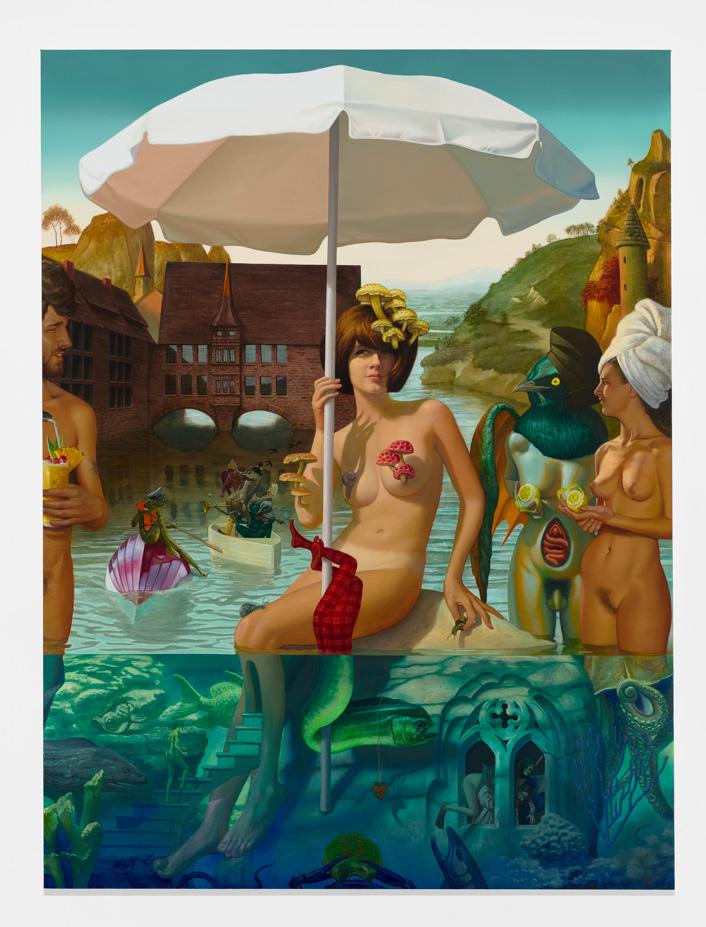
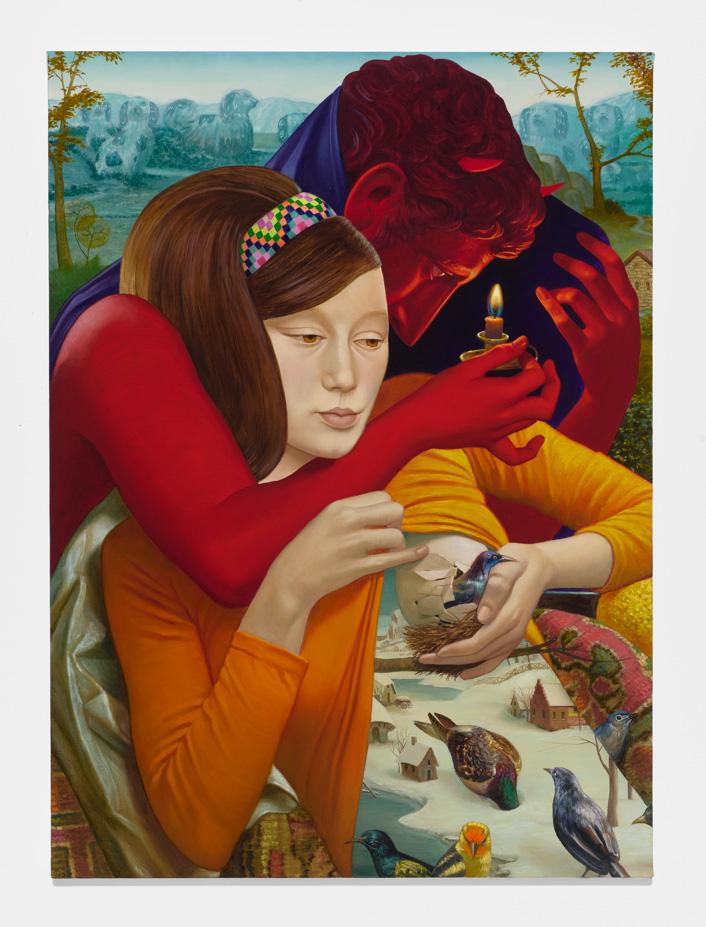
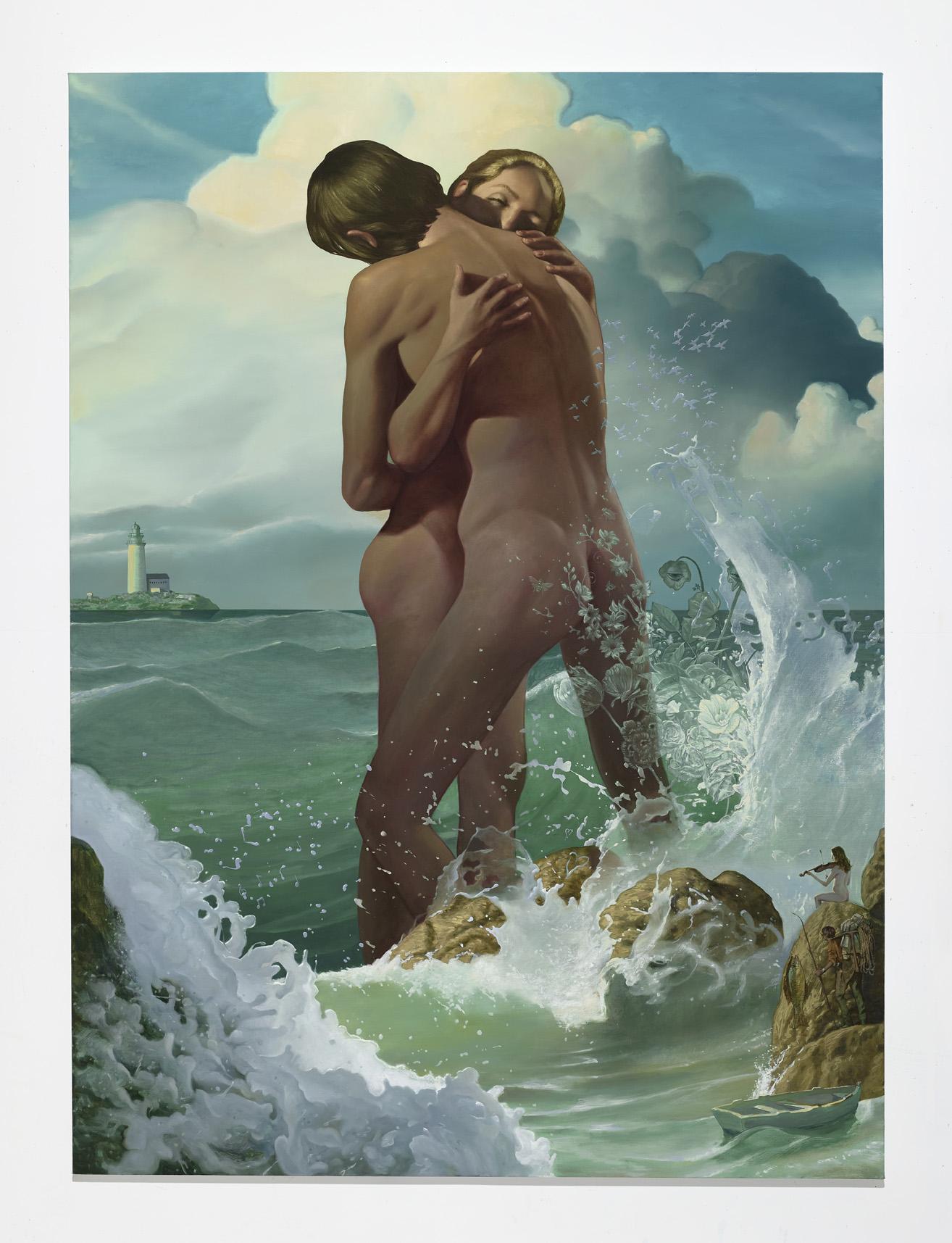
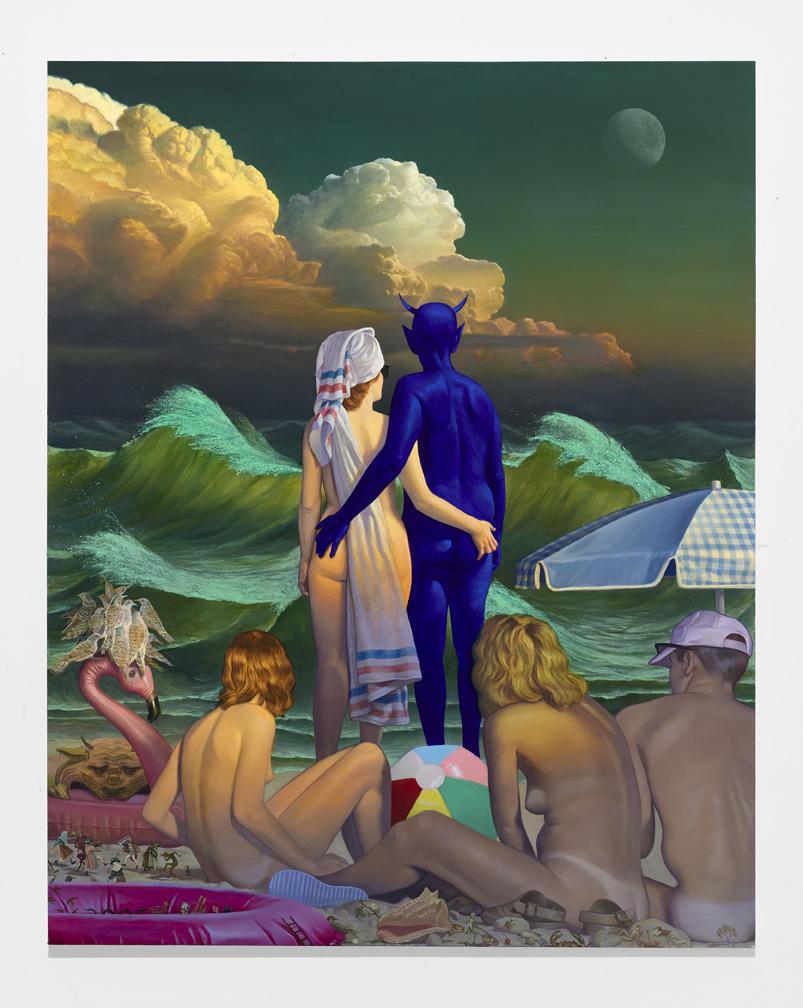
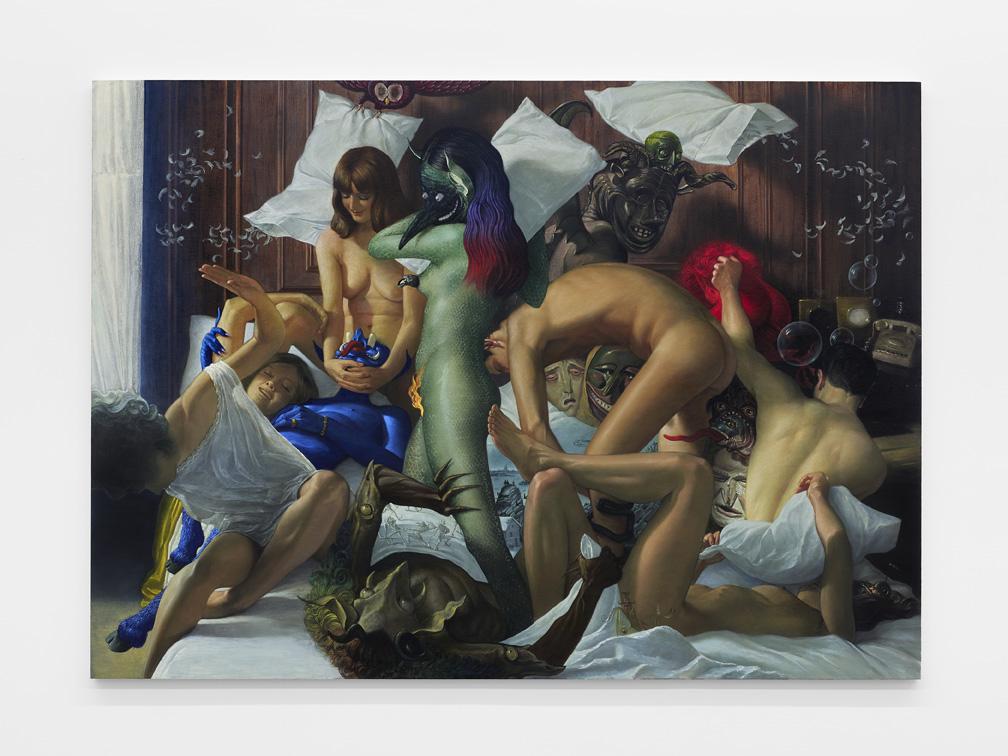
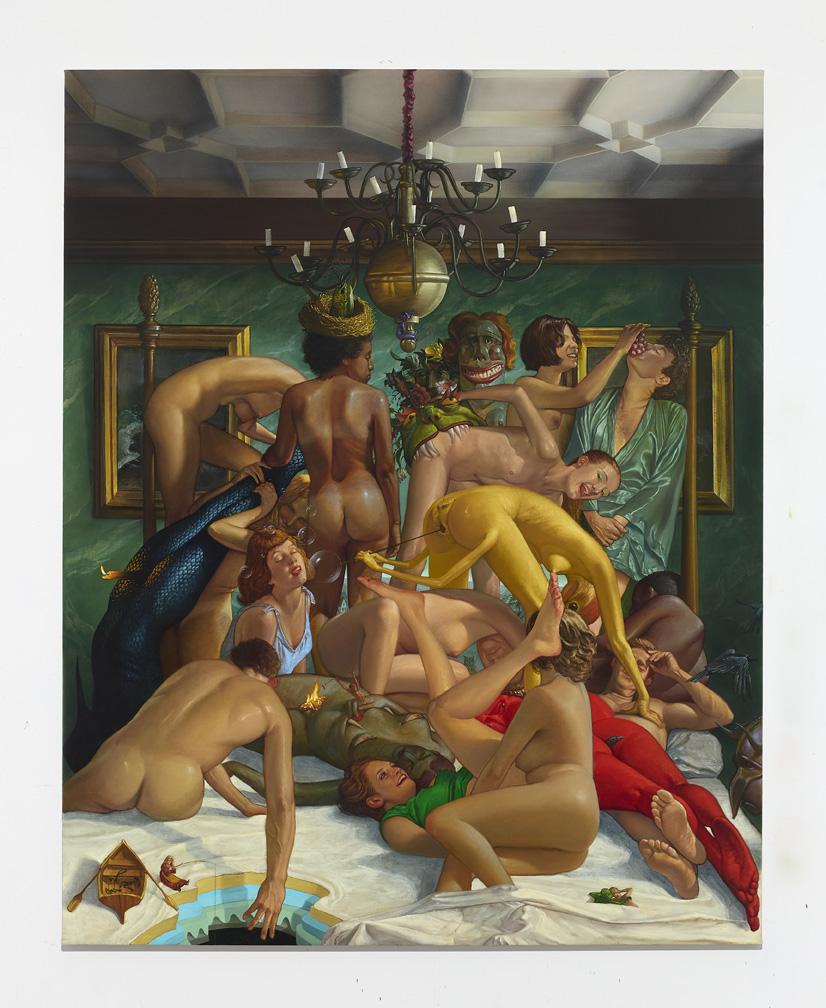
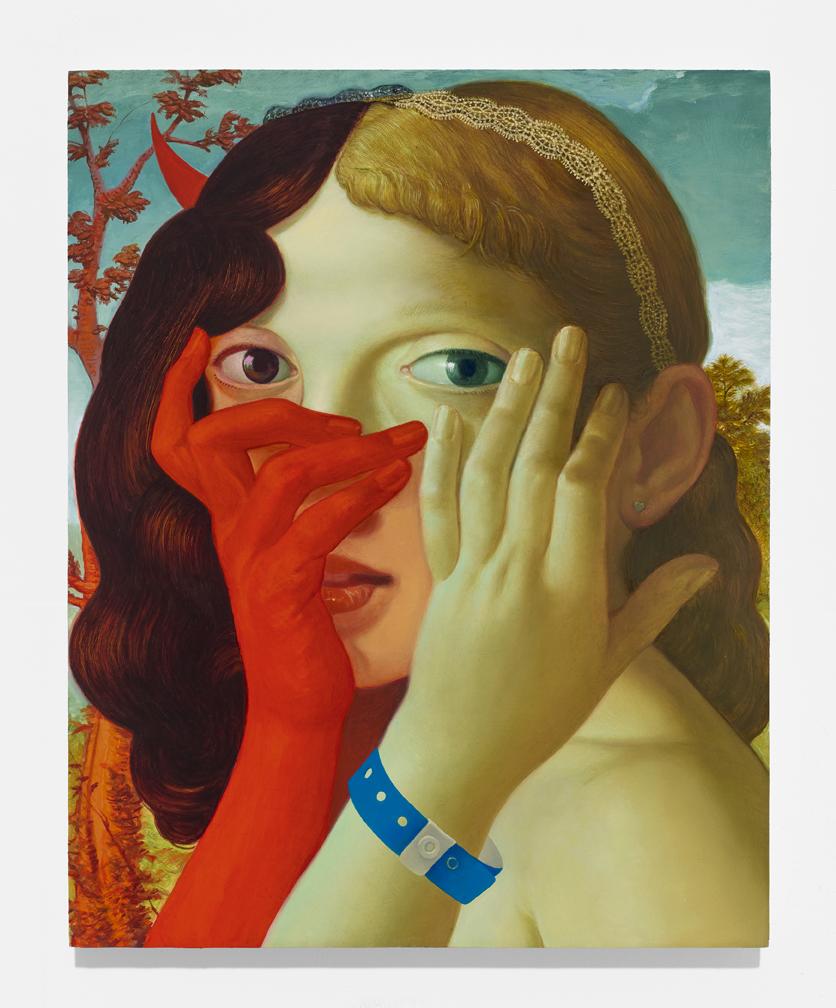
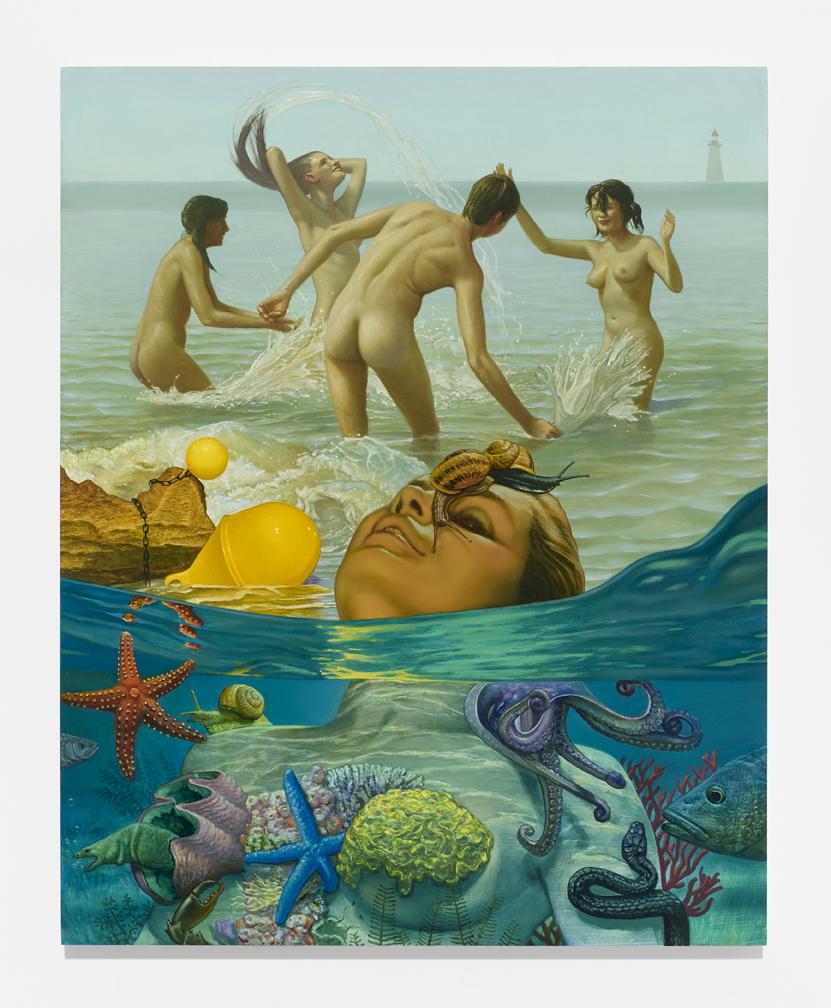
5.How would you describe your visual language to someone seeing your work for the first time? A good friend of mine told me that my paintings were the love child of Norman Rockwell and Hieronymus Bosch. I think that’s close enough to the truth.
6.Your work often juxtaposes the intricacy of Dutch Masters and Vanitas painting with contemporary, often cartoonish, surreal elements. What led you to this specific blend of high and low culture? I’m just responding in the way I see and think. Things seem to be wide open at the moment. There are no over-.arching “isms” dictating how to think about or construct meaning. If there is an “ism” that dominates today’s artistic discourse it would have to be pluralism. More specifically, an effort to build upon, remix or mash-up in order to subvert or reorder the original intent or meaning of something. This can be seen in full display in internet meme culture; where an image or video circulates like a snowball rolling downhill growing in complexity as users add layer upon layer of meaning to it. It not only changes in size and shape, but the internal structure of the image itself - morphing in humorously ingenious ways. I think this is the current state of the creative mind. This is how society constructs meaning at the moment.
7.Is there a specific ritual or routine that anchors you in the studio? Everyday when I walk into the studio I do two things: First, I immediately sit in front of the painting I will be working on that day and take note of anything I notice. I try to take it in as if I just stumbled upon it in the wild. You only get to have fresh eyes in the studio for a few fleeting moments. Soon your mind becomes flooded with the same thoughts it was having the day before and you start seeing the painting as a riddle to solve. Second, I remind myself how lucky I am to be here and to be doing what I’m doing. Being able to have a studio, to make work, to come to a place everyday where I have that freedom- is a gift. I take a minute to let that sink in. Then I start trying to solve the riddle.
8.You've noted that your work explores the idea of an "inner demon" that one must learn to accept. How does this concept of radical self-acceptance manifest visually on your canvases? I believe we all have parts of ourselves that we choose to keep hidden from the world. Ironically, these interior worlds are often intrinsic to who we are and can be quite fascinating when explored. Instead, we treat the aberrant with suspicion and often refuse to interrogate it any further. This leads to a constant threat of being discovered for possessing something everyone has. It’s an exasperating facade that we are taught must be maintained in order to function in society. However, through art we have the ability to create worlds outside of society; worlds where the norms and conventions can be dismantled; worlds that only have to make sense in relation to themselves. My paintings are worlds where the dictates of conscience are exchanged for the freedom of self acceptance. They create a space where we can be seen as the flawed and bedeviled humans we are.
9.How much spontaneity is within your process? I make a painting the same way I mix a drink- mostly by eye. I don’t adhere to recipes. If the ingredients are good, then it just becomes a matter of proportion. I usually start with some humor, add a splash of pathos and then garnish with as much virtuosity as I can muster. I like a solid base- a well conceived composition. Once that has been established, I allow the smaller worlds within to emerge spontaneously. The relationship between the macrocosm and the microcosm has always been important to me. I want to give myself a chance to bypass the conscious mind and access deeper and sometimes darker insights. The small creatures and worlds in the corners of my work serve as a tool for self discovery. They are physical manifestations of unplanned impulses that arise when I stop thinking too hard about what is supposed to be happening.
10.Your work has been dubbed the "torch carrier of contemporary surrealism." Do you feel a connection to or a departure from the historical surrealist movement of figures like Salvador Dalí or René Magritte? I love both those artists. I feel connected to them in the ways both stylistically and conceptually. However, surrealism has become so fully assimilated into modern culture that it has no torch in need of carrying. Like all things, artistic ‘isms’ have a natural life cycle. They begin with fiery manifestos, produce inspired works of art, and end with those artworks printed on gift shop t-shirts. What I love are the individual, idiosyncratic lessons these artists have taught me. Lessons written in the language of paint. These lessons no longer need the structure of categories or pretense of intent. In fact, once divorced from these constraints, they become part of something much larger and universal: mankind’s desire to evoke emotion through the painted image…a torch that has yet to be extinguished.
11.If your paintings are meant to create an alternate reality, what do you hope the viewer ultimately takes away from a moment spent inside that world? Art asks questions. It doesn’t dictate or resolve. It’s open ended and experienced differently by all who engage it. In this way, art and life are the same. Its a blessing to live our lives surrounded by people and objects that invite us to inspect ourselves more fully. I suppose my work asks the question, “What would it mean to live with our full selves on display?” It’s a proposition really - a bit like a pitching a proposal for a theme park where we can ride the Ferris wheel with our inner demons. Inside these gates we are free to show the parts we normally hide and revel in revealing the cloistered side of our common humanity. Art allows this funhouse mirror world to exist – the amusements are free to ride, there’s no line and all one has to do is look.
12.Has your relationship to your own work changed over time? If so, how? Yes, when I was young I felt like my relationship to my work resembled a series of blind dates. I was nervous and uncertain. I tried on lots of outfits- mostly ones that didn’t fit. I mimicked other’s personalities and tried too hard to please. In other words, I was a hopeless romantic who was desperate to be loved. I was trying to find myself through dating strangers - which I think most young artists do. I’m now in a much more comfortable and self assured relationship with my work. To beleaguer the metaphor, I’ve found my person. We’ve moved in together and I’ve deleted all those old contacts. We aren’t without our disagreements from time to time, but we are dependent on one another and realize we have something special; something unique.
13.How do you navigate moments of doubt, block, or artistic fatigue? I’ve never had an artist’s block or artistic fatigue. I have had plenty of doubt. Doubt is a natural state for an artist. It’s in the air we breathe. Doubt hides behind every brushstroke - trying to catch the painter’s eye; to derail their certainty. Which, ironically makes the work better. Of course, for the creative process to succeed, it must assure that these moments of doubt are accompanied in equal measure by moments of unbridled assuredness. This seesaw effect is what keeps creation happening; similar to a sailboat tacking back and forth in order to sail upwind. I’ve often left the studio thinking I’ve tamed a painting - only to return the following morning to find it outside the stable eating the neighbor’s vegetables. The creative process requires a tremendous amount of supposition. Supposing you have something interesting to add, supposing someone cares. However, you must also allow self doubt to act as a corrective to this hubris. This uneasy relationship leaves the artist oscillating between the poles of, “I’m a genius!” and “I’m a fraud.” This dichotomy enriches a work of art and imbues it with the messiness of humanity. Ultimately, you must learn to embrace the precarious nature of the creative temperament. How have I navigated moments of doubt? I’ve learned to relish them. I make uncertainty my armor against the blandness of blind certitude.
14.Are there contemporary artists or creative fields (music, fashion, film) that inspire your current direction? An artist should embrace the particulars which come most naturally to them. Know thyself. I’ve learned over time that humor, pathos and virtuosity are my ingredients. They suit an impish and sometimes obtuse character. In this respect, I’ve always felt a kinship to the roguishly tormented temperament of Morrissey - himself being a spiritual descendant of Oscar Wilde. I admire his flamboyance and defiant individualism, which is accompanied by a melancholic sense of humor. So many artists live inside the conventions of society creating no friction whatsoever. Morrissey has created work and lived a life outside of those constraints. He’s a true iconoclast. “And when I’m lying in my bed I think about life and I think about death And neither one particularly appeals to me.”
15.How does the world around you—socially, politically, or emotionally—make its way into your pieces? Honestly, I try to let as little of the ‘real’ world into my work as possible. A blank canvas is a gift given to the painter without expectation or restriction. Contained within is the entirety of possibility and the weight of emptiness. While it demands nothing in return, I believe the painter has a responsibility not to waste it. We exist in the world outside that canvas. The ‘real’ world. We’re stuck here. This world forces us to adhere the laws of science, the laws of the state, we have to be cold, we have to smell whatever’s in the air, be bound by gravity, develop moral codes, accurately predict the properties of objects that surround us, adhere to basic social norms, sleep, get paper cuts, strive to be ethical, eat food, explain ourselves and engage in a million other banal realities it imposes on us. It is only the pedestrian artist who continues walking in the insipid world to which they were born. When you are given the gift to be a world builder you shouldn’t waste it wallowing in the languid waters of reality. Mimesis is simply the uninspired pointing an uncertain finger at things that we already know. A blank canvas is an opportunity to create an unprecedented reality that can only be experienced within its borders. I want to create worlds where the entirety of what the viewer knows and has experience is irrelevant. I want the reality in my paintings to be unbound by the monotony in which I live. Mostly, I just want to do my absolute best not to waste a blank canvas.
Interview by Jimon
