
1. How would you describe Lizbeth Mitty?
I am a hermit who is fortunate enough to have a close family and lifelong friends. I’m in the studio six days a week, and how things go with the work defines my general state of mind. Small talk is difficult for me, and my kids tell me I can come off as somewhat intimidating, but spending inordinate amounts of time alone can make the transition into the speaking world challenging. I’m fascinated by artistic process across all disciplines, especially fiction writing, and although I grew up making visual art, there was a time when I hoped to write fiction.
2. Growing up in Queens and living in Tribeca for many years, how has the intense, ever-changing environment of New York City influenced your artistic eye and your fascination with urban chaos and decay?
My Queens neighborhood was magical. Alleyways ran through the center of each square block with playgrounds, lots of dirt for digging, and the foghorn like sounds of a nearby subway yard. I remember staring at car lights moving behind patterned glass, reimagining distant bridges and apartments as Disney like worlds. Returning to New York in my late twenties after some college teaching was a shot of adrenaline. Tribeca was still mostly small factories and strange bargain stores amid crumbling infrastructure. Many of my ideas came from commuting to adjunct teaching.
3. Your work is described as teetering between the abstract and the representational, with a focus on urban ruins, decadence, and the “apocalyptic.” How do you view this balance in your own artistic philosophy?
Freedom exists in the space between representation and abstraction. Moment to moment, the paint offers cues within the loose structure of the compositional framework. Decaying structures and junkyards are a kind of visual fait accompli, a smorgasbord of form, color, and texture, so the process can feel like making many abstract paintings within the larger one. Decay is inherently apocalyptic, but my work goes there regardless of subject, without any conscious effort. The most optimistic topic in my hands exudes a deep unease. Malcolm Morley, my first painting professor, said, “We paint the newspaper,” meaning the artist is a sponge.
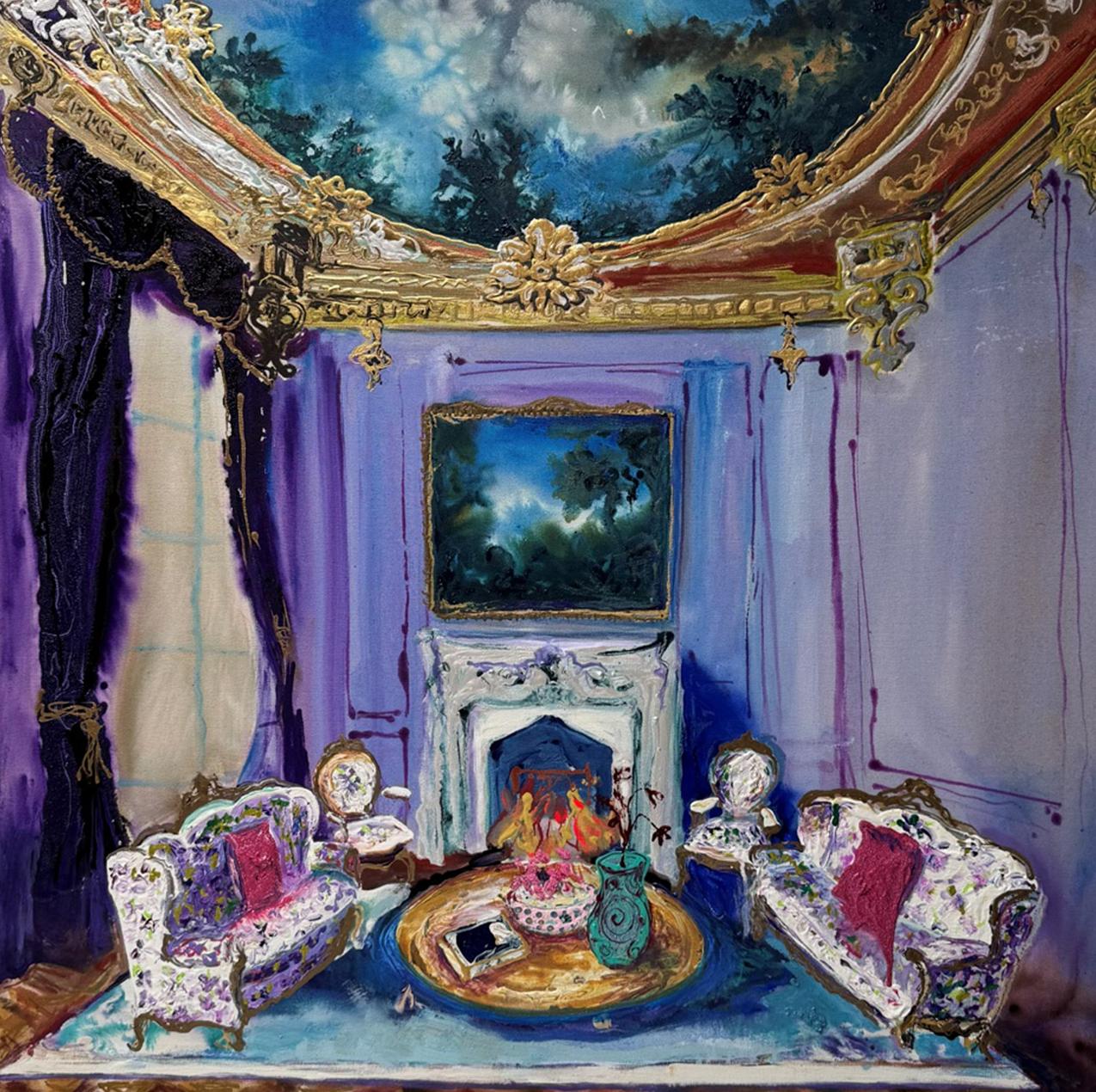
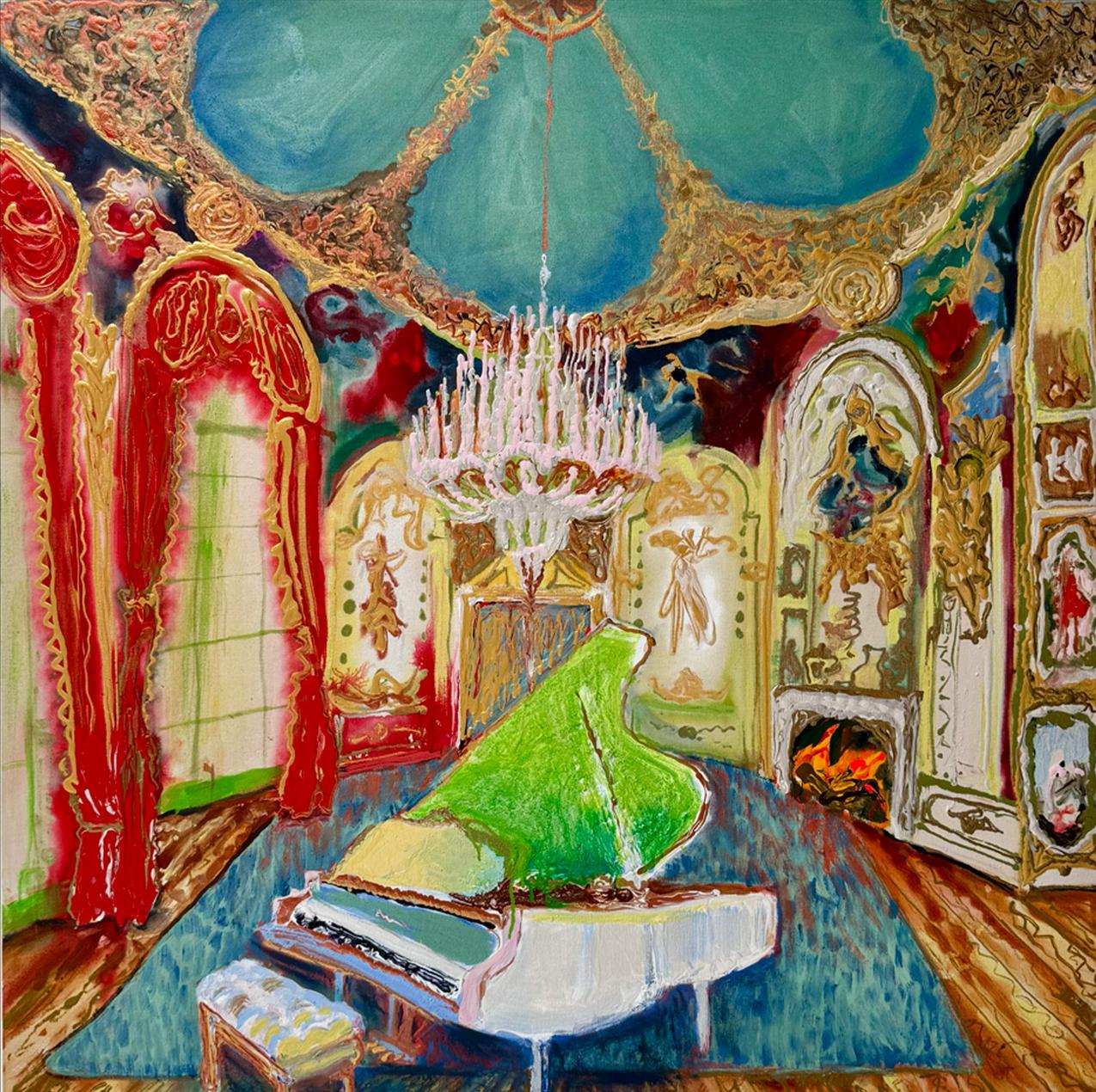
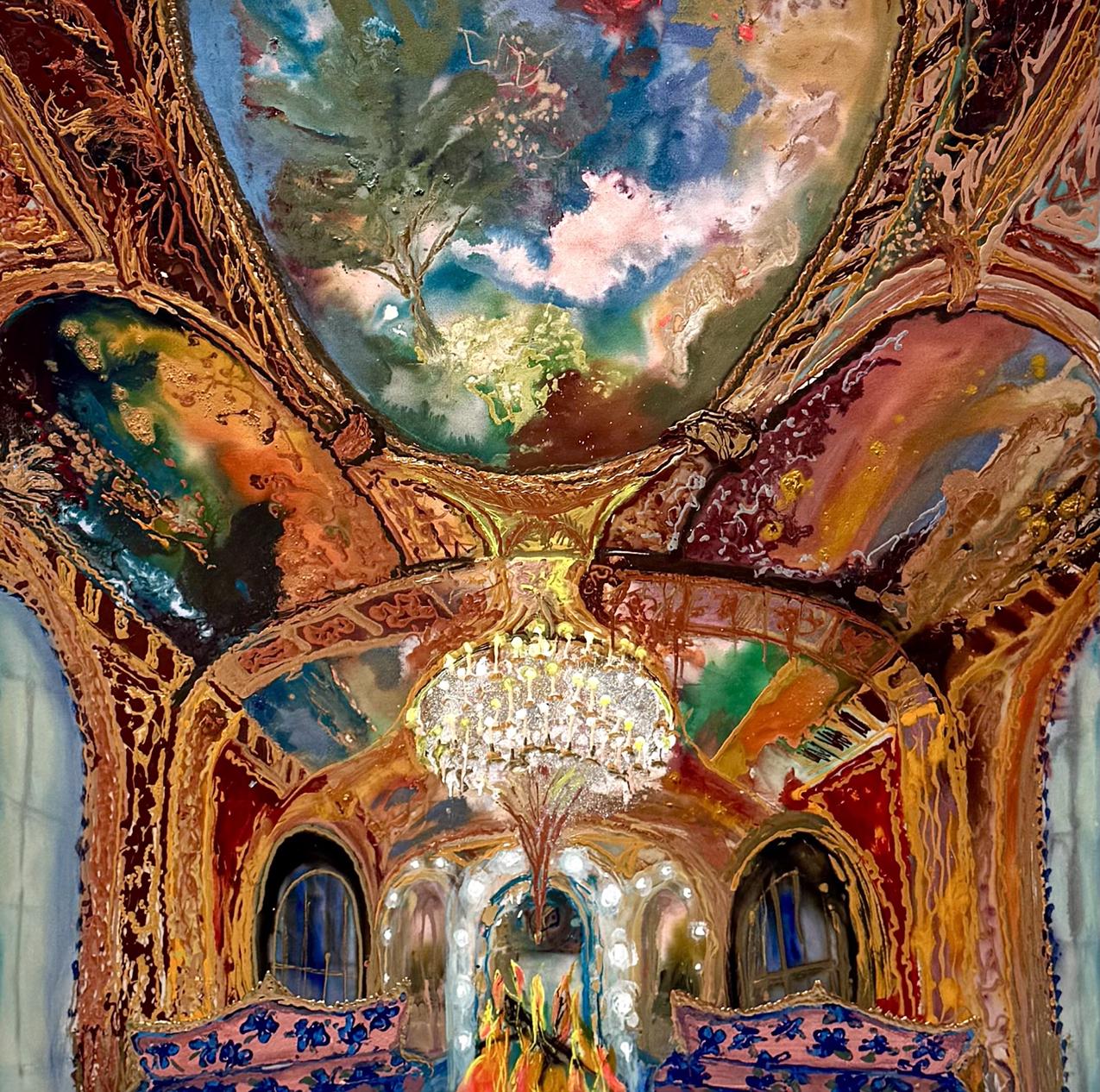
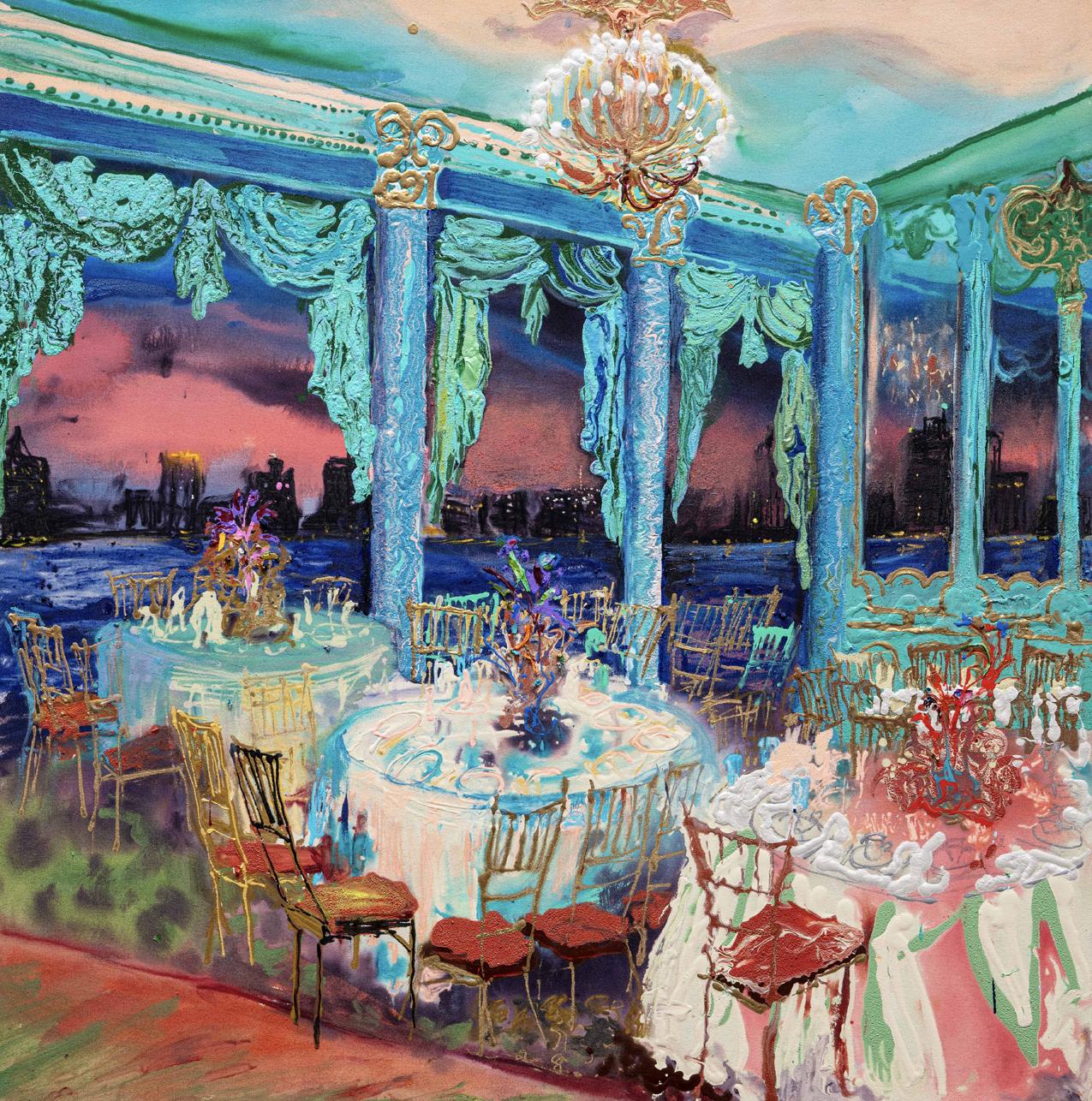
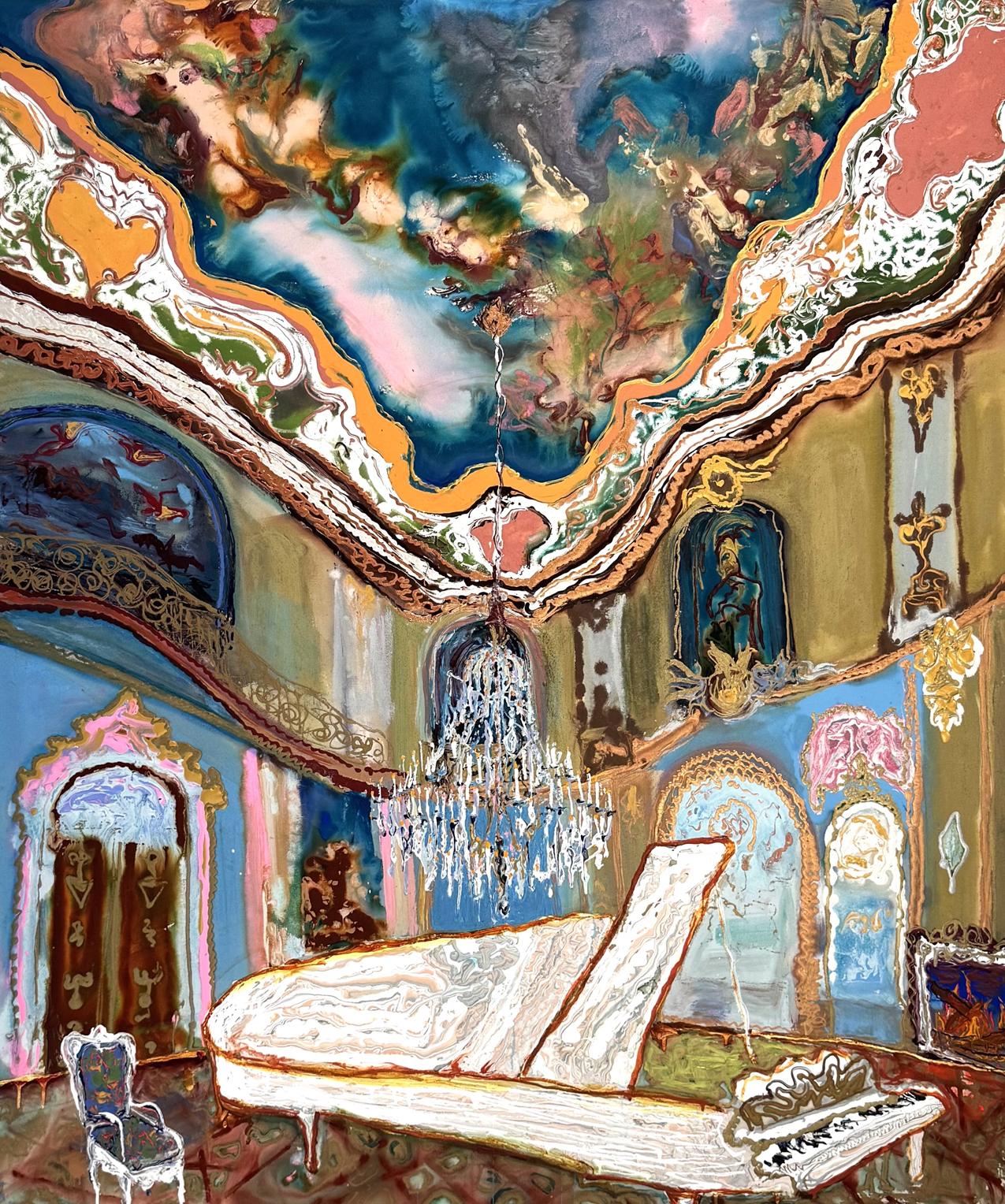
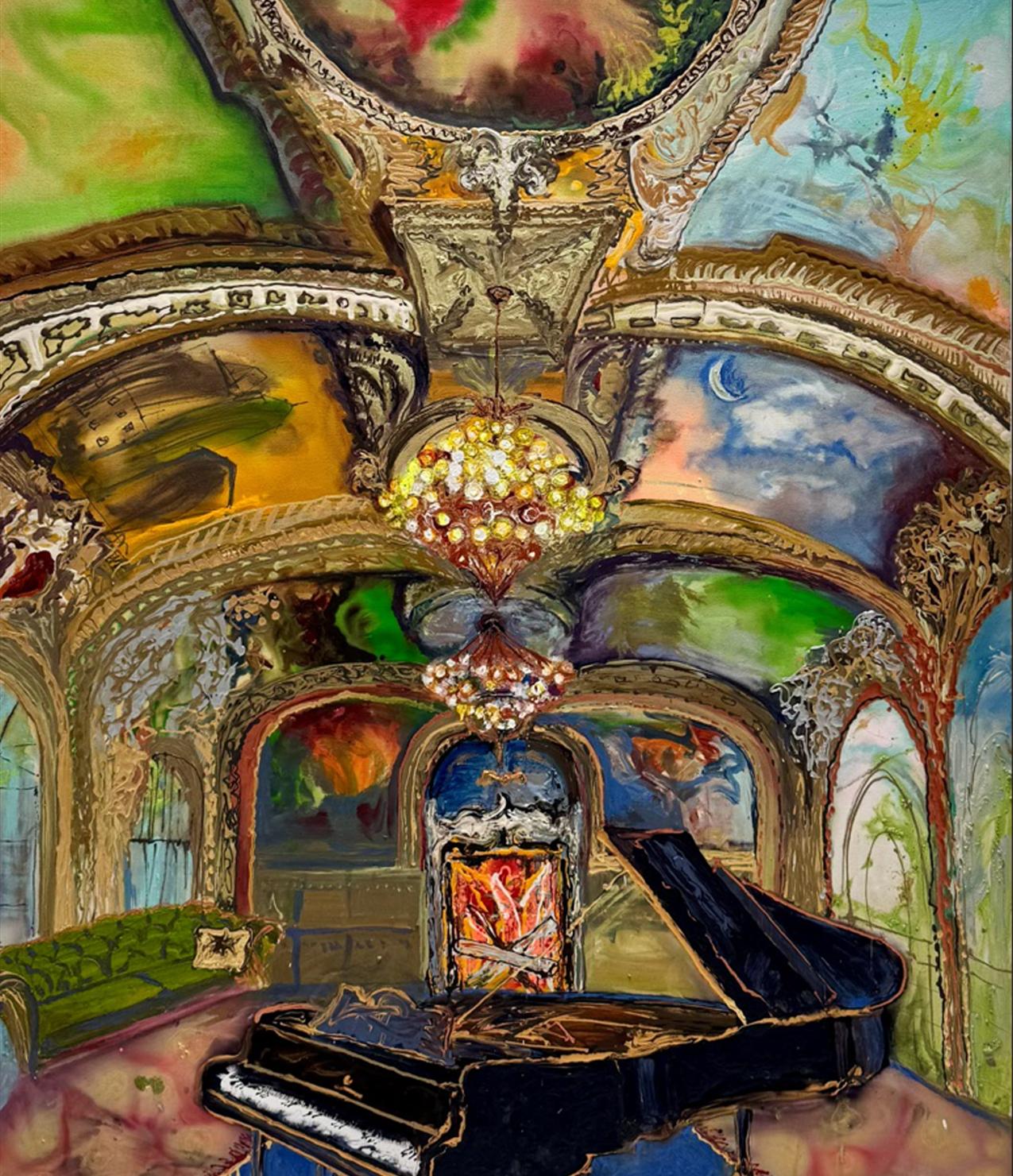
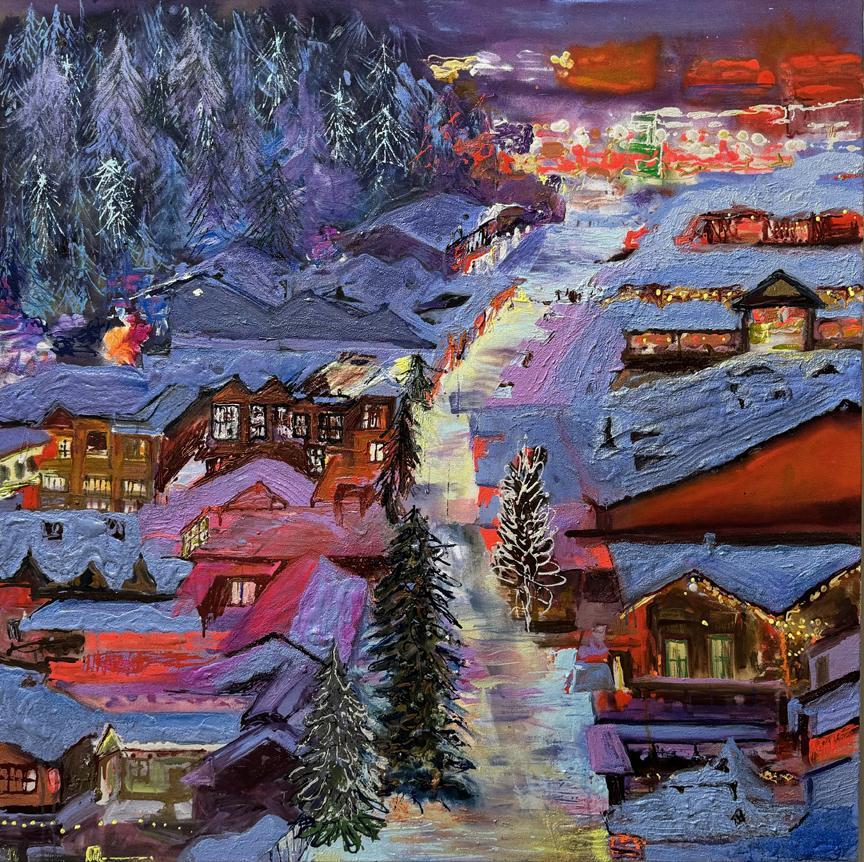
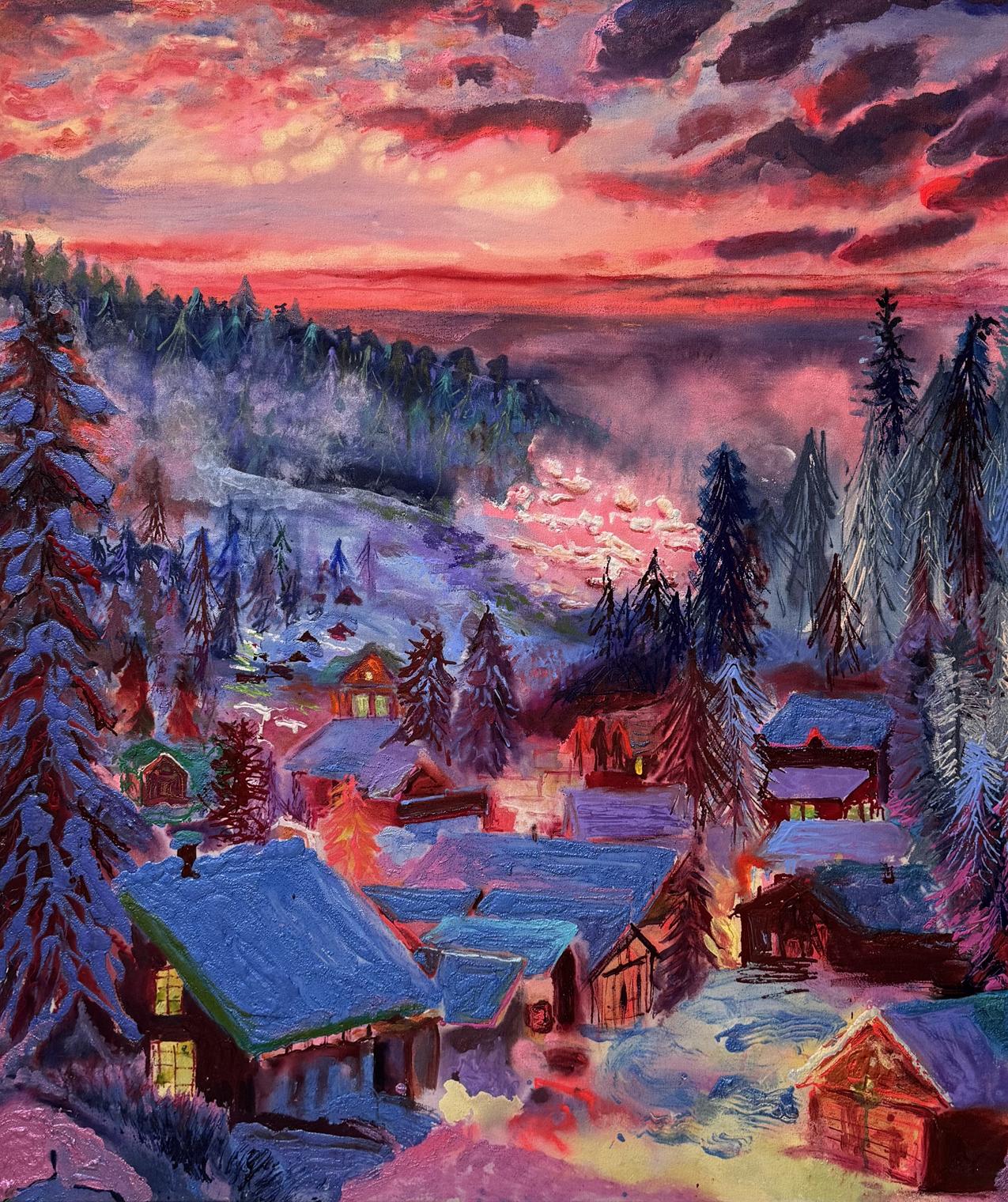
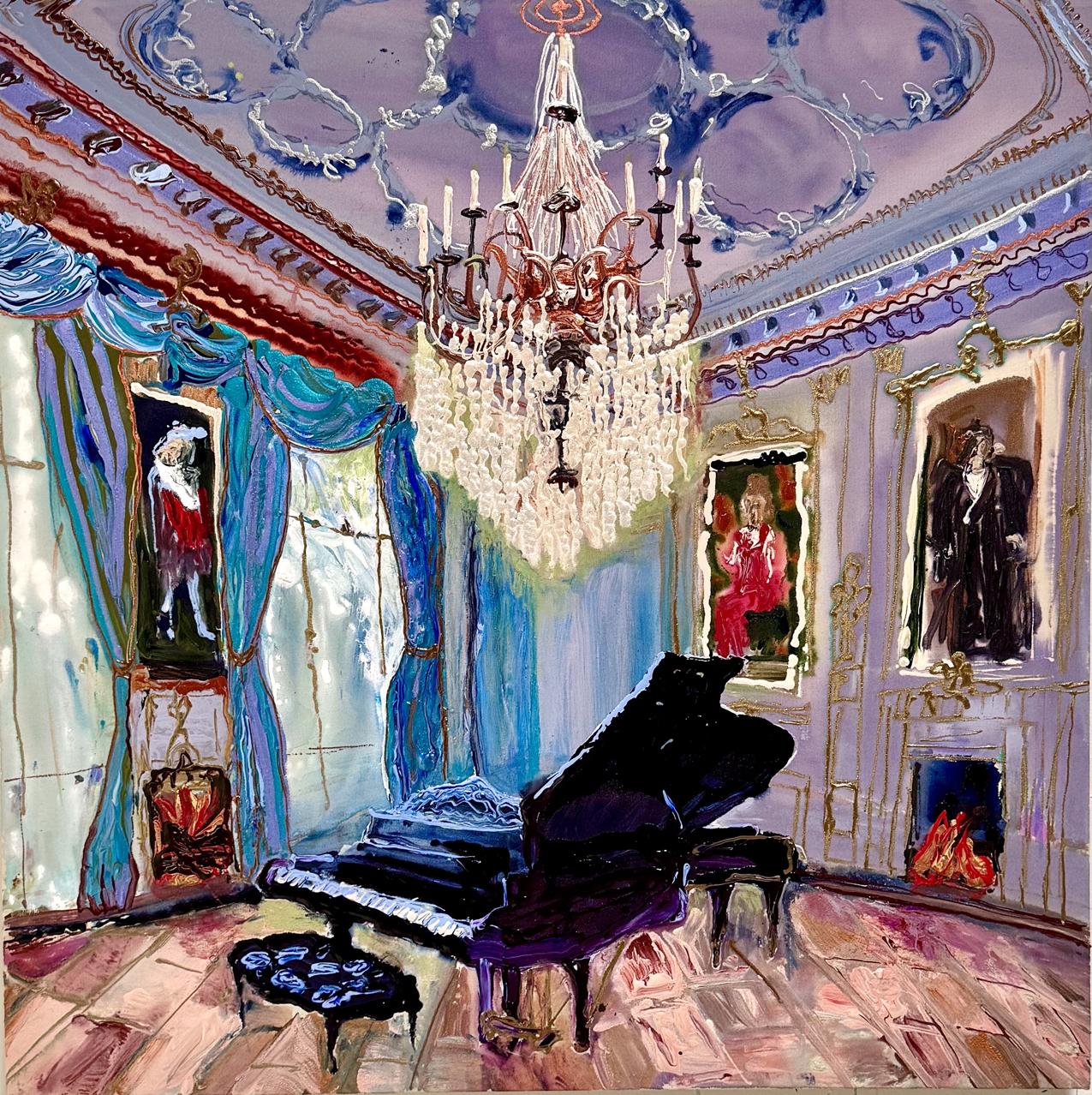
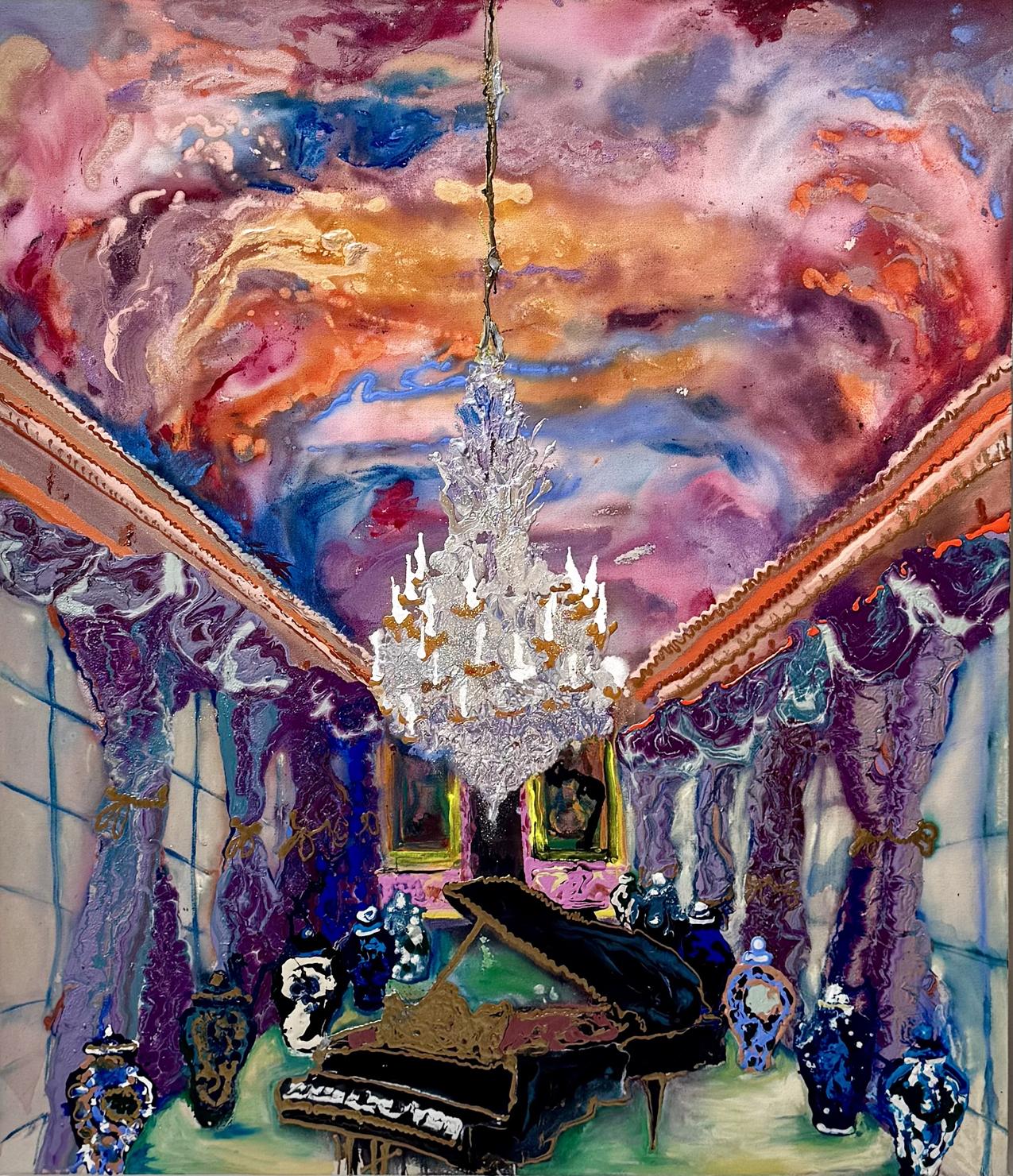
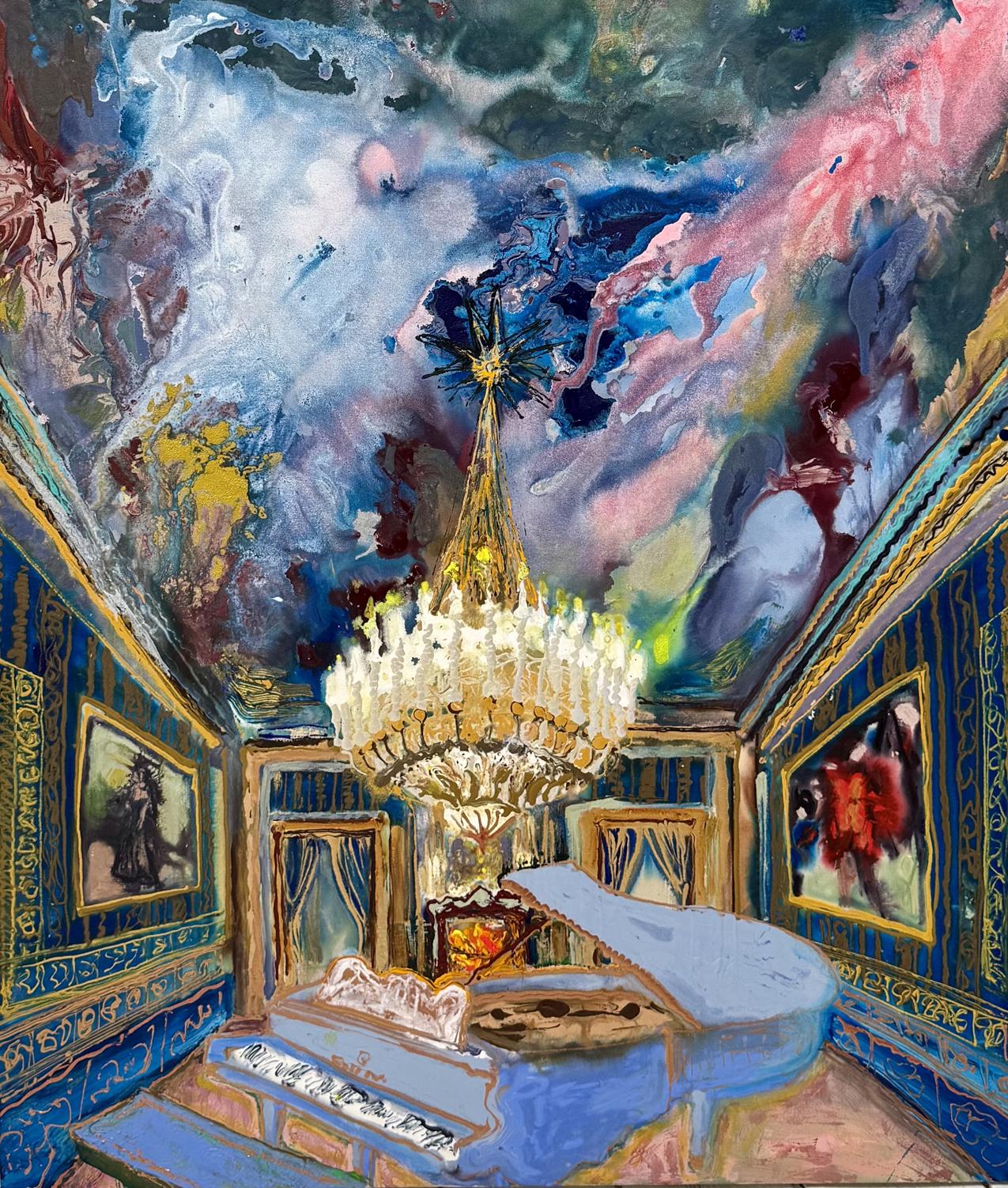
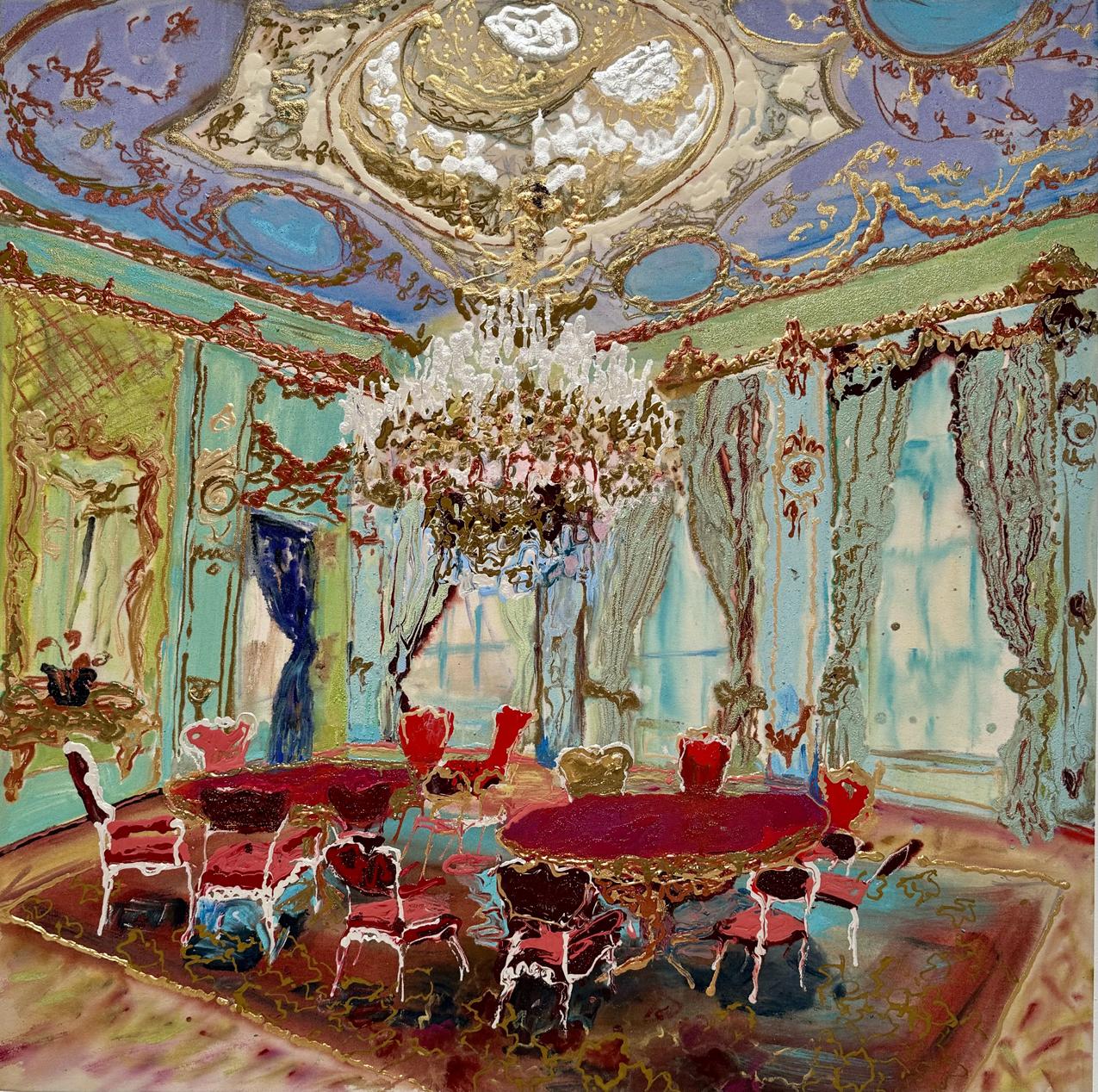
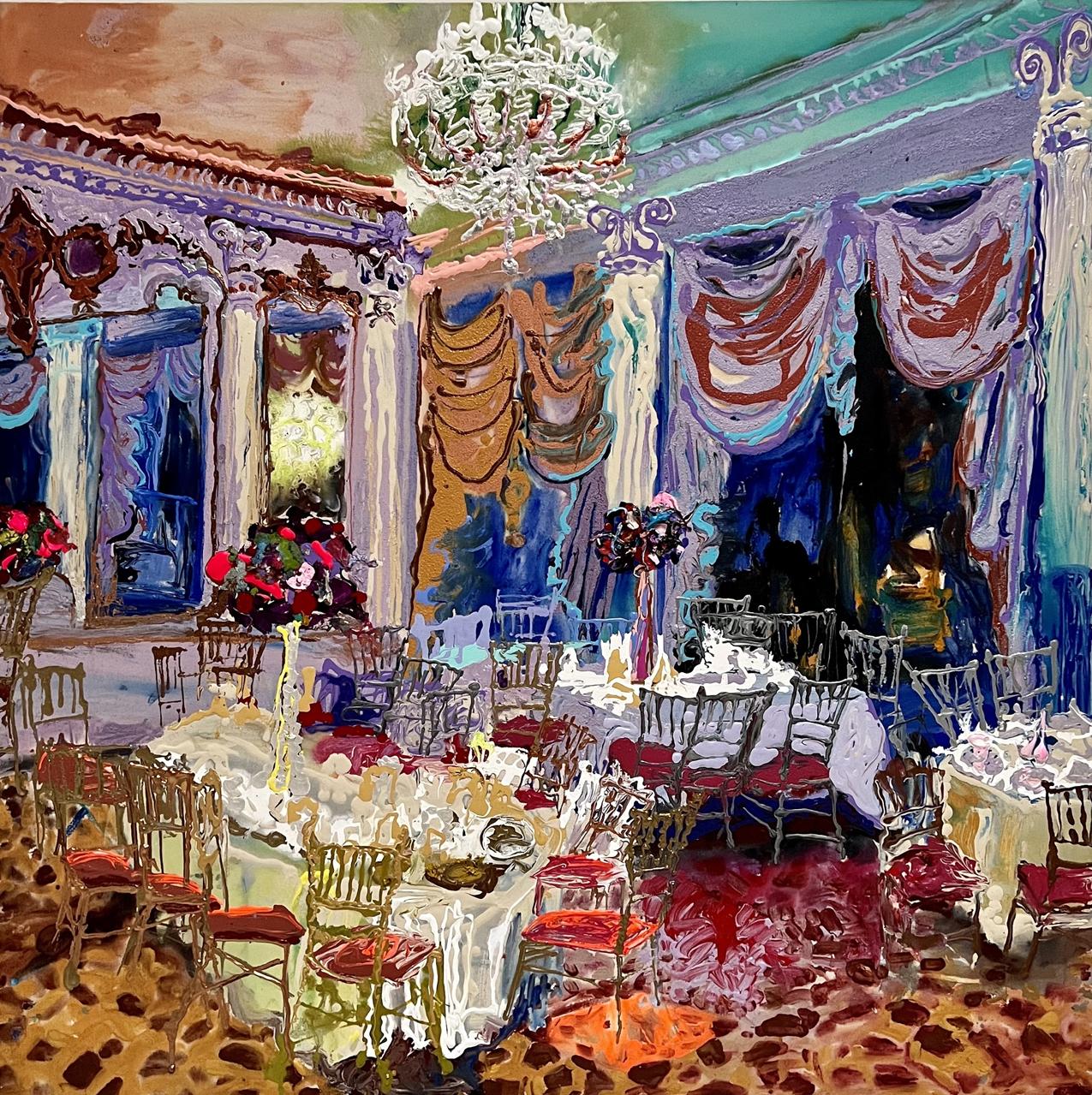
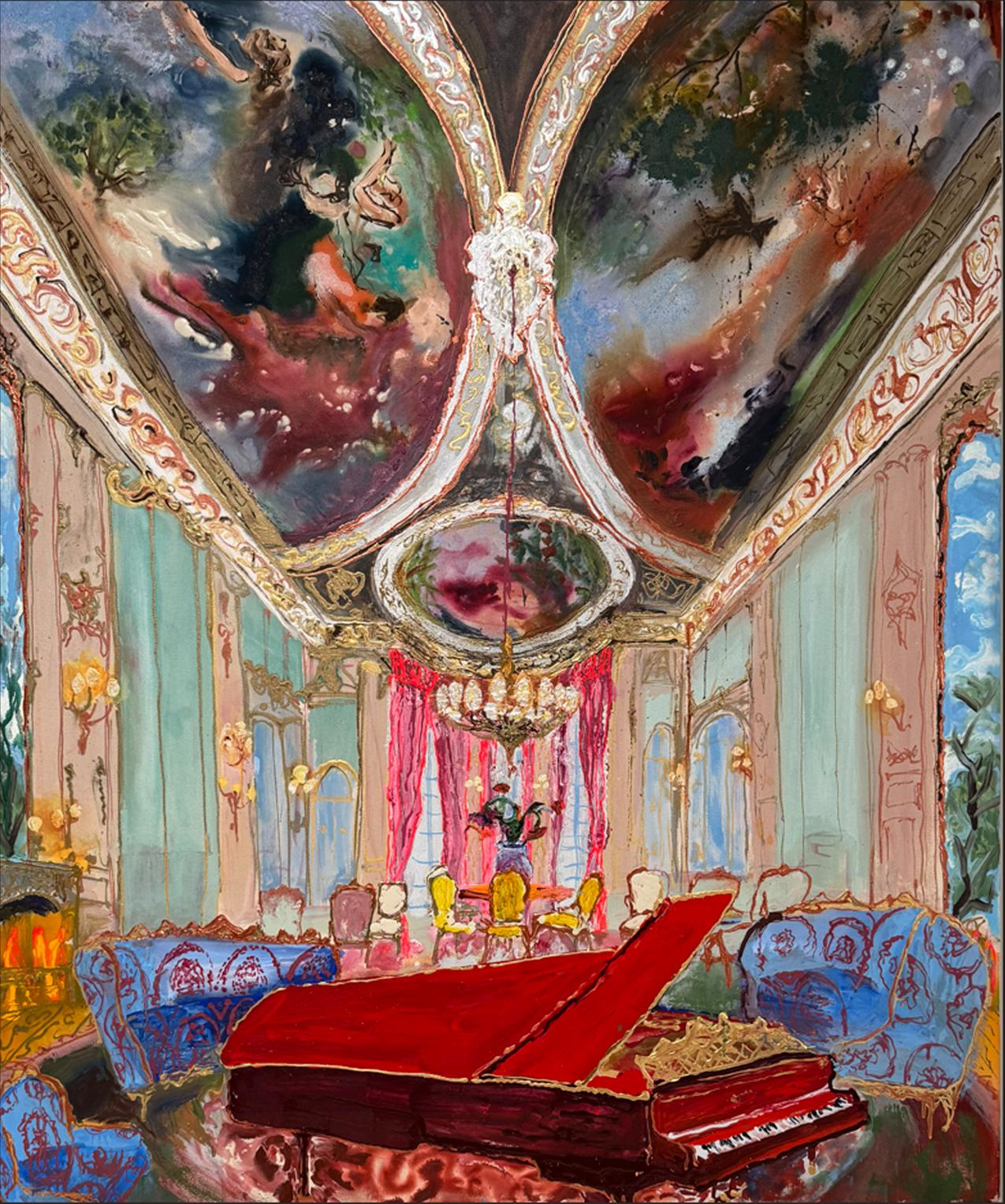
4. Your subjects have evolved from junkyards and urban ruins to more recent interiors featuring chandeliers, banquet halls, carousels, and gazebos. What prompted this shift while maintaining the core themes of decay and excess?
I painted interiors from 1980–1990 as well. Places of grandeur, whether a landscape or an interior, make my heart pound in a way that tells me I must paint them. My subject shifts entirely when I see something I simply have to paint. In my recent interiors, I’m mining the fertile ground of the awe-inspiring Rococo and Baroque. The cavernous spaces adorned with patterns so lush and extreme seem to paint themselves, yet a sense of unease or foreboding appears on its own.
5. The chandelier has become a signature motif since 2015. What does this object, in its state of dereliction or restored splendor, symbolize for you personally and within your broader work?
The beauty of the chandelier’s formal elements always draws me in, and I’m hooked once I begin to translate it into paint. A series often unfolds so that I can continue exploring new avenues within a topic. In the case of the chandelier, I am directly and unabashedly wallowing in the seductiveness of light. The chandelier evokes thoughts of horror films, opulent mansions, love, money, sadness, and even death.
6. You've spoken about being “hooked” by something that makes you say “wow.” Can you recall a specific instance of seeing a scene or object that triggered this immediate compulsion to paint?
There used to be an immense warren of wrecked buildings on the Red Hook waterfront. The main building was a massive conglomeration of patched materials from many eras. The colors and textures were wildly stacked inside the damaged sections, with gouged out areas revealing the other side of the façade. It presented itself as a broken grid. Each section felt like a gift a painting in its own right and a precursor to the interiors I’m making now, which include wall and ceiling paintings within the larger work. I visited and painted this location for several years and was bereft when it was demolished.
7. What role does memory play in your choice of subjects, especially interiors, objects, and overlooked spaces?
Memory operates on many levels: visual pictures of places and things, very particular colors, something someone said, music, books, movies, and so on. Sometimes the memory is of an individual place, but even then, I’m weaving in other thoughts. Prior to 1990, I worked entirely from memory and revisited points of interest numerous times to flesh out my first impressions.
8. You are known as a masterful colorist. How do you approach the use of color and light to convey the atmosphere of “beautiful sadness” or “apocalyptic beauty” in your paintings?
The first phase of a painting is a several hour session of color mixing, resulting in roughly fifty colors stored in large cups and squirt bottles. This is when I’m intentional about my palette, while still allowing room for unanticipated discoveries. As I mix, I visualize how the colors might work in the painting, but once I see how they behave on the canvas, much can change. Color is tricky because every color its size and its position changes the surrounding colors. I don’t mix colors to evoke sadness or any other emotion; I paint what excites me visually, and if the result reads as sad or apocalyptic, that is simply an unintentional mirroring of life.
9. Could you walk us through the technical process of a painting, especially the “fast-moving, mostly poured, wet-on-wet technique” you employ? How does relying on the medium and “accident” feed into the final image?
When my colors are ready, I make a few lines on the canvas to designate a horizon line and locate some dominant shapes. I balance the canvas face-up on two five gallon paint containers, saturate the top third with water, and begin pouring paint into the wetness. Working from the top down, the painting remains upside down until I reach the bottom third. This makes it easier to think abstractly. My mixed colors range from thin washes to thick paint with texturizing elements like pumice and glass bead. I make marks with brushes, squirt bottles, and various tools. The process can become technical, as my long-established vocabulary includes understanding how different pigments interact, which colors will fan out, look flat, or appear luminous. Throughout, the flowing paint has a mind of its own, and I make decisions about how far I’ll let accidents alter my course. After the top two thirds are poured, the painting dries overnight, and I stand it up to see what has happened. Wet-into-wet is a wild process, so this is an exciting moment when I visualize the foreground, always a surprise that usually requires changes to the upper portion. On average, one-third of the paintings don’t make it out of the studio.
10. You've mentioned being influenced by Cézanne’s idea that “every part of the painting is as important as every other part.” How do you intentionally build this kind of all-over structure in a piece?
Working upside down and staying open to accident allows me to see the painting as pure color and shape and to hold on to the premise that a painting is an object. No square inch should be uninteresting.
11. You studied under the acclaimed photorealist painter Malcolm Morley. How did working with a photorealist inform your subsequent move toward expressionism and abstraction?
Malcolm Morley wasn’t the sort of photorealist who simply copied pristine photos. The abstract strength of his work came from establishing a grid to divide the painting into small paintings. Breaking the picture plane into segments was his way of implementing the theories of Cézanne, who built paintings with patches of color. Morley worked from dirty, bent newspaper photos and postcards in an effort to express unease and political turmoil. He mixed color for his own paintings in the classroom while talking theory and art history.
12. Your work is held in major institutions like the Metropolitan Museum of Art. What does it mean to you to have your work enter a permanent collection?
I am thrilled and honored that my work is held in public and private collections; however, it is the daily ups and downs in the studio that define how I feel about myself as an artist.
13. How has your artistic practice evolved over the years, and what has stayed consistent?
I perceive my career as divided into three sections so far. From 1970 through 1990, I worked in wet-on-wet acrylic with mostly urban landscapes and interiors. From 1990 to 2020, I worked in oil with urban ruins and junkyards, chandeliers, gardens, and occasional pastoral landscapes. When I returned to acrylic in 2020, it felt like a dam breaking. I simply couldn’t make oil paint do what I wanted it to do. It was during the pandemic, and I focused on picture-perfect travel images juxtaposed with foreground still-life objects. More recently, reception halls and castle rooms have become fertile ground. Place with all its complexity—has been the consistent theme throughout.
14. How does the chaos and beauty of the studio environment itself influence what you create?
I’m fortunate to have had the same beautiful studio for the past seventeen years. There is a noisy, smelly factory beneath me, and the building isn’t maintained at all, but I have space and great light. I keep the space very organized and as empty as possible so I can see what I’m doing without interference and find things without wasting time.
15. Are there mediums, formats, or collaborations you hope to explore in the future?
From 1987 through 2007, I made monotypes at a print publisher. This medium greatly informed my painting, and I loved the structured freedom it offered. I would like to make monotypes and possibly other prints again in an assisted studio.
16. What is the most valuable piece of advice you've received or learned during your 50-year-long investigation of transforming environments that you would pass on?
The best advice is simple: keep working consistently never stop. The work is everything.
17. Is there a location, object, or feeling you haven't yet explored in depth that you are currently considering for your next major body of work?
I hope to travel to new places that feel like a fascinating amalgam of past and present. The shock of the new is always a good place to start.
Interview by Jimon
