Where are you based at the moment?
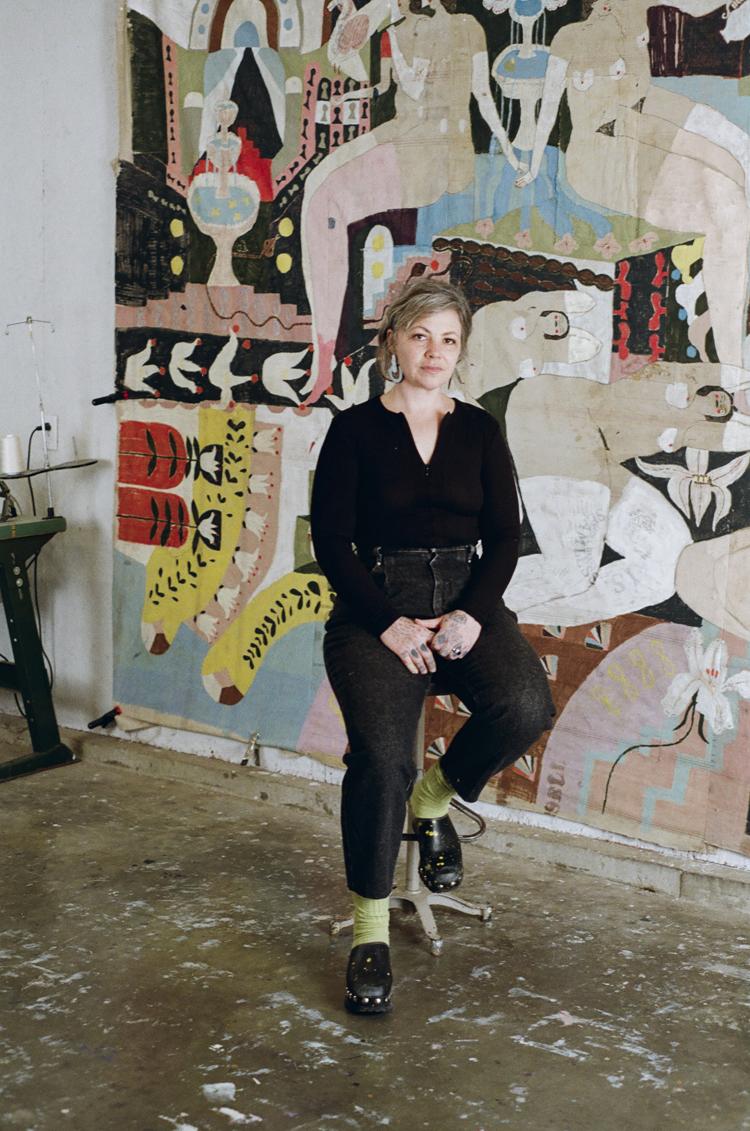
My studio is in an old schoolhouse in a small town on the Mississippi River called Alton, Illinois. It’s near St. Louis. I live about 20 minutes from my studio in a town called Edwardsville.
How would you describe Lauren Roche?
I am introverted and spend most of my time alone. I have three dogs that keep my house very lively and are extremely rude to visitors. When I spend time with friends, it is mostly one-on-one.
Can you describe your earliest memory of creating art?
When I was a kid, I loved drawing dog portraits. I think I was in first grade when I drew a Yorkie with a bow in her hair using colored pencils and entered it into the school coloring contest. I won first place. In my memory, it was extremely realistic and detailed, but I have no idea what it actually looked like. Later, in grade school, I drew pencil portraits of celebrities for friends and things like that. I did teen heartthrobs and boy bands.
Do you follow a daily routine or ritual when creating art?
I am extremely routine with my studio practice. I go seven days a week and only skip if I am out of town or sick. Some days I show up feeling icky or stressed, and I might meditate first to get grounded, then see what my body feels like doing while I am there. If I still feel bad, I will just read, research on YouTube, or watercolor—whatever gets my nervous system regulated. I might only stay for a few hours, or I might end up painting for nine or ten hours. My daily life really revolves around my studio practice. I try to stay healthy and get good sleep so that every day I am prepared to be as present as possible.
Your work is very sensual. Is there a message or emotion you’re trying to convey with your art?
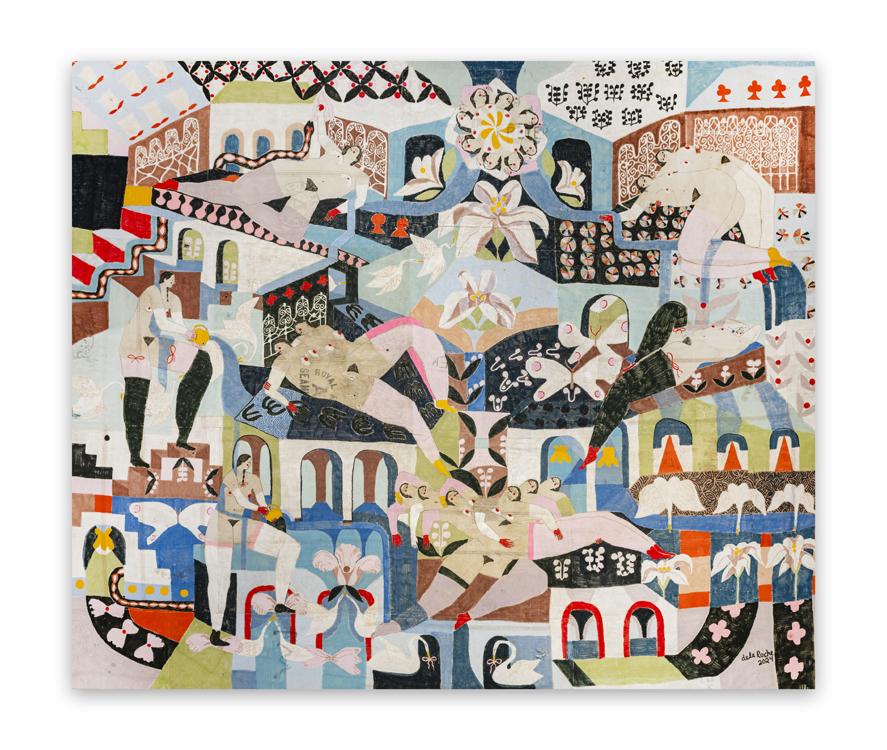
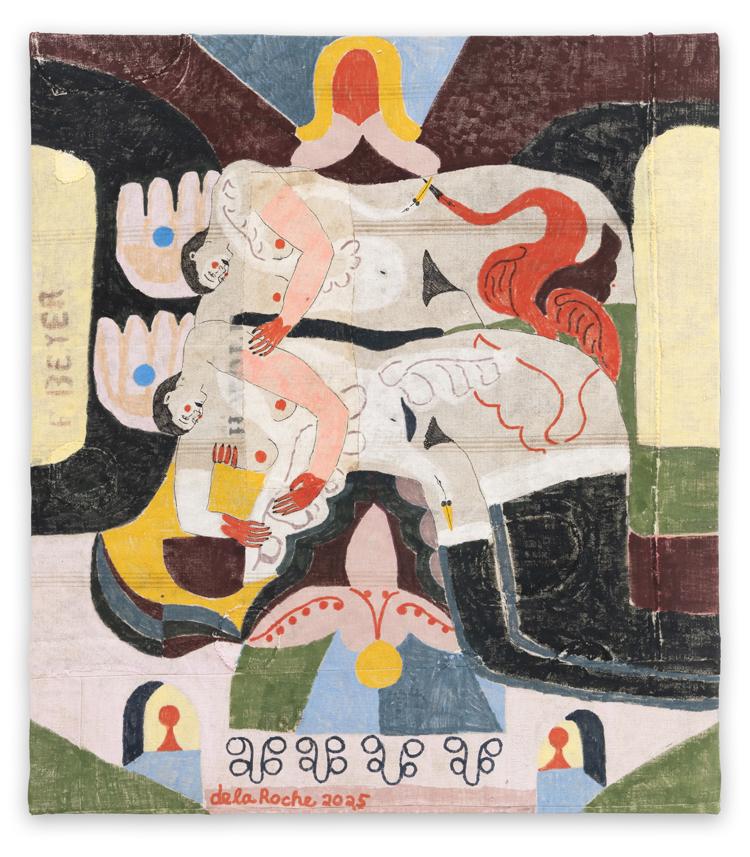
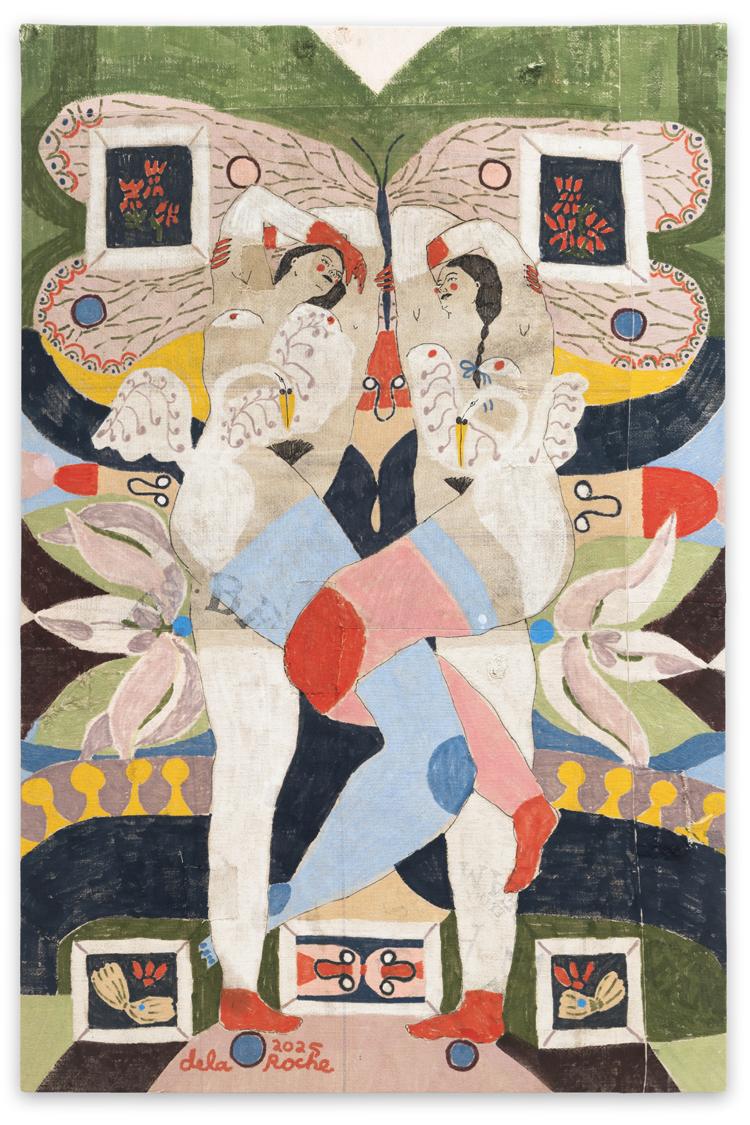
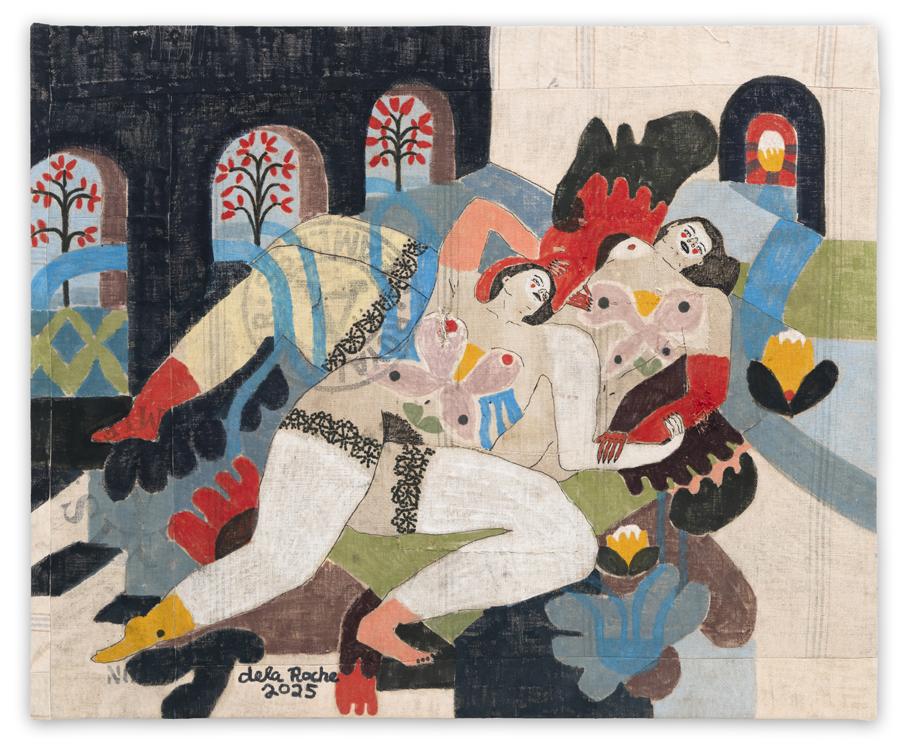
There is an emotion conjured through gesture, line, and color, and there's an innate tension in the space between shapes and colors. I enjoy the process, the struggle, the surprise, and everything in between. I find intimacy within the vulnerability I experience when I am painting or creating, and I think that emotion comes through in a tangible way to the viewer.
Many artists speak about visual influences, but are there writers, films, or experiences that shape your work?
I skipped school for most of high school and hitchhiked to the nearest independent bookstore, where I read Kathy Acker and Jeanette Winterson. I pretty much read all of both of their books at Copperfield's in Sebastopol, California (it's still there). After I quit high school, I discovered transgressive film at the local video store—they had a "cult" section—and I watched everything I could rent on VHS. That was how I found Lydia Lunch and David Wojnarowicz. In my late twenties, I started reading Haruki Murakami, and his writing style had a big influence on my visual practice. He portrays these portals, tunnels, and caves that deeply impacted how I visualize a storyline. I spent ten years living in the woods of northern Minnesota, building a small straw-bale cabin out of materials mostly found on-site. The cabin walls were made of mud, squished and sifted handful by handful through a chicken-wire sieve and mixed with tiny pieces of straw, sand, and goat's milk. The mud was then applied by hand to the straw bales in layers and coated with limewash. It was kind of like building an anthill. That experience really shaped my internal cadence and how I physically approach a project. There's a certain sense of palpability that I apply to anything I do. I have always been driven to learn things my own way, and I cultivate my perspective through experience rather than authoritative influence. I get a lot of dopamine from learning new skills on my own.
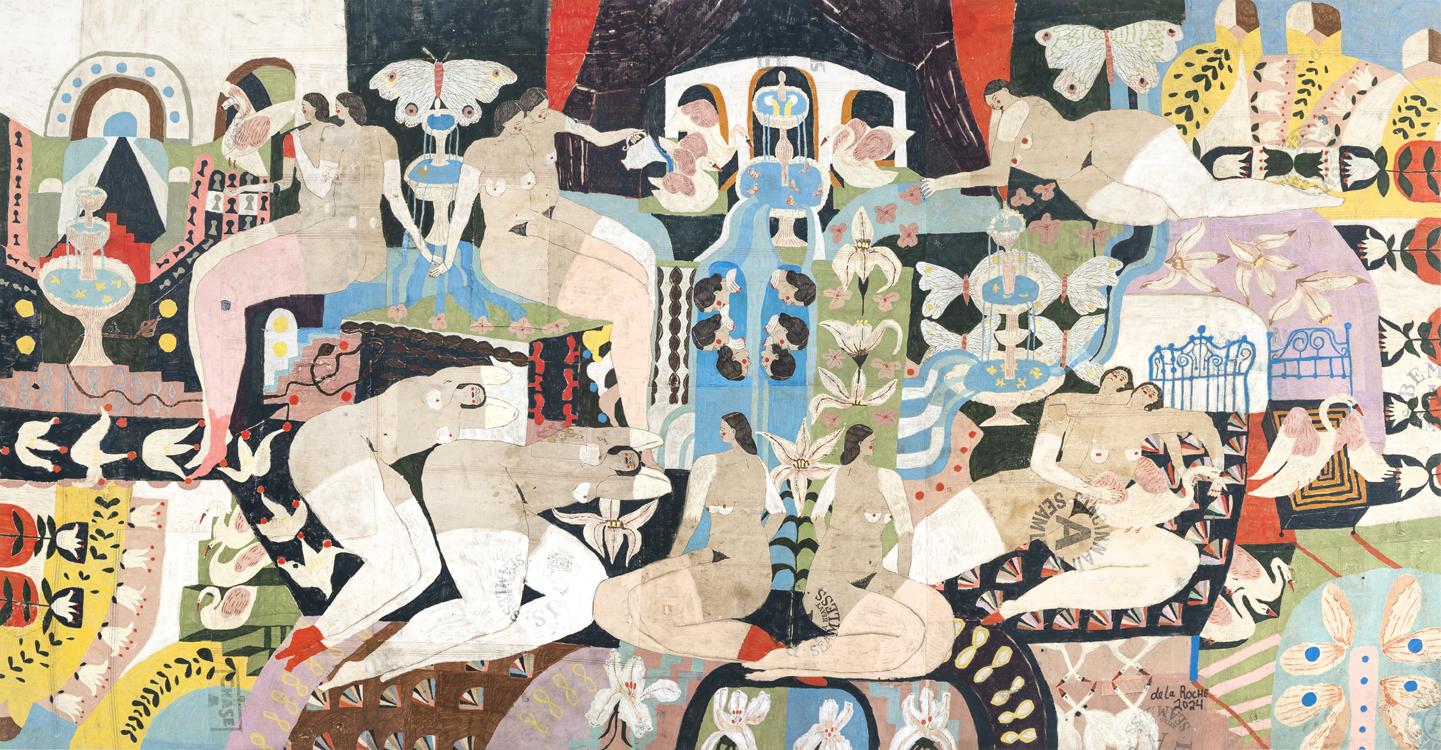
You have a painting called Infinity Pool that is 14 feet wide. How long did it take to complete?
I think that painting took about one month.
Your compositions feel both intimate and distant at the same time. Is that tension intentional?
That distant intimacy is kind of the liminal space my nervous system lives inside. I did ketamine trauma therapy at the beginning of this year, and one of the visuals I had was of a man sweeping the floor of my consciousness to clear away the dust and debris and reveal my subconscious. I think I am constantly looking for whatever that tension between those two planes has to reveal.
What do you feel when you’re deep in the painting process? Are you escaping something or connecting to something?
I am connecting to something. When I was a kid, making art was a way to escape, but now I have worked a lot on figuring out how to connect my nervous system to my physical body. Since I get to choose what physical space I inhabit, I can live in a more lucid state, which means I can be really present when I am being creative. I listen to a lot of storytelling podcasts while I’m working. While part of my brain is stimulated and occupied by an audio narrative, it allows space for my subconscious to connect to my nervous system so my body can feel free.
What is the most challenging part of being an artist?
Deciphering the voices of my inner child and my inner critic. If my internal system is regulated, these voices work as a team and they have harmony. When I get dysregulated, the critic overpowers the inner child, and the playfulness hides. The child is always there, but I have to figure out what makes her feel safe enough to come out again. There are endless external issues to feel activated and angry about, and I strive to stay present and aware. Keeping enough space to remain playful without falling into total cognitive dissonance is part of that ongoing struggle.
Do you create with an audience in mind, or is your work more personal?
For me, making visual art is both personal and voyeuristic. The work exists in a total bubble of my reality until I show it to someone. I don’t allow anyone into my studio—not even my partner. I get to have this really intimate experience with the work and ultimately decide if it exits my personal space. I have to listen to it to hear whether it wants to be seen by others, and I always give it a choice. It's not up to me!
Pablo Picasso once said, "The chief enemy of creativity is good taste." Would you agree with that?
No. I bet Picasso probably wished he had less taste so he could feel freer.
What role does memory play in your practice?
Memory in my work is muscle memory. The more my body knows how to do something routine within the practice of creativity, the more space my subconscious has to act freely within those structures, and the more risk I can take. Muscle memory acts as a framework to work within.
How has the digital world changed being an artist for you?
I am a very private person. At the beginning of COVID, I was starting to get more attention on Instagram for my art, and my reaction was to pull back from sharing online. I kind of took a break from making art around that time to reevaluate my relationship with sharing my work publicly. Back then, I was hustling vintage clothes to make money and had a separate Instagram account for that. I started posting more on that account, and my partner began making clothes out of the old textiles I found. I decided to start drawing on the handmade clothes. That account kind of blew up, and we created a clothing brand that has a really solid following. I think being on the internet has taught me how to delegate and parse the level of intimacy I feel comfortable sharing with viewers.
How do you know when a work is finished?
I’ve never really had an issue with uncertainty when it comes to knowing whether something is finished. The process I use for painting is more about following my intuition about when to step away for the day.
Are you trying to communicate something specific to the viewer, or create space for projection?
I’m always thinking about systems—how things connect, how they affect one another, and how those systems create a storyline. That eventually turns into visual language for me. I think the storyline creates space for the imagery to unravel. I love art that feels like it tells a story that is deeply personal and somehow also universal. That's the secret sauce for me. Books and films are like that too. Once there's an agenda that becomes too obvious, it loses its spark and its connection. Maybe that's my aversion to authority, haha.
What part of being an artist do you struggle with the most?
I struggle with socializing at big events. I love showing up for the work and think it’s an important aspect of supporting my vision, but I am an introvert and prefer to socialize one-on-one.