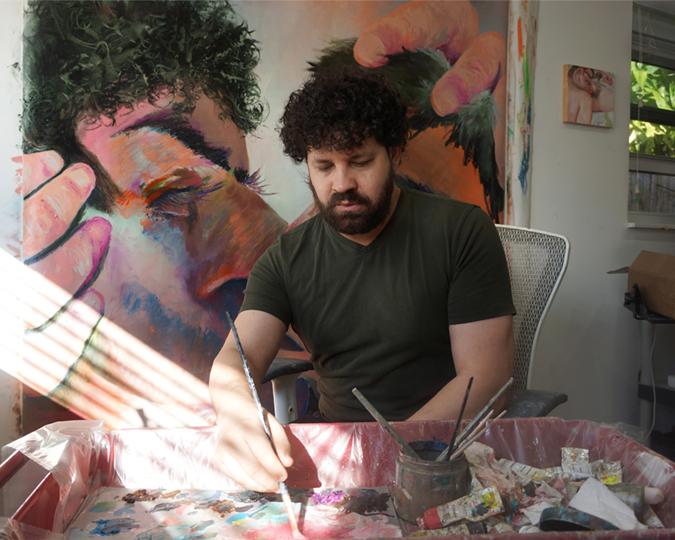
Where do you currently live and create? I’m currently living and creating in Miami, Florida.
Did you have any formal education or training? Yes, I graduated from RISD (Rhode Island School of Design).
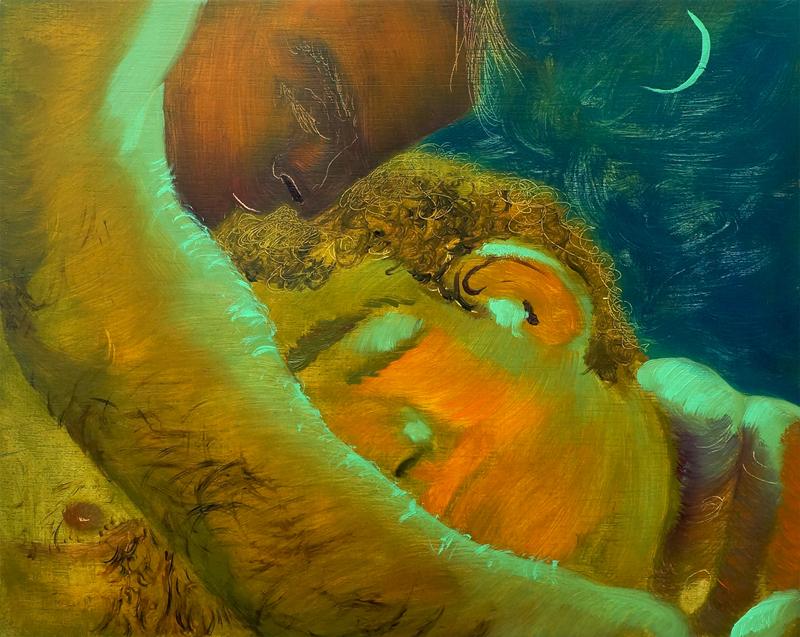
Much of your work seems to explore connection, isolation, and memory. Which of these themes feels most central to you and why? All three are central, as these themes inevitably intersect in life. For example, there were times when I had many strong connections with people and to myself, but as relationships change and people move, this often leads to a feeling of isolation. As I get older, connection seems more virtual and precious than ever. The dynamics shift, and sometimes my own health both mentally and physically can exacerbate those feelings of anxiety and isolation. The cycle continues, and I eventually find myself seeking out and finding new connections again.
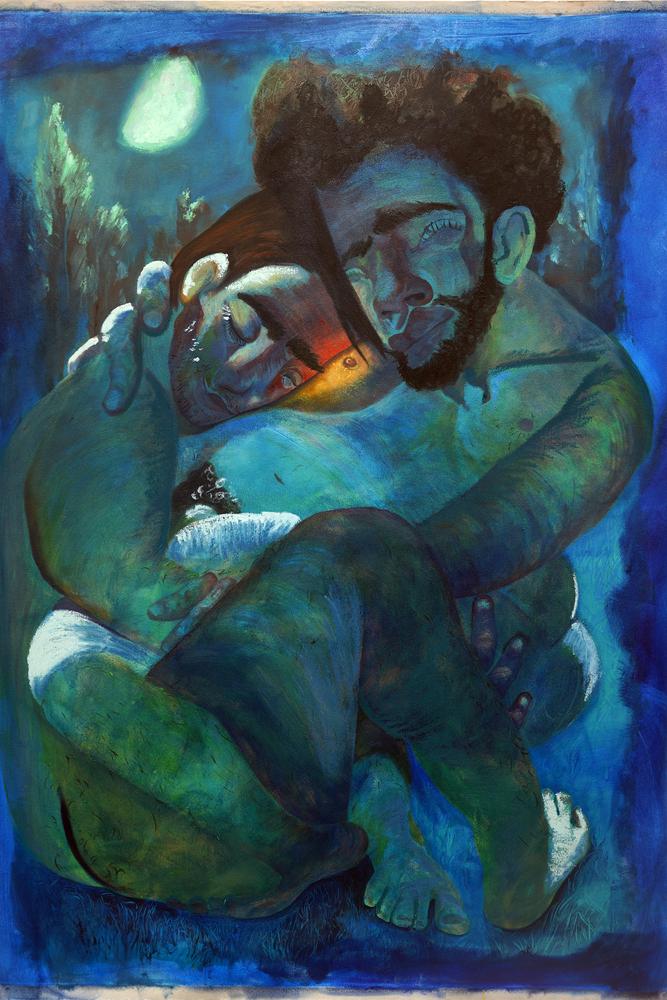
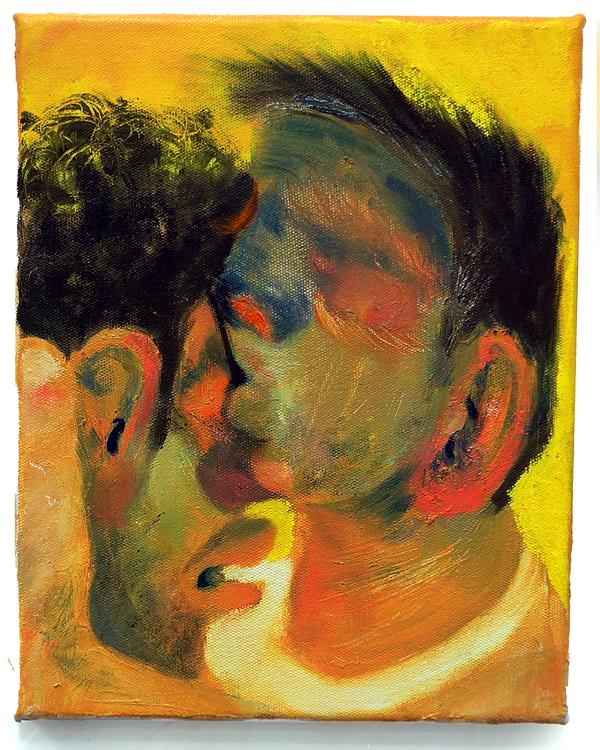
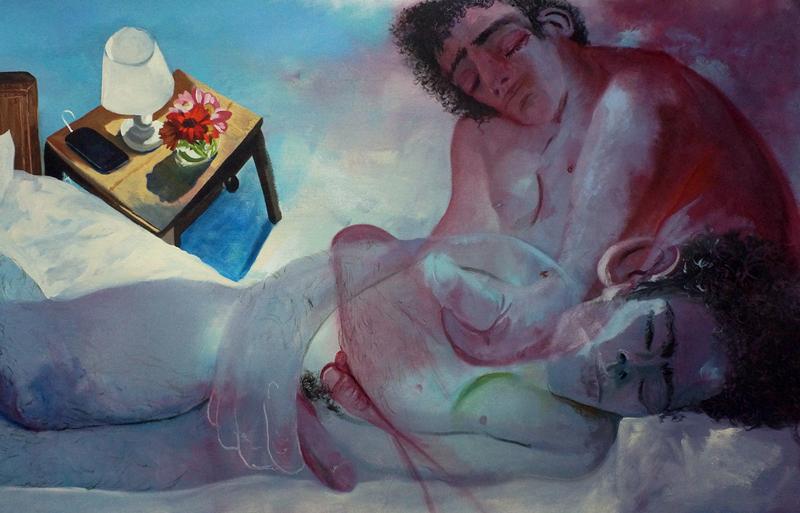
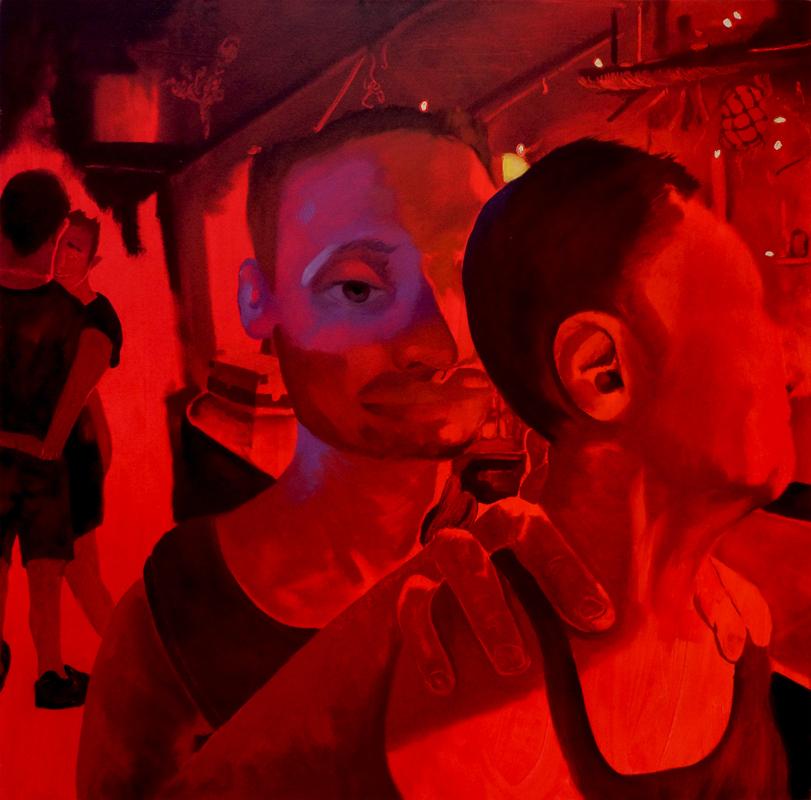
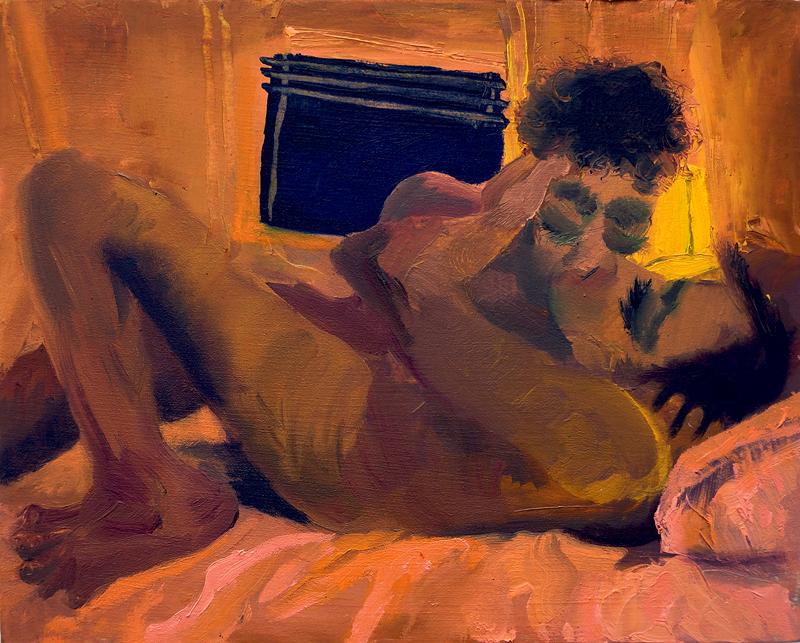
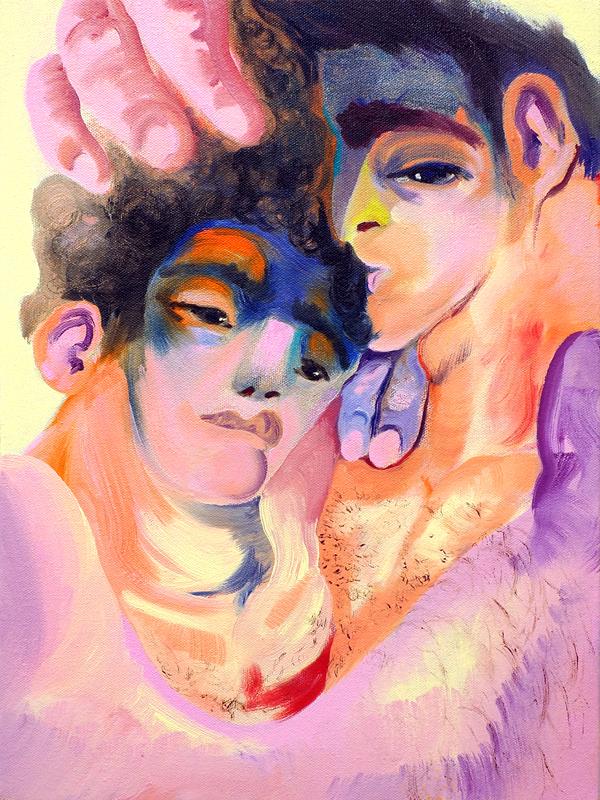
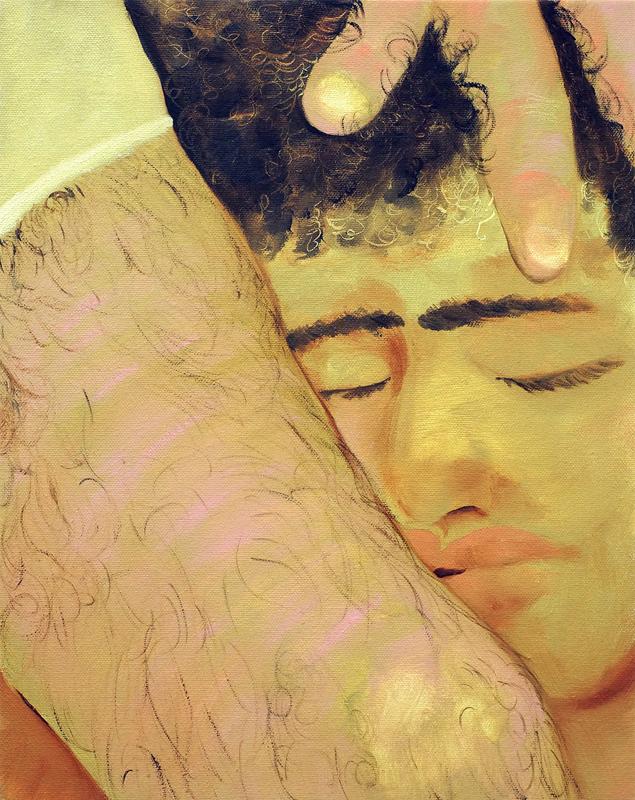
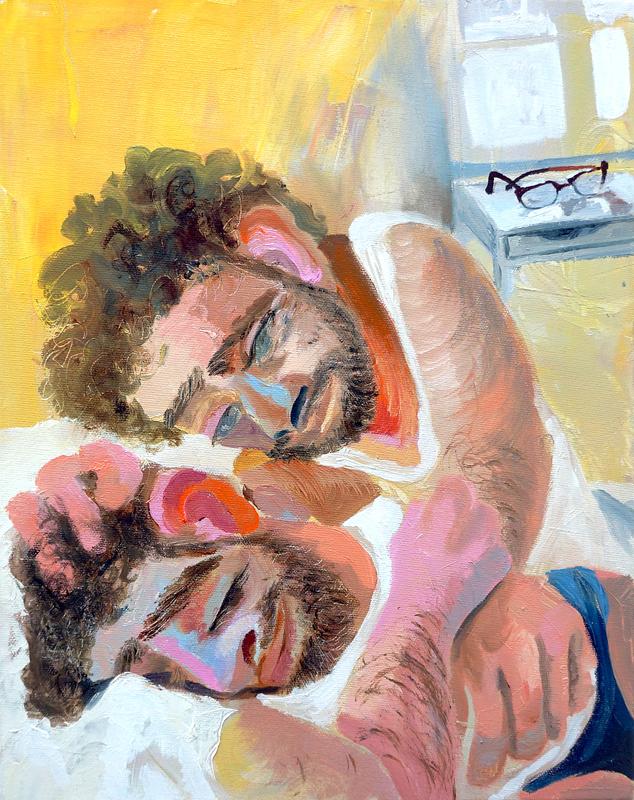
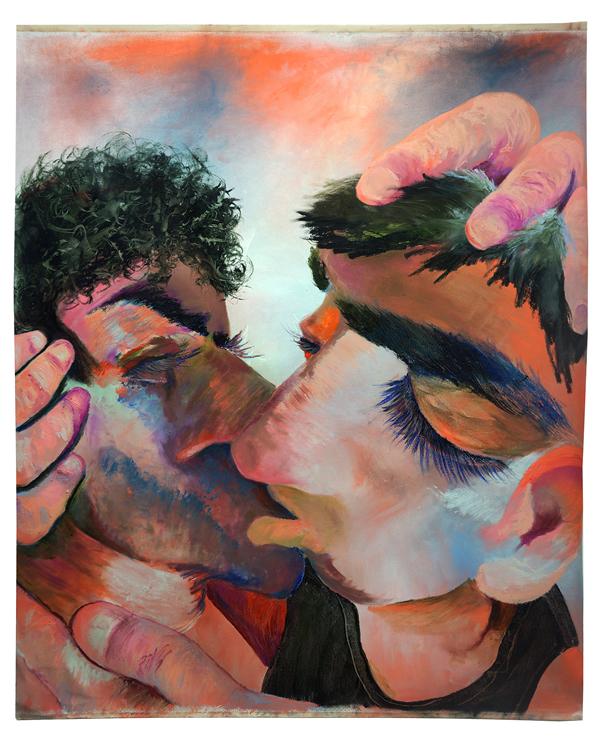
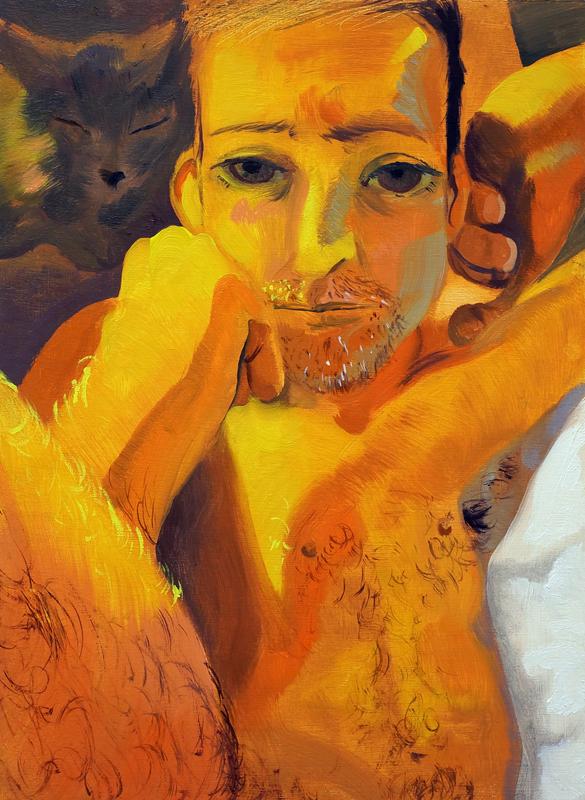
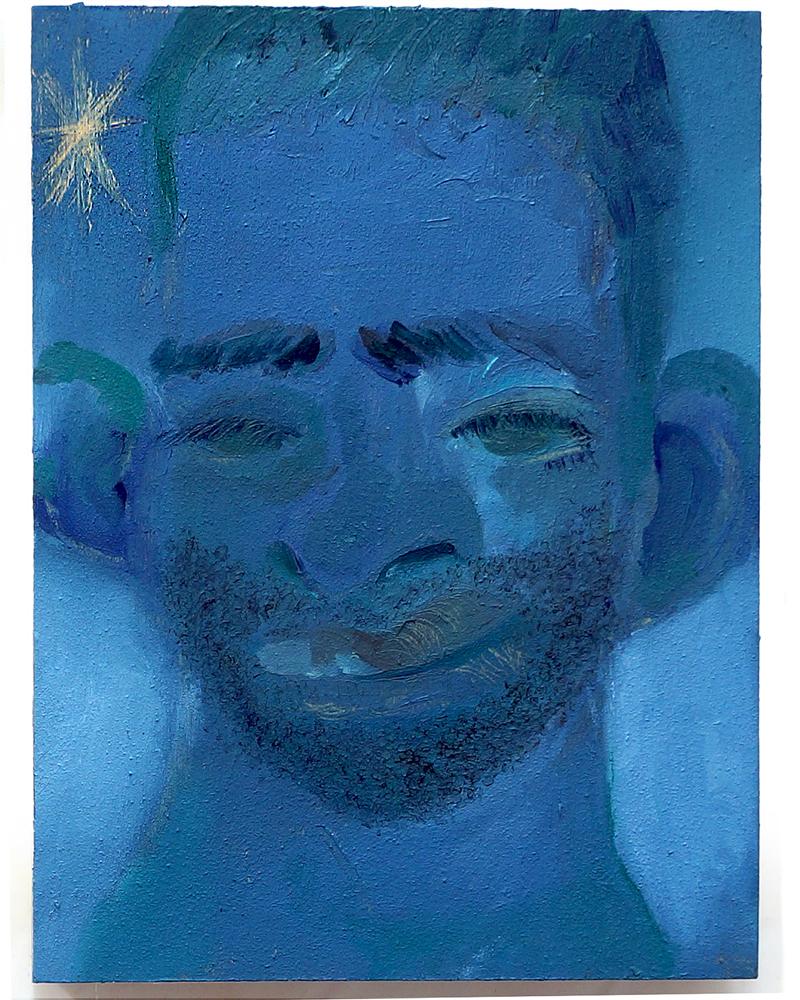
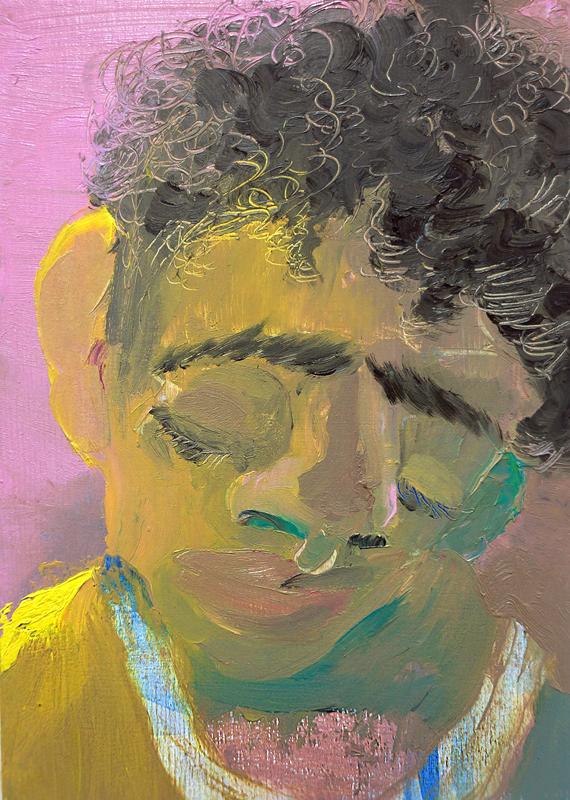
The characters in your works often feel familiar, yet dreamlike. Who are they to you, extensions of yourself, composites of others, or something more symbolic? If you see a character with unruly curly hair, that’s me. Other figures are usually composites and/or memories of others, representing concepts like the ideal partner or fleeting encounters I’ve had that stick with me long after they pass.
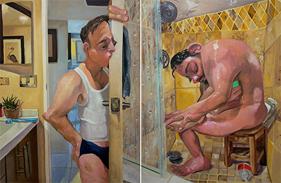
Are there personal or emotional chapters of your life that you feel compelled to explore through painting? Yes, “The Fever,” a diptych, depicts a seminal moment in my life, a moment of crisis but also profound connection. I was very sick, and as I was trying to shower, I saw my partner looking in on me quietly. The way he comforted me through proximity in that moment, when I was completely vulnerable, made me feel safe for the first time in a long time. It was an essential chapter to explore.
Your pieces evoke strong emotional responses. How much does audience interpretation matter to your intention? It’s integral, but I'm flexible. I enjoy when the audience sees something I didn’t notice initially, or when they find themselves in the work and connect to it on an emotional level. If they grasp the emotional resonance of the piece, even without knowing the backstory, it matters. The audience’s reaction is often a good indicator that I was truly listening to myself during the creation process.
Do you follow a daily routine when creating art? I try to, but I struggle; I'm not a routine kind of artist. The gym is crucial, one hour every day. Outside of that, I love watching anime, Judge Judy, reading Reddit threads, and watching cat videos. These things help me relax and focus, which is necessary when creation can be a super isolating activity. I also force my partner to watch Schitt’s Creek and Parks & Rec reruns against his will.
Is there a message or emotion you’re trying to convey with your art? Just be honest. The core message is simple: I can love, and be loved. We can love, and be loved.
What is the most challenging part of being an artist? I think it's remembering to invest in your existing friendships, build new connections, and treat your love life with respect. That person is there with you and helps anchor you when you may find yourself lost. It’s also crucial to remember that this support works both ways; they may need you just as much.
What do you find most rewarding about being an artist? Having the opportunity to reflect on the life I’m living and to manifest those experiences and thoughts in a visual and tangible way that others can potentially understand.
Do you create with an audience in mind, or is your work more personal? It’s more personal because the narratives originate from my own life and perspective.
How do you feel about the role of social media in showcasing art today? It’s a double-edged sword, for sure. I remember when Instagram was a powerful tool to share work and connect with people globally. However, like many other artists, I eventually found myself chasing a self-gratifying algorithm that punished me for not using it daily.This caused a great deal of anxiety. I wasn't allowing myself the freedom to create and go through the “clumsy” stages where a piece can end up being a bad one.Funny enough, it was on Instagram where I saw a clip of British art critic David Sylvester from 1969, who said:Artists must be allowed to go through bad periods! They must be allowed to do bad work! They must be allowed to get in a mess! They must be allowed to have dud experiments! They must also be allowed to have periods where they repeat themselves in a rather aimless, fruitless way before they can pick up and go on. The kind of attention that they get now, the kind of atmosphere of excitement which attends today the creation of works of art, the way that everything is done too much in the public eye, it’s really too much. The pressures are of a kind which are anti-creative.I stepped away from social media for a few years. Now, I try to use it only when I feel it is appropriate for the work.
If you weren’t an artist, what do you think you would be doing? Probably something else my parents wouldn't have understood initially, like an archaeologist or an actor.
The future is......cozy.
What do you hope viewers carry with them after encountering one of your paintings? Something honest and tactile.
If you could describe your art practice in three emotional words, what would they be—and why?
Vulnerable: I can now laugh at myself and my physical traits (like my wide nose, big ears, and curly hair) that I was once made fun of for.
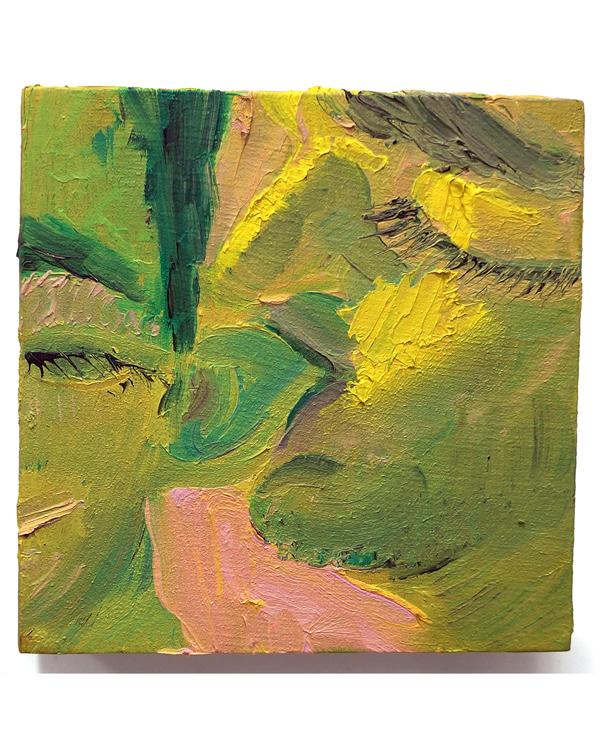
Intuitive: I’ve learned and am still learning to let things evolve as I work, even if they weren't my initial intention.