
1- What first drew you to fashion, and when did it become serious for you? In my teenage years, I often went out with my older sister Patricia. She was always interested in fashion and introduced me to luxury brands and the fashion world. We went together to a fashion show in Vienna, where we met a group of teenagers who told us they studied at the Vienna Fashion School. I became very excited about the idea of studying fashion in high school, so at 13 I started working on my first fashion portfolio, which I later used to apply to the fashion high school in Vienna. I began studying there at 14. After graduating, I wanted to continue my journey and applied to the Academy in Antwerp. I was accepted, moved there in 2015, and completed both my BA and MA. I think I realized it was truly my passion while I was in high school. At first, I wasn't sure whether I wanted to work in fashion, but step by step, as I learned more about the craft and the industry, I fell in love with it.
2- Where do your ideas usually begin, concept, fabric, or feeling? A mix of all three. I think fabric is often a good starting point, but then you begin to feel a certain vibe created through the selected textures and colors, and that's when I start building my story. The girl wearing it, the silhouettes, the location, the makeup, and so on.
3- You attended the very prominent Royal Academy of Art in Antwerp. How did this experience shape your career? My career really started there. From the beginning, I was uploading my work to social media, and luckily my student work was picked up early by the press, stylists, and PR, eventually making its way into magazines and onto celebrities like Lady Gaga, Charli XCX, and Zara Larsson. After my master's degree, I had the opportunity to work at Dries Van Noten before launching my own brand in 2021–2022 while freelancing on the side. The Academy made all of this possible because it gave me the freedom to create, discover myself, and develop my own design language.
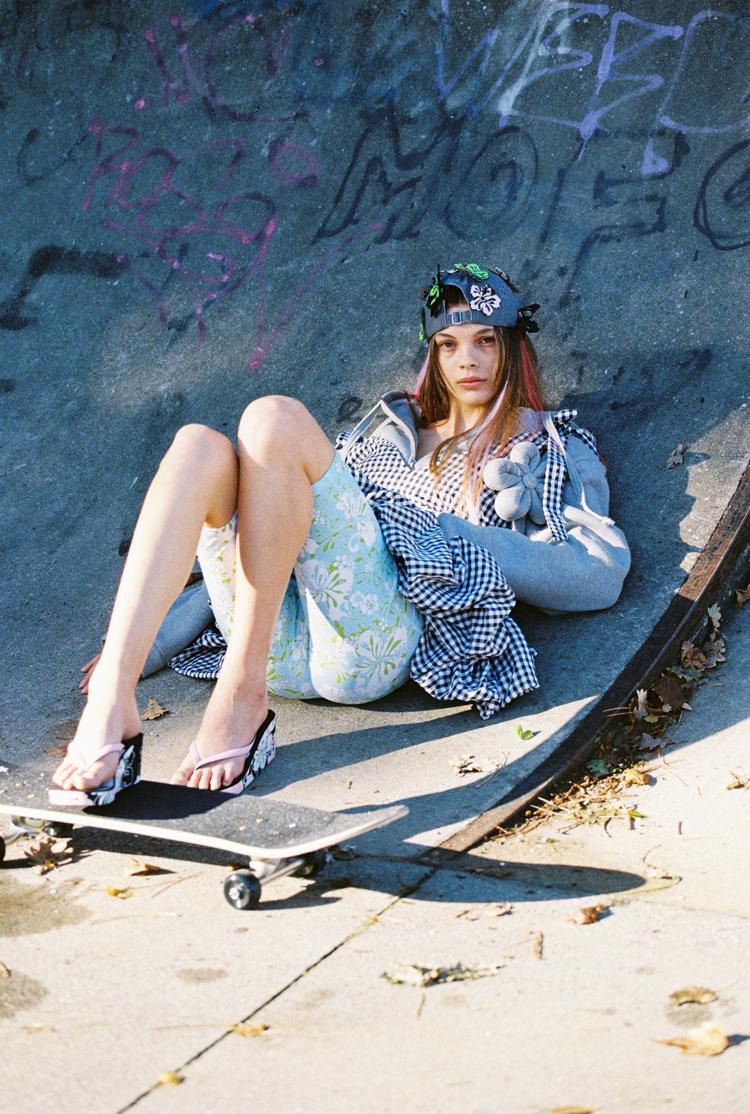
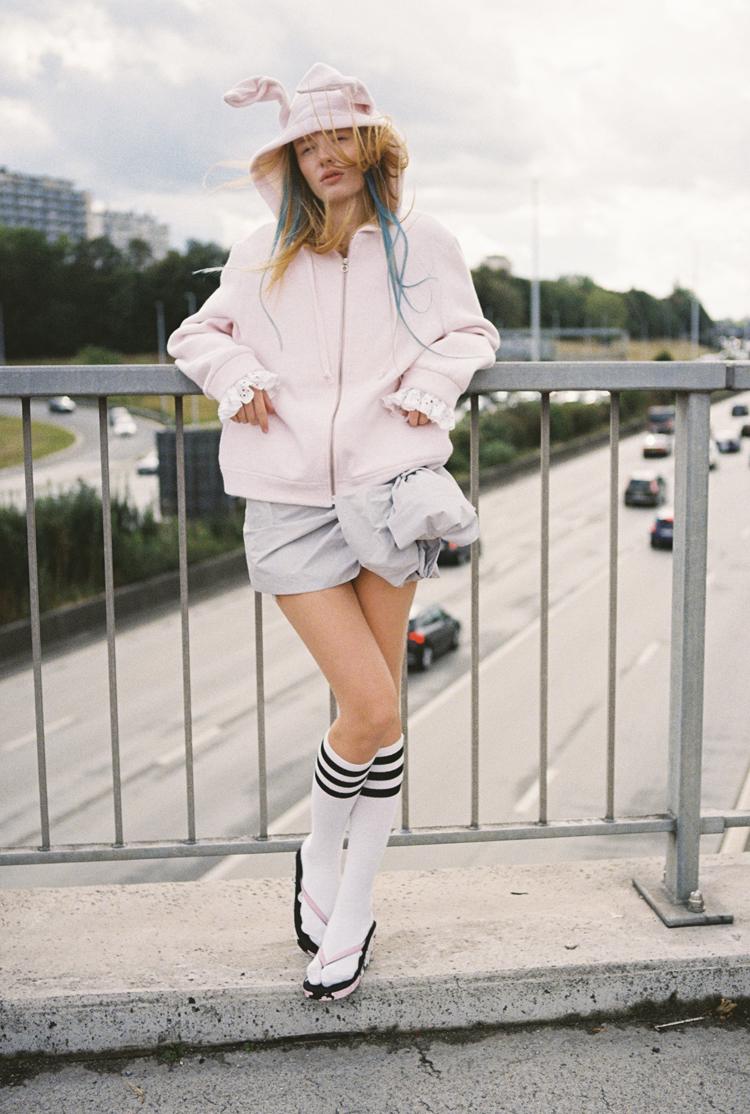
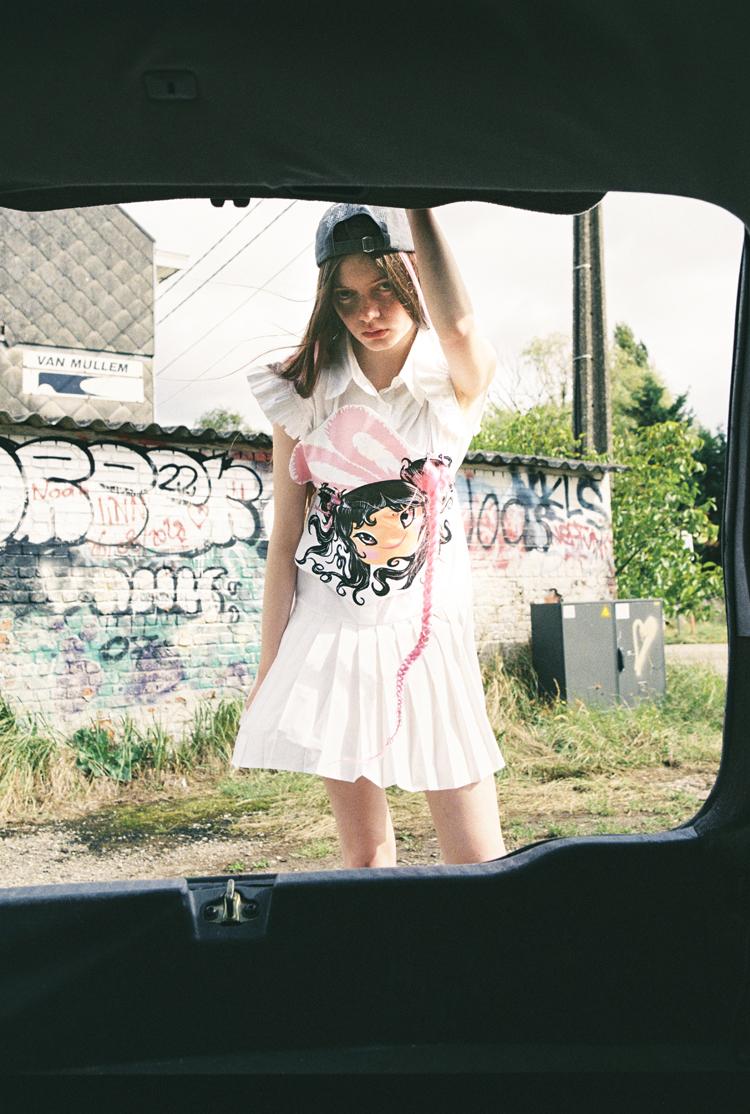
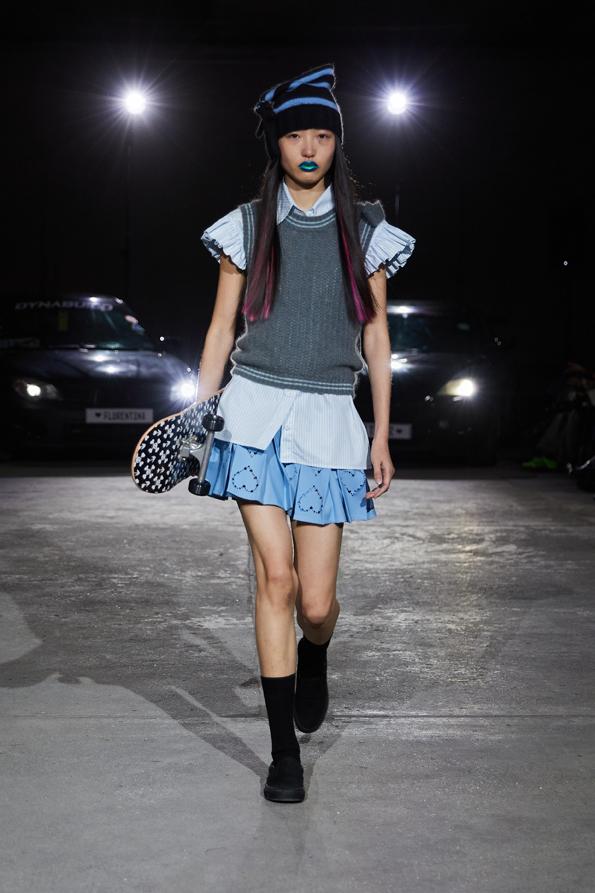
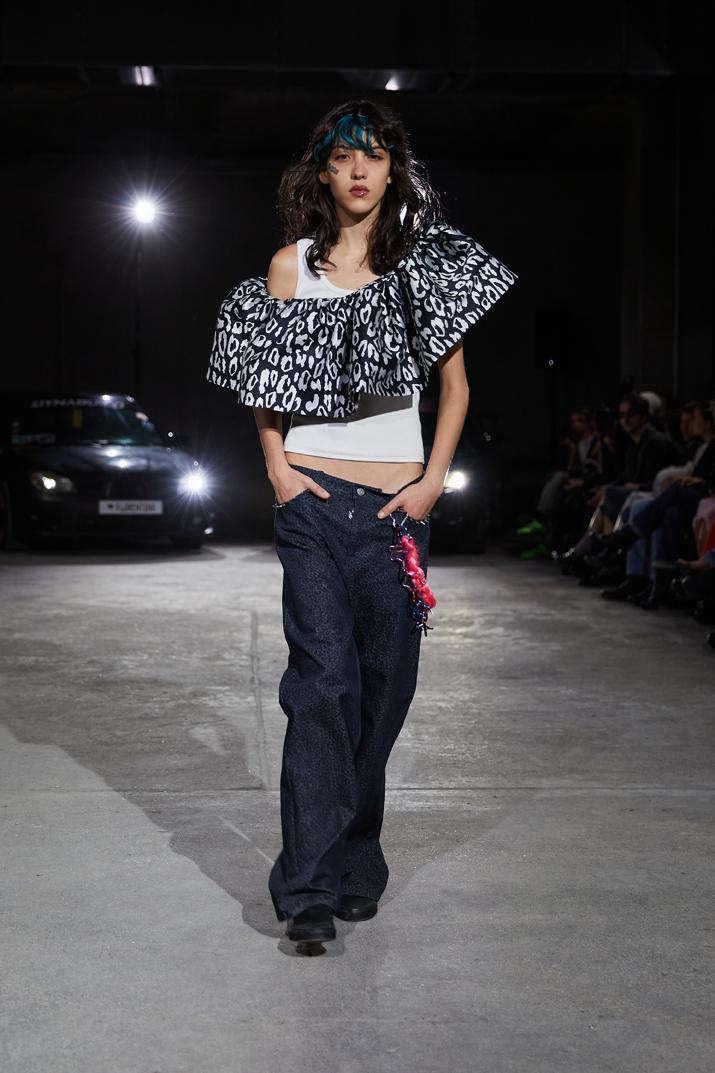
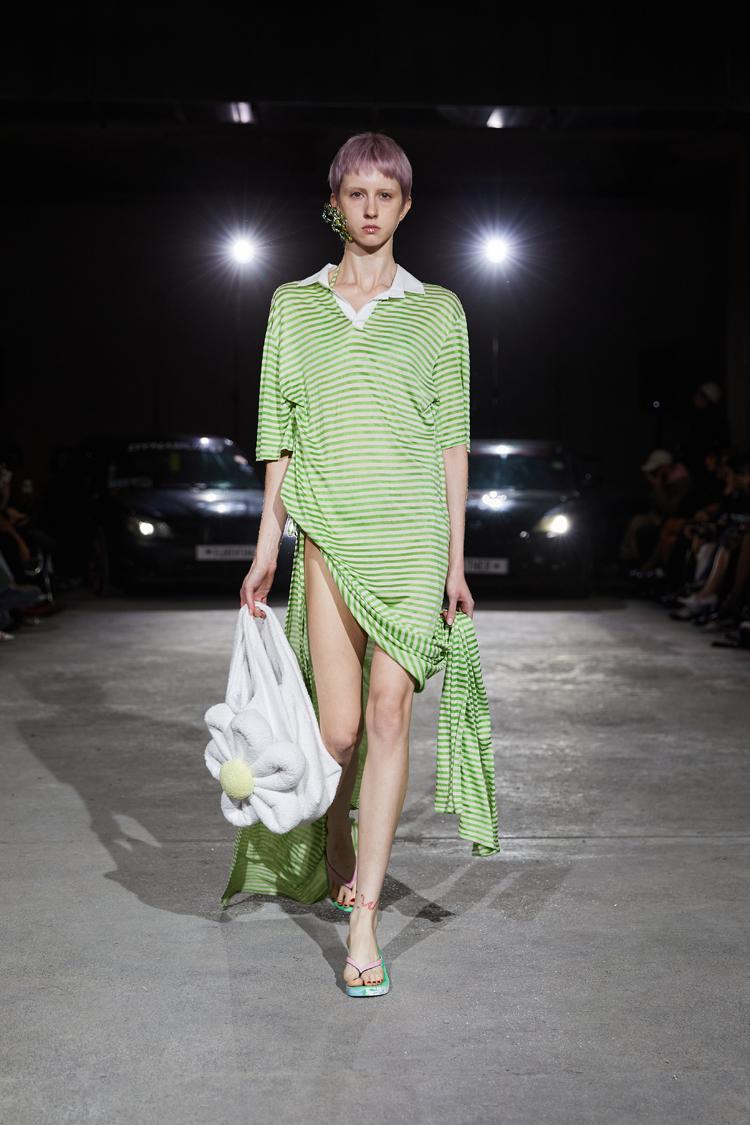
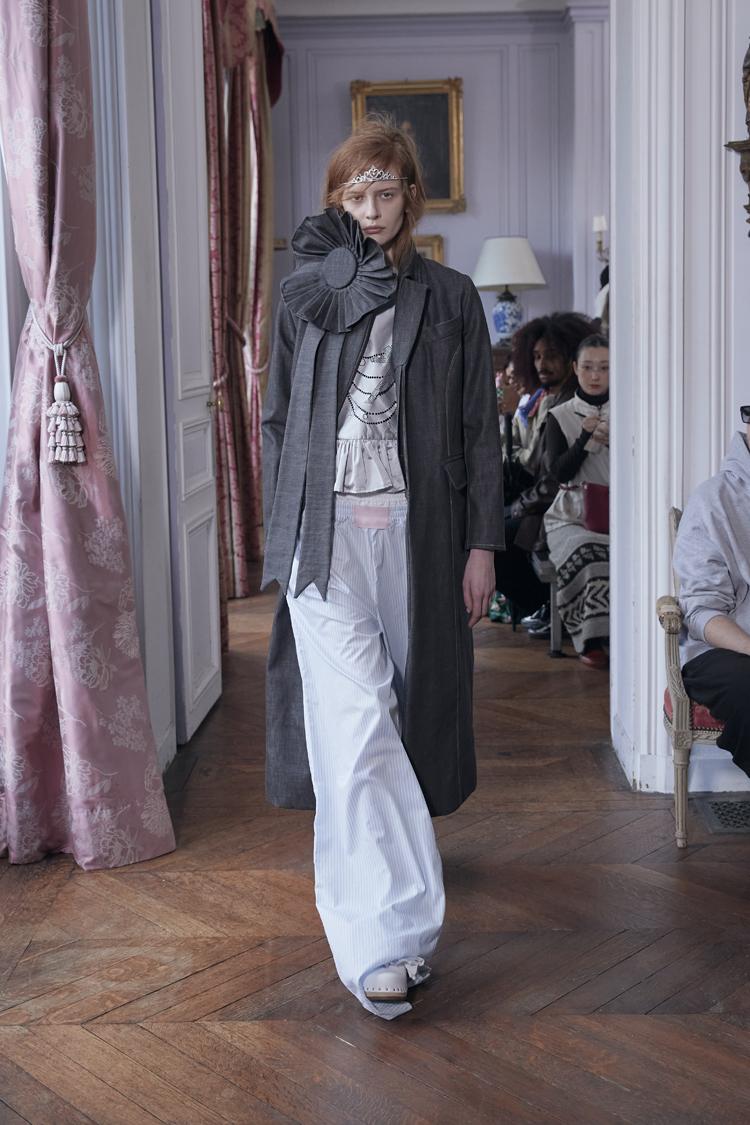
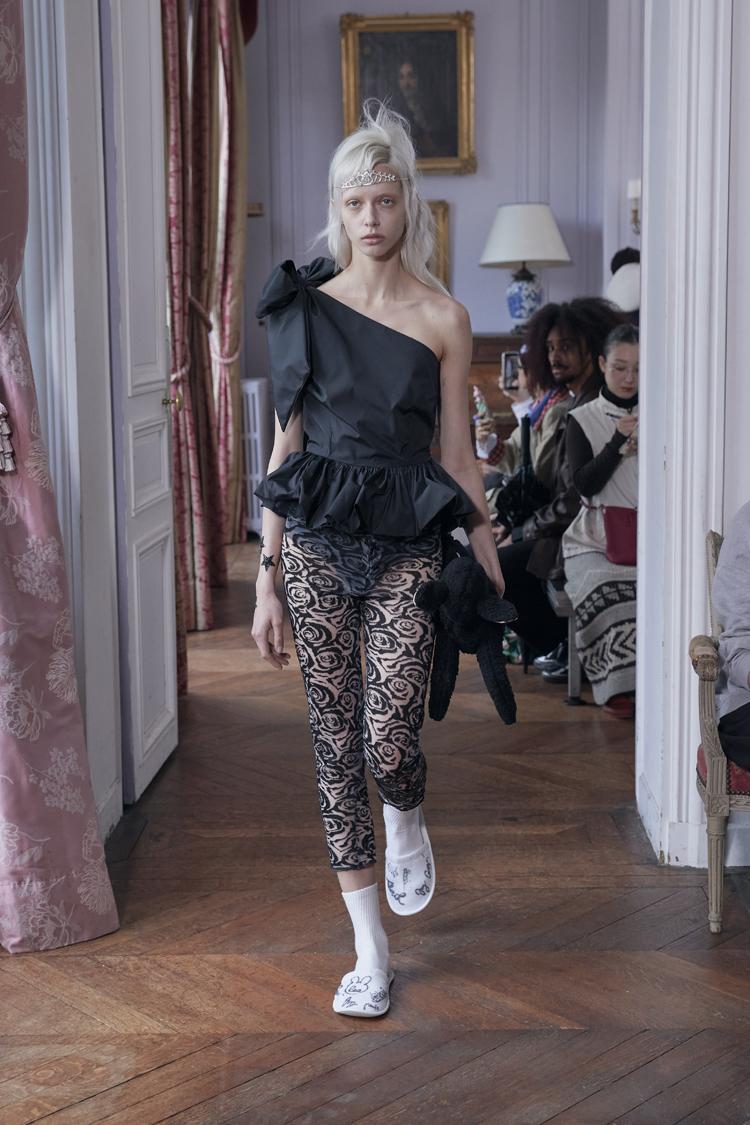
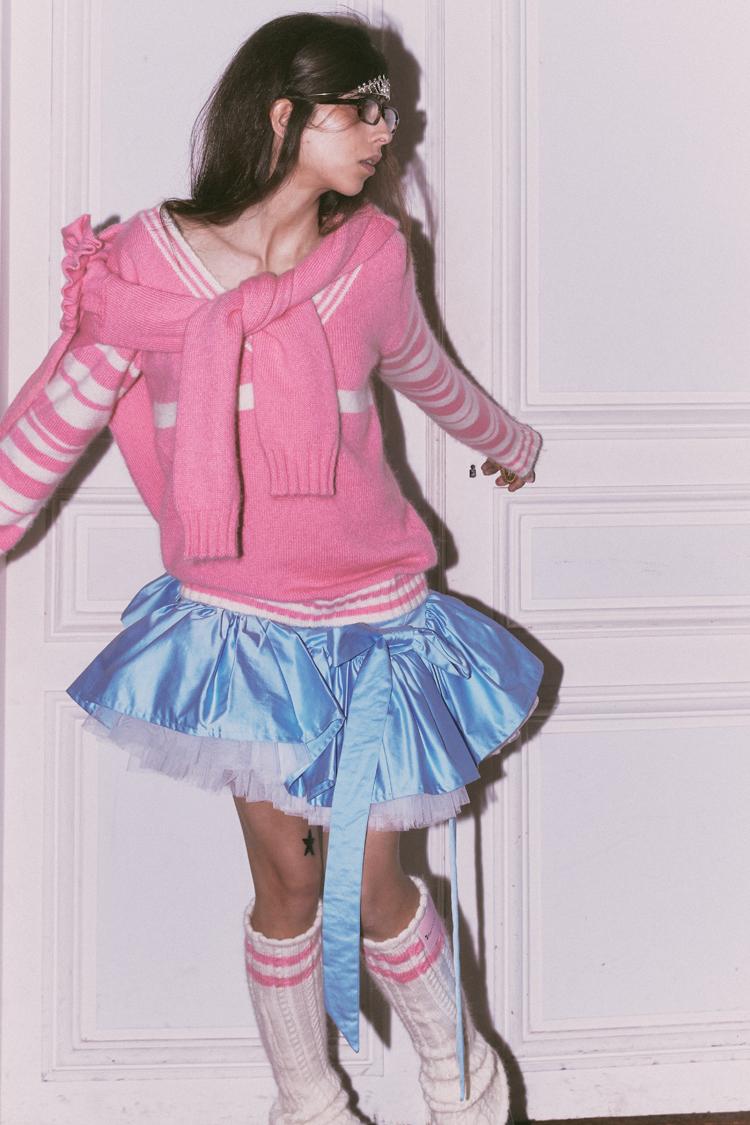
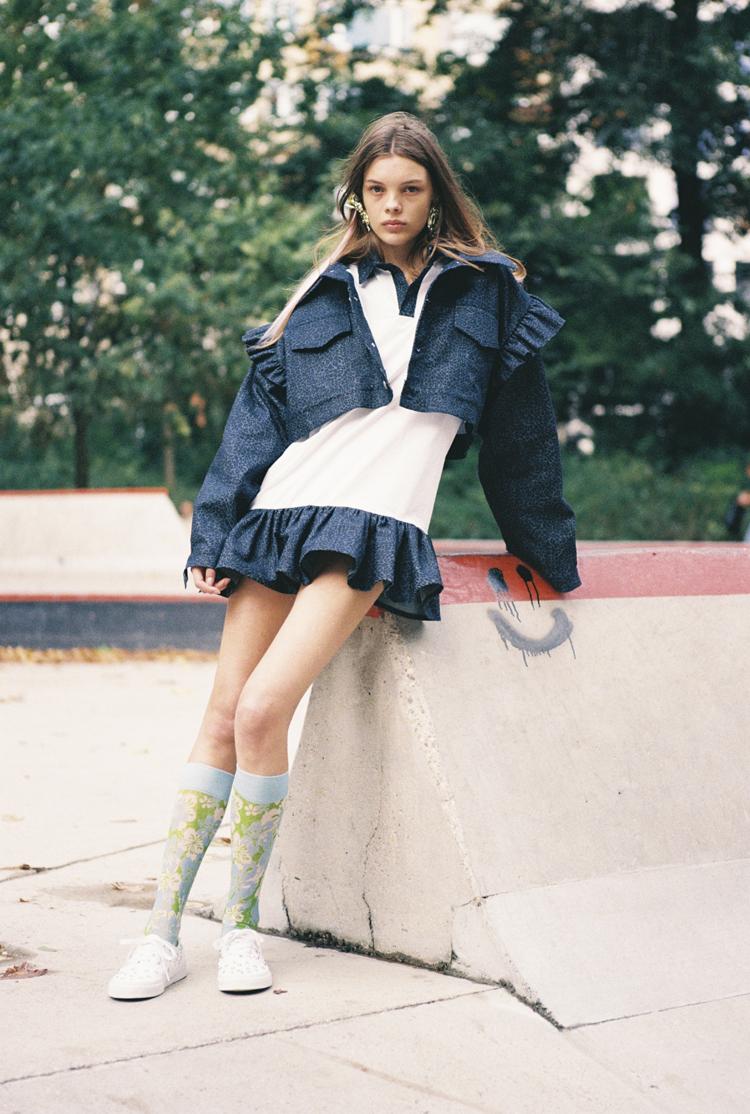
5- Can you walk me through your process from initial idea to finished garment? I try to find inspiration from all kinds of things, we have a mood board with objects I found, flyers I got at Art Expos, old fabric, Prints, images from movies I have recently seen hanging in my office. So I like the chaos in the beginning and then try to find a common thread among things I have collected. I like to have an overall theme. And try to work with products/shapes which make sense in the story we want to tell in the season. We also try to build an identity which keeps on coming back so now after creating over 10 collections already I want to get inspired also by my own work, it is especially interesting for me to look back at my student work and see how freely I designed. Currently I try to have a bit more of a "commercial view" on pieces but I also do not want to lose the playful and bold way of creating.
The garment as its getting stitched is still in the "editing phase" . It might change the sleeve or collar along the way, I like to have fittings as much as possible to change the design when we see proportions that won't work or it still misses a detail or so. When the garment is finished we need to find and create the perfect way to wear it, we have had our stylist Kerry Dorney for some seasons now and we (me and my work partner Max) test with Kerry all kinds of options and pairings to find a look we are most excited with. Then we need to find the right model and setting to show it to our end client via photo shoots or shows and finally the garment hopefully gets sold and worn a lot of times in someone's life.
6- Your design for a certain age group is this because you can relate to the age group or is there another reason? I don't think I design for a specific age group. The brand was picked up in Asia, especially in South Korea, by K-pop stars, who are generally younger. That wasn't intentional, and I never specifically targeted a younger audience. I'm always happy when older clients want to wear and buy the brand as well. I turned 30 this year, and who knows—maybe the brand will grow with me. But I believe fashion should be fun at every age.
7- Do you feel pressure to have a “signature style,” or do you resist that? I think a signature style develops because people genuinely enjoy wearing it. Luckily I like our signature styles but of course sometimes you want to start all over with new fabrics, themes and patterns, however as a young brand that would not make sense, as it can confuse our clients. I think it’s important to have a clear signature styles to come back to in the bigger picture.
8- Art is a form of personal communication. What are you currently trying to communicate through your designs? Floral, Feminine, Fantasy, Fashion. I enjoy creating a story you can see and buy in stores in the form of garments and make it part of your own story.
9- What has been the biggest reality check since entering the industry? That it's not always easy and that not everything is possible. Sometimes you have to cut budgets. You need to focus and spend your budget wisely. Many people will tell you what's right and what's wrong, but in the end I think you also have to trust your gut feeling.
10- How do you balance creativity with the business side of fashion? I think they are very interconnected. I enjoy creating but if I would only be designing I would miss the strategy and business part of it all. If you are a great designer but can't build an e-shop, manage production, or lead a team you will be better working for a bigger brand but I always enjoyed organizing and arranging all kinds of things so luckily I am still enjoying both sides.
11- What challenges do young designers face that aren’t talked about enough? Production is probably the biggest challenge. First, you have to find the right production partner, and then you have to deal with very high manufacturing costs because you're often unable to meet minimum order quantities.
12- What role does culture or cultural responsibility play in your work? Our next collection highlights my Austrian roots and the country's traditional culture. Most of my inspiration comes from my own experiences and the things I've lived through.
13- In your view, how has social media affected fashion? It has helped me enormously by giving my work visibility. At the same time, I think it's easy to become overwhelmed and bored by the constant stream of content that's pushed in front of you every day. Still, I believe it's an important platform for discovering and connecting with like-minded fashion lovers.
14- How important is sustainability in your practice? Very, that is why I also prefer to grow sustainably step by step and not order in crazy masses and then sit on stock from seasons ago which devalues so fast in fashion. Me and my team try to recycle a lot of materials in our studio from old seasons and produce/order only what is really needed. We also work mostly with dead stock materials when ordering new fabrics.
15- Have you developed any techniques that feel uniquely yours? Overall, Florentina means "flowering," so our puffy flowers and laser-cut flowers have really become part of the brand's identity. They're techniques we've continued to develop over several seasons.
16- What keeps you motivated during slow or uncertain periods? My boyfriend, my friends, my family, and my team—they're the people I call whenever I'm stressed. I also think having a positive attitude helps. There's no better feeling than receiving an order through the e-shop, a request for a new project, or seeing someone wearing one of your pieces and enjoying it.
17- Has your relationship to fashion changed since you started? I've become less of a consumer myself. When I stop working, I prefer spending time in nature and being offline rather than browsing shops or the internet for new clothes. I'm also lucky that I get to wear my own designs, so I don't really need to shop as much. I've come to value time away from work more and more because that's when new ideas emerge and I can breathe between stressful periods.
18- What does success look like to you? Being happy with yourself and your work. Fashion—and life—moves so quickly that you often forget to look back and appreciate everything you've achieved. For me, success is someone who has goals, not necessarily someone who has already achieved them all. Simply figuring out what you want to do with your life is already a great success.
19- What do you want people to feel when they wear your clothes? I hope they feel protected, cute, cool, and happy. But I think it also depends on which garment they're wearing.
20- What does fashion allow you to express that nothing else does? Fashion allows me to create something that continues its journey on someone else's body and through someone else's life. I can sell a garment to someone, and that person will wear it, show it to others, and give it an entirely new story. I love seeing garments come to life through the people who wear them.
