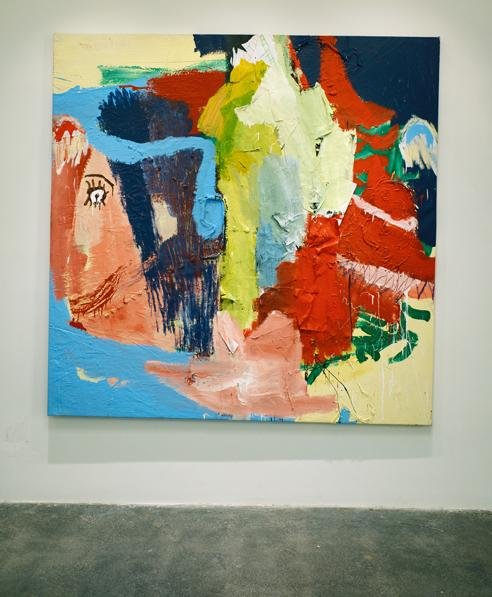
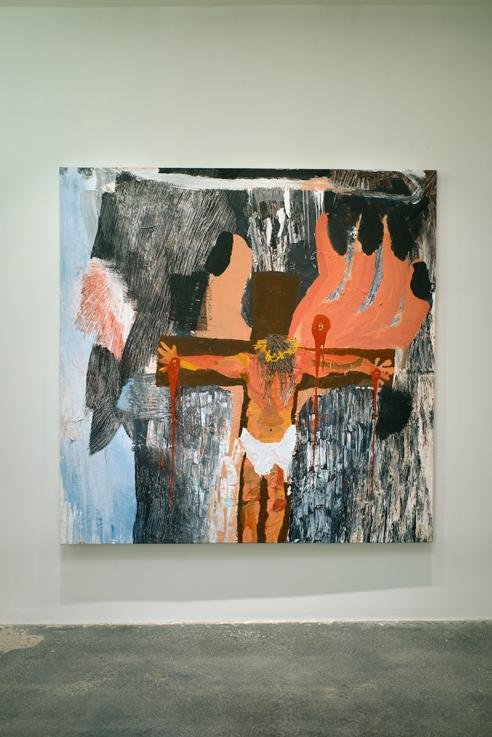
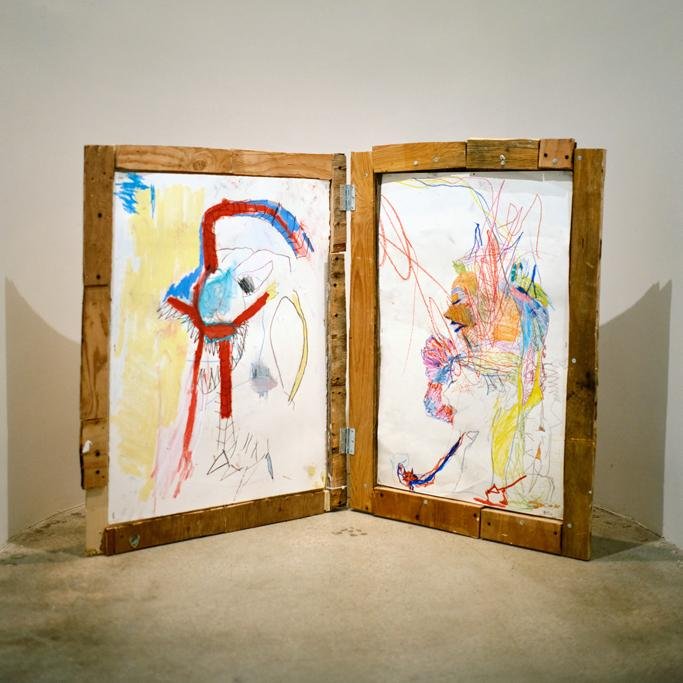
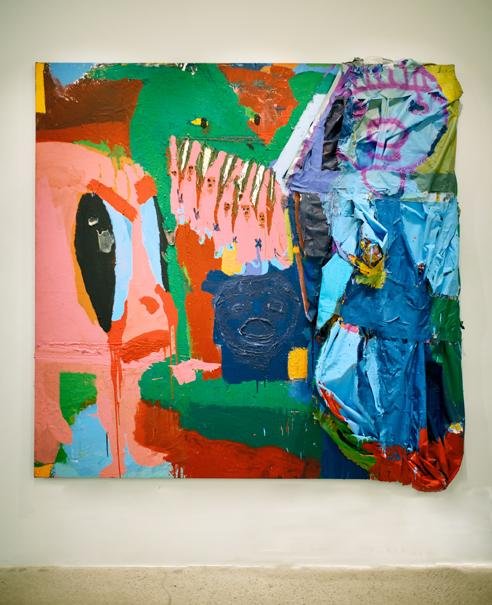
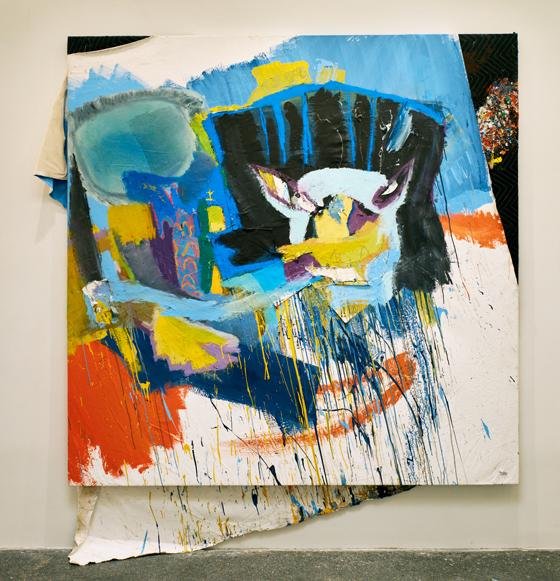
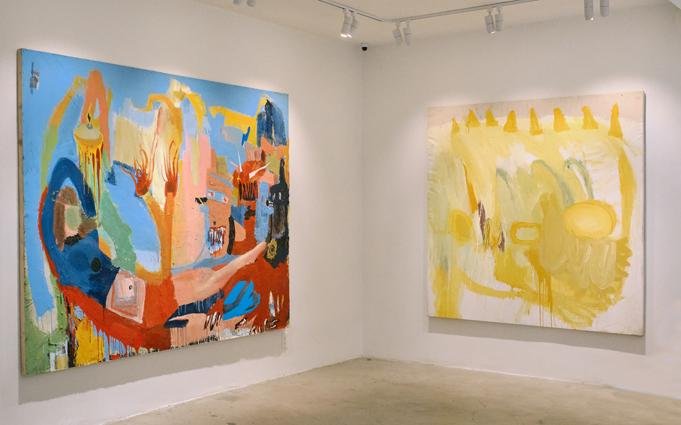
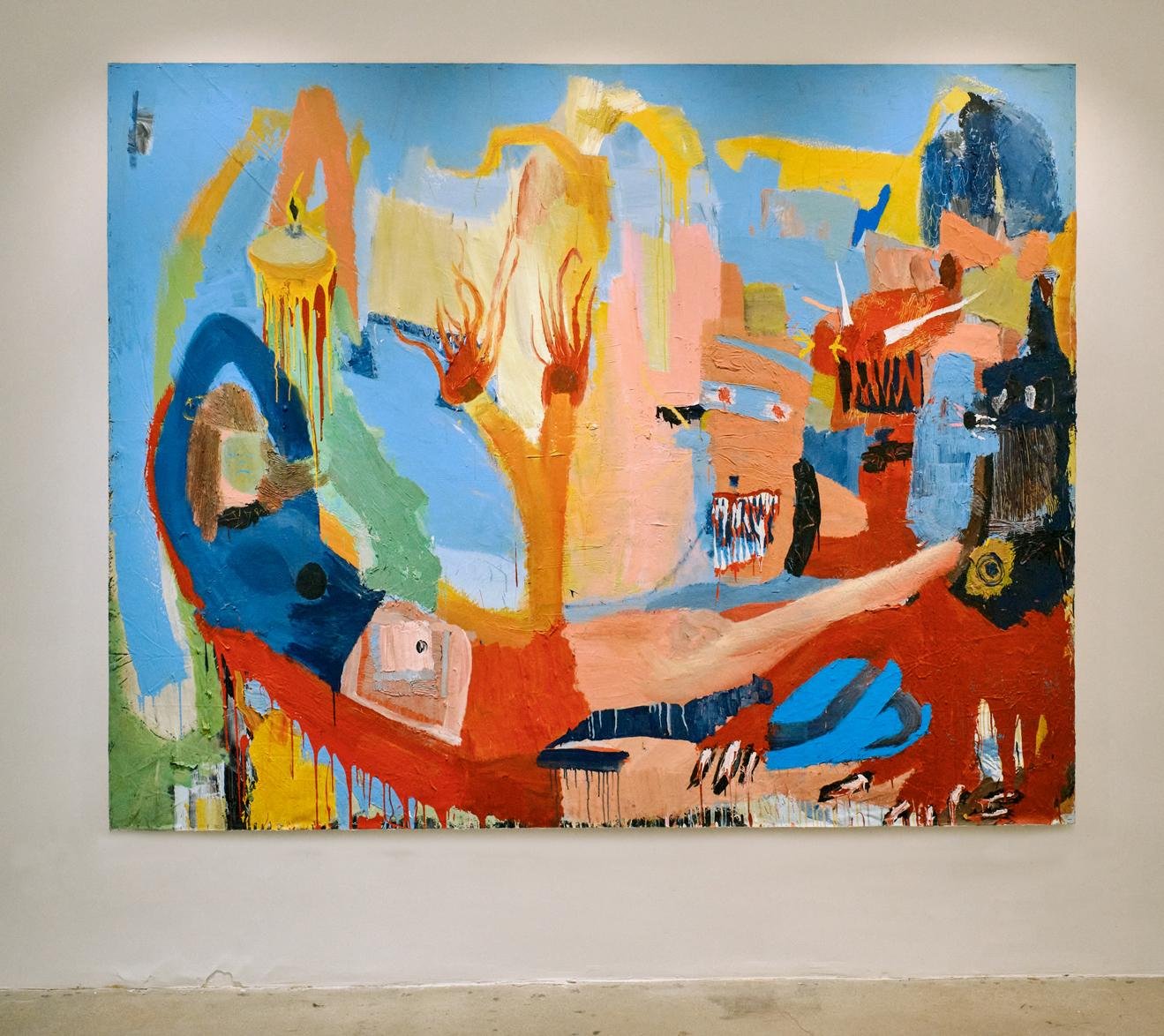
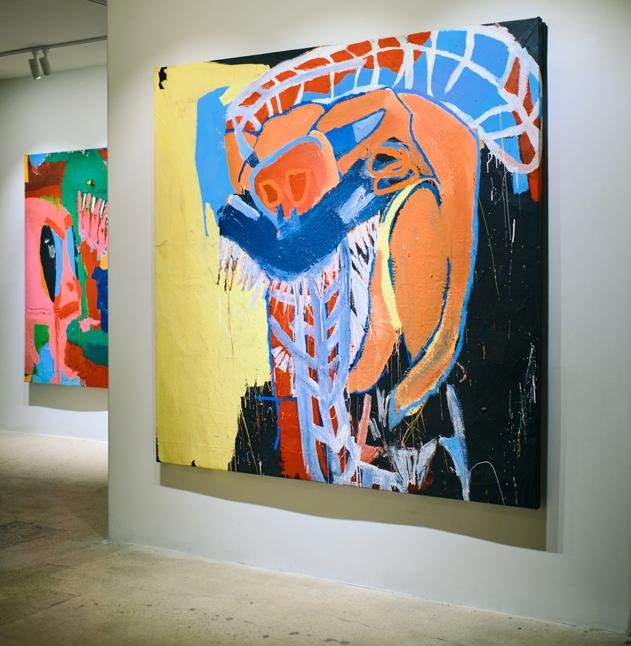
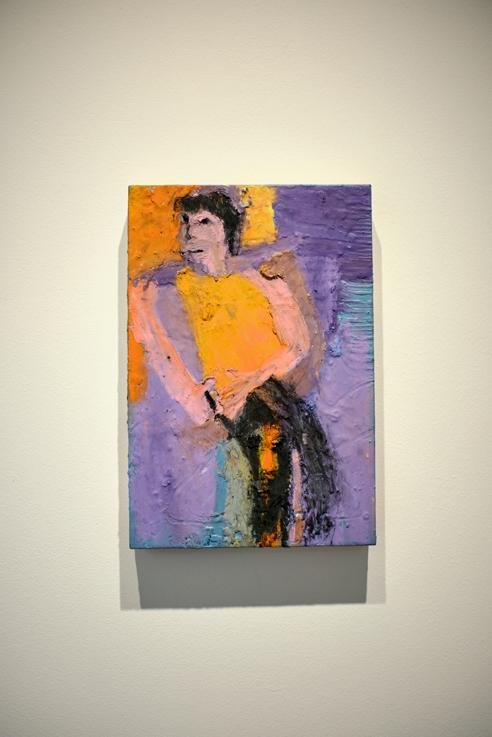
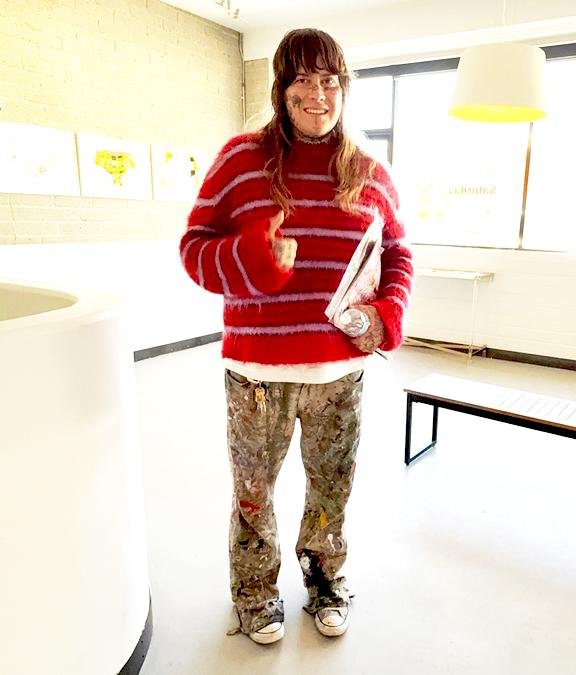
How would you describe Sandy Kupfer? A very swaggy, forward thinking, authentic, queer, silly, sensitive, emotional, and caring human with a big heart that hurts too much. Sandy is overwhelmingly obsessed with creating art.
When did you start making art, and when did it become your work rather than a pursuit? I was drawing nonstop since preschool and it has been that way since. At 15 years old painting found me and that artistic practice consumed my entire life from that point forward. I mostly hustled and worked various random jobs in high school and college. By the time I attended my MFA program tattooing became my main source of income. For years I have been presented with freelance artistic opportunities and get to do collaborations with legitimized brands. I used to lead art therapy groups in detox centers too. My paintings sell fairly well for where I am at, and I have other hustles on top of all that. Whatever I need to do so I can paint as much as possible.
What does a typical day in the studio look like for you? My studio is a sanctuary and sacred space to me called Paint City. Paint City is designed to be a space where I can get extraordinarily messy with my daily painting practice, so it is very free and embraces organized chaos. My practice is founded on long hours of energetic painting with longer moments of stillness and contemplation on works.
Do you think your work reveals things about you that you don't consciously know? Always. The work is ever-expanding contextually. As you grow so does the work, even if it has been finished for years.
What is the source of inspiration which feeds your creativity? I do not have the capability to credit the countless inspirations who have moved me and informed my practice. There would be thousands of artists' and thinkers' names. And take up at least an entire page. Metaphorically my creativity is a singular spindle of a spider web I am stringing on the many spindles of my predecessors, my greats, and my influences whose spindles makeup the majority of the web. These artists are all in communication and I am in communication with them, and them and I will be in communication with the future generations.
What emotional state produces your best work? Any honest state of emotion will produce my best work.
Where does a piece begin: an image, a material, a feeling, a problem? A piece begins as a metaphoric itch which I cannot resist scratching. The action of me scratching is me creating the artwork which is a direct response to the influence (the itch).
Has your palette or technique changed noticeably over time? My stylistic approach has become less crude and more intentional over time. At this point the perceived mistakes are majority deliberate and the mess is intentional. A singular mark made that looks enigmatic and impulsively done in a rush may have taken ten hours.
Has a limitation or a mistake ever led to something you loved? It almost always does if you let it figure itself out, with you as the channel and witness. The largest example of this is my tattoo stylistic approach results from me not having a steady hand.
How different is the person you are in the studio from the person people meet socially? I am always me and that is a blessing and curse. Sandy in Paint City is fortunate to be alone and painting in a frenzy. This stylistic approach of creation inherently means there is vulnerability and authenticity. When I am with other people who are not in my close-knit circle I have much more discernment on allowing my vulnerability to be elaborated on. Authenticity is forever a state of being for me, for better and worse.
Do you believe as an artist you have a responsibility towards your audience? As a human I have a responsibility towards humanity.
What role has love played in your creative development? False love has motivated me to transmute the immense betrayal and pain it caused me into lots of exceptional artworks and learned more tenacity and strength. True Love has revolutionized and uplifted every single aspect of my creative practice, life, and soul. Unconditional self love has allowed me to become my best artistic critic and the main rock in life and most of my life is spent in the studio. LOVE has allowed me to bring spirituality and God into my heart, art and life and awaken to the belief that my creative practice is not truly only mine.
Where did “I Love Life” come from, and why is it the phrase you’re building around? True Love is the antidote for existence. It is the one way to experience real lasting connection to yourself, others, and the higher realms. I Love Life is a statement that speaks to me as a singular individual who accesses love as a conduit to connect to something so much grander than my own self. Essentially it speaks on the liberation love of life, and love of everything living, offers us. This form of love is unconditional because of the fact that life is consistent with immense suffering always.
You have a book “I Love Life: Vol 1”, tell me more about it? This book is a collection of hundreds of tattoos, drawings, and poems I created from the early years of my tattoo practice. Having the works accessible to viewers beyond the constraints of social media was the primary reason for “I Love Life: Vol 1”’s publication.
What did success mean to you when you started as an artist, and what does it mean now? My success is founded on internal recognition of growth and development in my practice as a serious artist, rather than prizes from the external world. I learned quickly that allowing the external accolades my art receives (or does not) and the opinions of “important” people has dismantled my agency creatively and given those forces too much power.
Do you work on multiple pieces at a time or one piece at a time? I always work on many paintings at once. I have too much energy to dedicate to one singular work. I tend to them like a garden with an expansive assortment of plants. If I just had a singular flower I would water it to death by accident.
What are you curious about that you haven’t explored yet? Painting as large scale as this specific Cy Twombly painting I saw in Houston’s Menil collection when I Was around 18 years old. I would go and witness it all the time when I was in Houston. This work changed my life. It must be hundreds of feet in width and diameter.
Do you think of your paintings as narratives, observations, or something else entirely? My paintings are direct investigations of archetypes, the process of pushing paint, thought, and emotion. They are really speaking to a conversation much larger than any of those experiences investigated though. The aim is to directly acknowledge universal topics and discussions through the process of painting about things I am familiar with. As Above, So Below.
What risks have been most important to your growth as an artist? So so so many. The most life-altering risk was to get sober after relapsing for years. I then truly committed to getting healthy, individuated, and well. The tortured artist archetype is mystified and glamorized by too many young artists. It ruins so many of their lives. This risk permits the most growth because I am directly positively impacting people’s literal lives by simply being committed to growth, positivity, tenacity, and sobriety. This grew me as an artist because it made me aware that the only part of my artistic practice is the actual practice of creation. Selflessness, curiosity, open-mindedness, and upliftment are the best waves for growing as an artist and human.
How do you know when something is finished? It’s a feeling, not a thought. Through immense trial and error, mostly error, you begin to hear that feeling more and you learn to listen to its soft guidance on when the work is finalized.
What’s coming in 2027 and beyond that you’re most excited about? Make masterpieces, fail, pain, ecstasy, growth, decay, and an absurd amount of artworks and adventures. Also more than I can guess. I do have actual artistic endeavors in the works, but surprises are better.