
1. Where do you work and create currently? I live in Fort Collins, Colorado, a university town right on the edge of the Rocky Mountains. It’s a beautiful, easygoing place to live and work.
2. Do you plan your paintings, or do they unfold organically? I’m much more on the organic side. I’ll often start with a formal idea I want to explore, and that guides me through, but what the finished painting will look like is almost always a surprise. I might try out an unusual limited palette or paint a motif that is constantly changing. These formal investigations build from one project to the next and lead me forward.
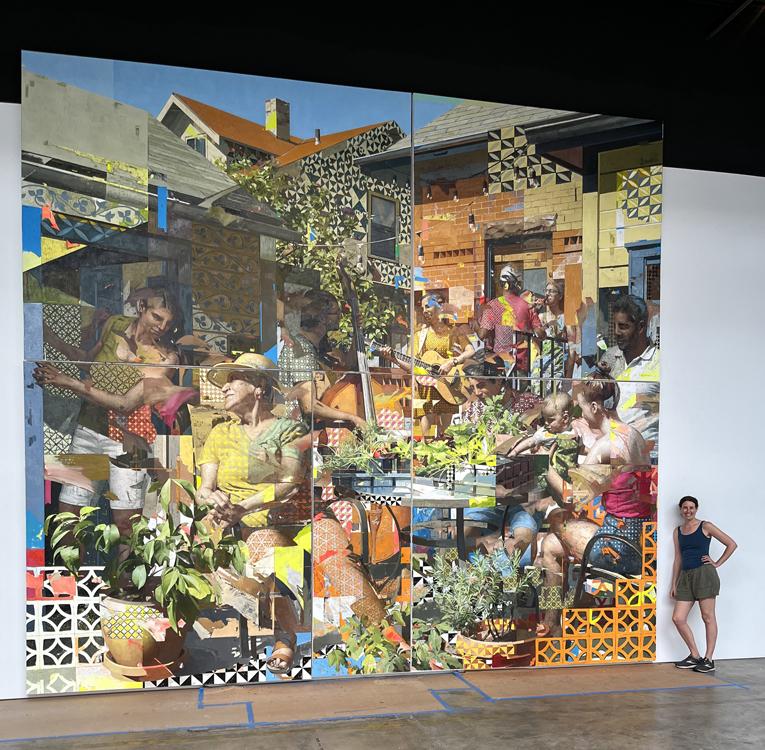
My large, multifigure compositions are somewhat planned—I’ll make small color studies at the beginning to work out the space and figure placement. But a huge amount changes as the paintings develop. The abstract patterns and shapes are found as I go, and a new value and color structure emerges in response to the representational elements, yet remains distinct from them.
3. Your work feels explosive yet controlled. How do you balance instinct with structure? I’m searching for structure all the way through, but I’m not satisfied with a straightforward arrangement. There has to be discovery for me to feel fully engaged, to feel like I’m learning something from the painting.
I’m always thinking about how my eye moves across the whole picture—the repetition of angles, shapes, and colors that carry me from one area to the next. But my first ideas about structure are never my best. I rework areas, try something new, paint it one way and then another, until that elusive and unexpected solution emerges. The rawness of all those attempts—all the different possibilities for where the painting could go—stays embedded in the image in unexpected ways. Maybe that contributes to the energy. Finishing a painting usually involves a very large brush and some bold moves to pull everything together.
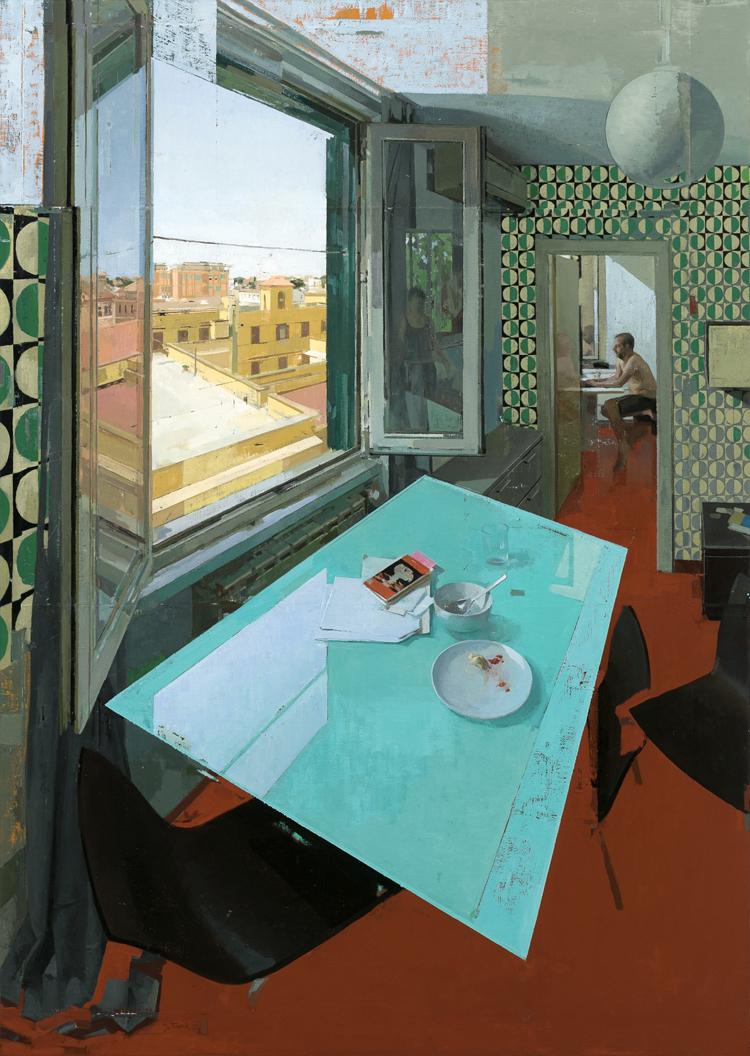
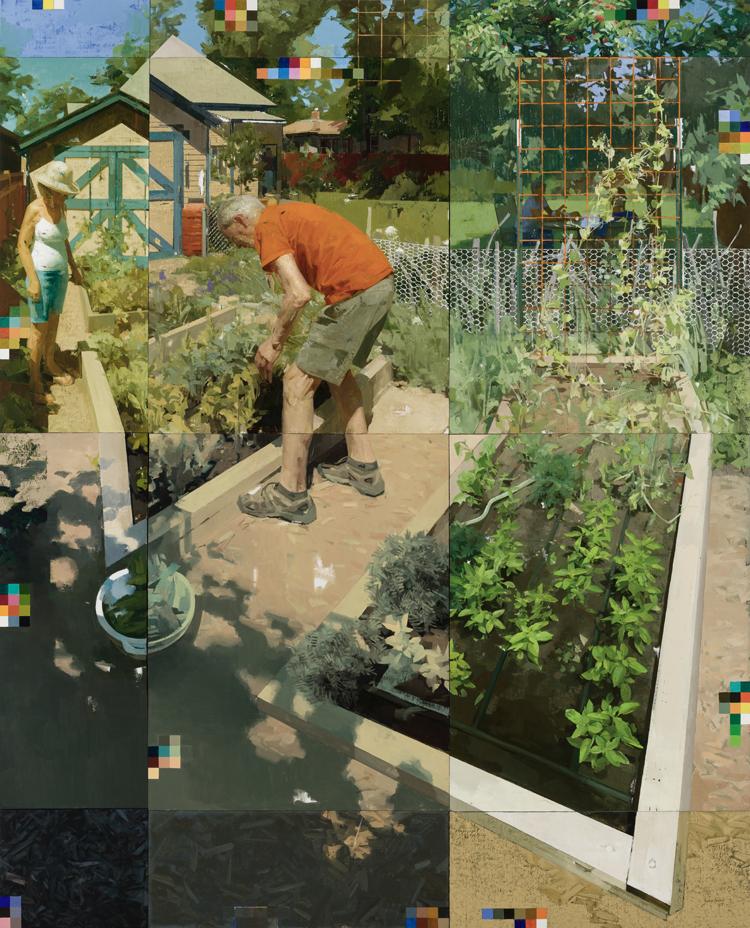
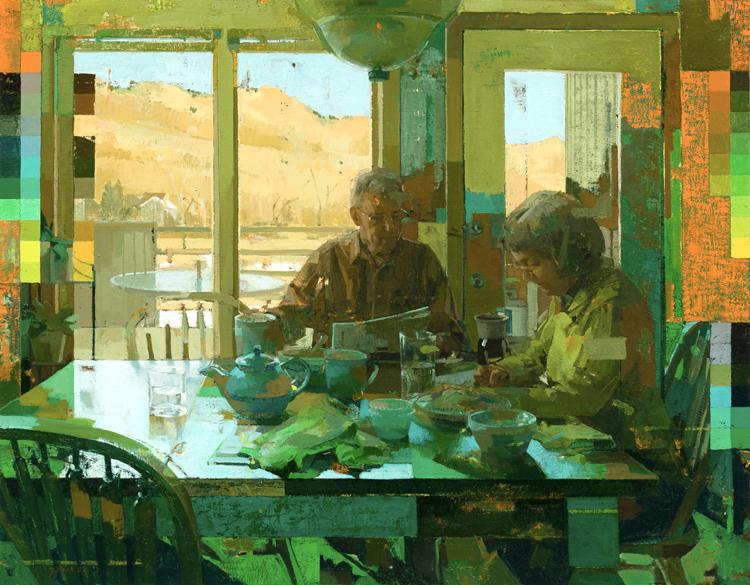
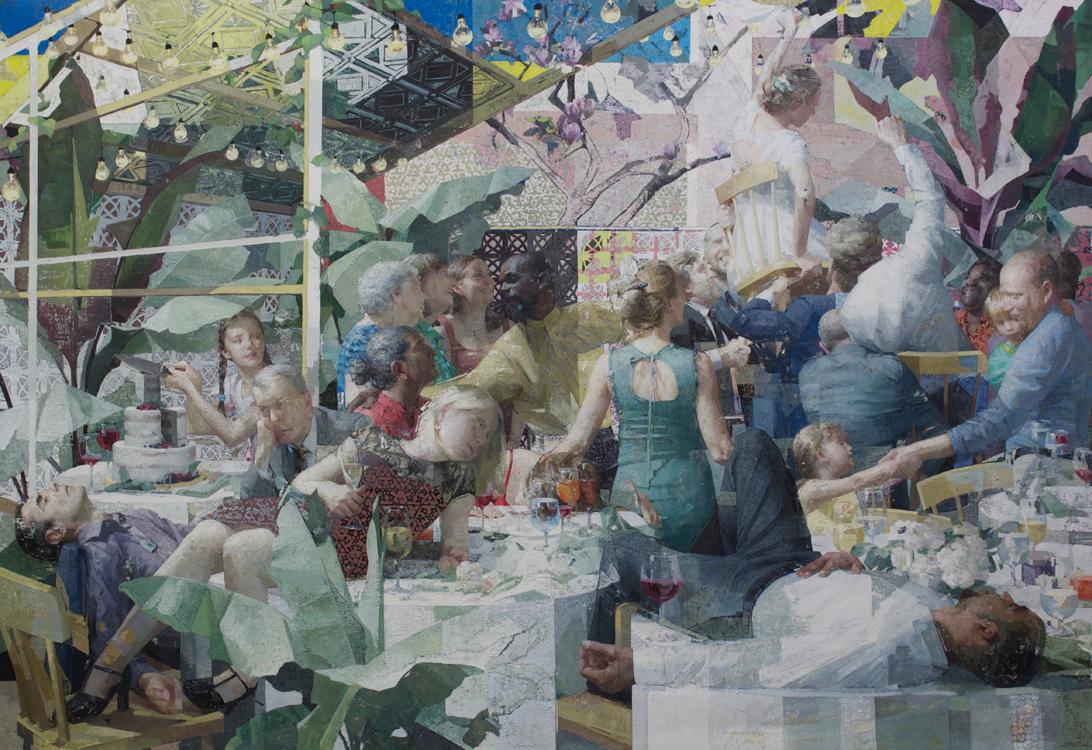
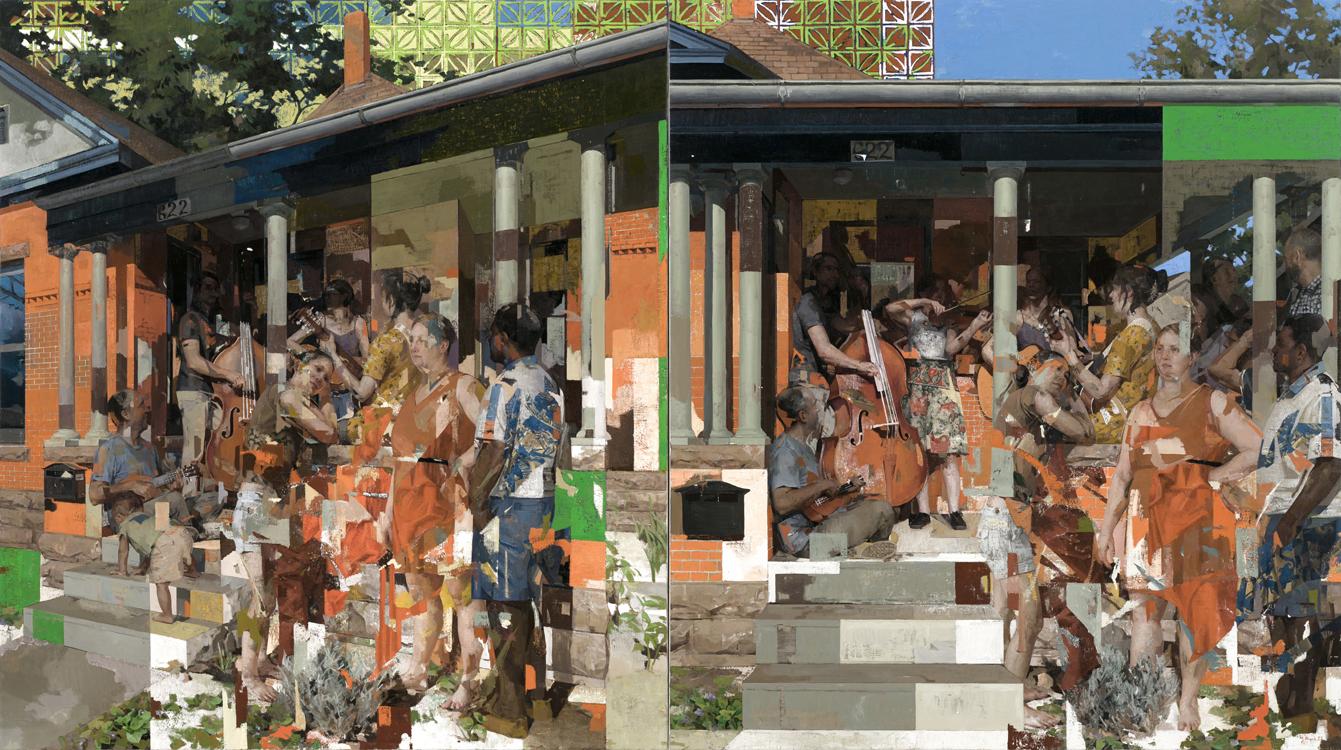
4. How has your background influenced your visual language? My first love was Renaissance painting, and I spent four years in an atelier learning traditional skills—how to build a value structure across an image, how to paint form, and how to mix color. That foundation underpins everything I make. But my engagement with art history has expanded enormously since then.
In terms of subject matter, I’m drawn to creating large-scale, ambitious compositions from my everyday life—friends, family, and young children, mostly set in my backyard. I love that juxtaposition.
5. What role does intuition play in your process? I feel like I’m following a pull or a tug in a particular direction as I work. I can usually see what the next few moves should be, but not much beyond that. I’ll sit back, think through the adjustments, make them, and then consider the next steps. I’m always pursuing a feeling of rightness, of the image fully working.
6. Do you ever begin with a specific meaning or message, or does that emerge later? I never begin with a message. I don’t want the work to be prescriptive or pedantic. Personal meanings do emerge as I go, but I’m not trying to communicate them directly to the viewer. I hope the meaning is somehow embedded in the paint itself, within the layers of the surface.
7. Do you revisit and revise your paintings, or do you work in one sustained push? I usually work very intensely at first, while everything is being established and it’s clear what needs to happen next. Eventually, I get stuck and need to step away. I’ll let the painting rest and return to it with new ideas after working on other projects or spending time looking at other paintings. Many of them take several years to complete, slowing down as they approach their finish.
8. What inspires your work most—emotion, music, memories, or something else? What really keeps me moving forward is the excitement of trying something new. I’ll look at the last painting and want to carry certain ideas forward while changing one or two variables.
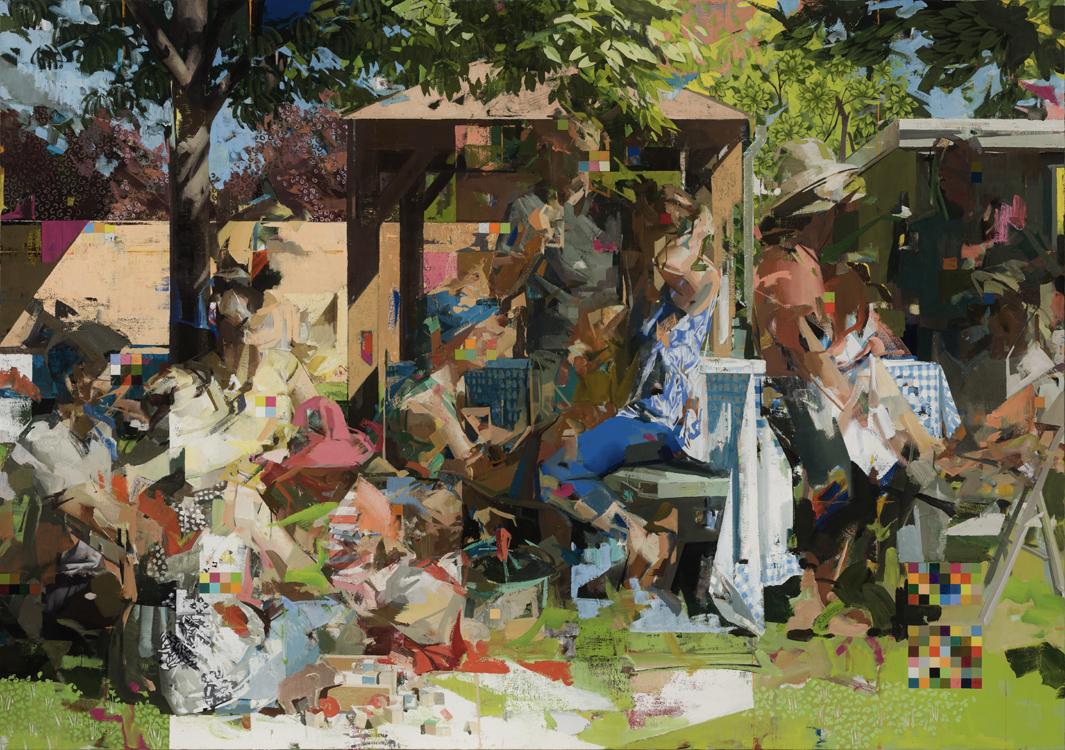
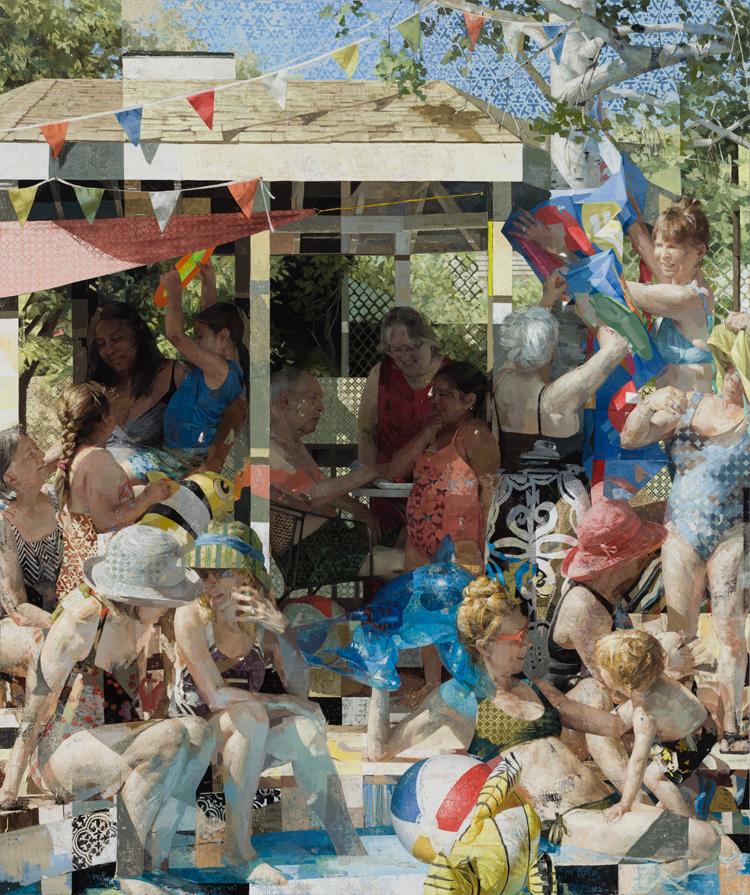
With Picnic 1, for instance, I wanted the image to hover on the edge of abstraction—everything loose enough that I didn’t have to paint any faces, allowing it to become entirely about light and space. For Picnic 2, I wanted the figures to feel more solid and sculptural: the same basic grouping, but with the figures pressed close together and fitted almost like puzzle pieces. I get excited about the next idea and want to see where it leads.
9. Do you expect viewers to understand your work, or do you prefer it to remain open? I like the paintings to remain open and to have something slightly odd about them. I hope they reveal more and more over time, and that they reward slow looking.
10. Do you keep the viewer in mind while painting, or do you paint purely for yourself? I make the work I feel I need to make, finding my way forward by reaching for that sense of internal satisfaction. I’m not thinking about what anyone else will like while I’m working—I stopped doing commissions because I found them unpleasant for this reason.
But I’m not painting purely for myself either. It’s very important to me that the work finds an audience and a place in the world. That connection with viewers completes the cycle in a way that deeply matters to me.
11. Which artists, movements, or cultures continue to inspire you most? Roman and early Renaissance fresco painting, along with Abstract Expressionism, have been particularly important to me in recent years. But I look at a fairly eclectic range of work and find things that excite me almost everywhere.
I was at an art fair recently with a friend who was dismissive of nearly everything, while I kept finding myself drawn in. At one booth, I liked the front of a painter’s canvases, but the way the paint was organically collecting along the edges was what I found truly terrific. It’s like that—I’m almost always discovering something I want to bring back into the studio.
12. Are you searching for something while painting, or documenting something already known? Searching—but using a great deal of accumulated knowledge in that search.
13. If your painting had a soundtrack, what would it be? I listen to podcasts while I paint—they occupy the thinking part of my brain, which frees me to simply respond to the painting. So I suppose the soundtrack would be people chatting about culture. That actually fits the work: my backyard scenes are full of people doing just that.
14. Is there a particular moment of vulnerability that became important to your development as an artist? I spent four years in the atelier learning a very specific process: a painted study, detailed drawing, transfer, grisaille underpainting, and then working section by section in color, bringing each area to a finish as I went. It was all planned and controlled.
Halfway through graduate school, I realized I needed to abandon that process entirely and work in a way that was open to change.
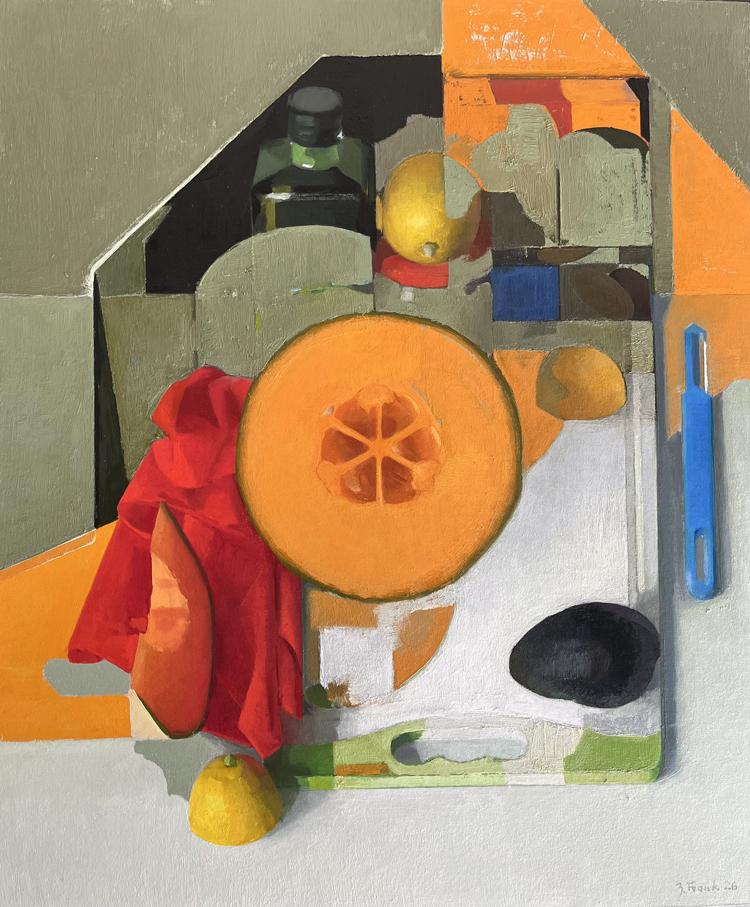
To make that shift, I started a painting of my worktable while I was still using the objects on it each day. I couldn’t plan it all out because the motif kept shifting. It felt very strange to be out of control of the image—but also much more alive. For the first time, I felt engaged in a genuinely responsive relationship with the painting.
It’s a scary way to work because the paintings are constantly falling apart and coming back together again. I had to learn to tolerate instability in order to make paintings that felt more alive.
15. What fears accompany you most often in the studio? Right now, I worry that with young children I’ll disappear into motherhood and middle age in a town far outside the center of the art world. I worry about losing the foothold I’ve built. I want to keep making large, ambitious paintings, and I hope I can sustain a career that allows me to continue doing that.
16. If you could sit down with your younger self at the beginning of this journey, what would you tell her? You’re on the right track. You can worry less. Just keep going.
17. What is the most important thing you’ve learned about being human through the act of painting? It’s important to show up every day and be as present as possible.
18. Lastly, how would you describe Zoey Frank? I love to paint, and I truly need my studio time to feel happy. At the same time, I am joyfully and overwhelmingly consumed by family life right now. I have a three-year-old daughter and twin girls who will turn one this summer. I love going for walks in the neighborhood, working in the garden, and putting my feet in the kiddie pool in the backyard while my children play.
