
1. Where do you live and create at the moment?
I live in Viken, a small coastal town just outside Helsingborg in southern Sweden. I work from my home, where part of the house has been extended into a dedicated studio. It allows my everyday life and my artistic practice to exist side by side, which is essential to how I create.
2. Describe Linus Cinnamoni in one word.
Uniqueness.
3. Did you study art, or is it inherent?
I am a self-taught artist. My artistic journey began about seven years ago, almost by accident, when I picked up a pen I connected with. From that moment, I started creating strange figures without rules or boundaries. After about a year, those figures seemed to demand color, and that was when my visual language truly emerged. Once color entered the work, my style was born.
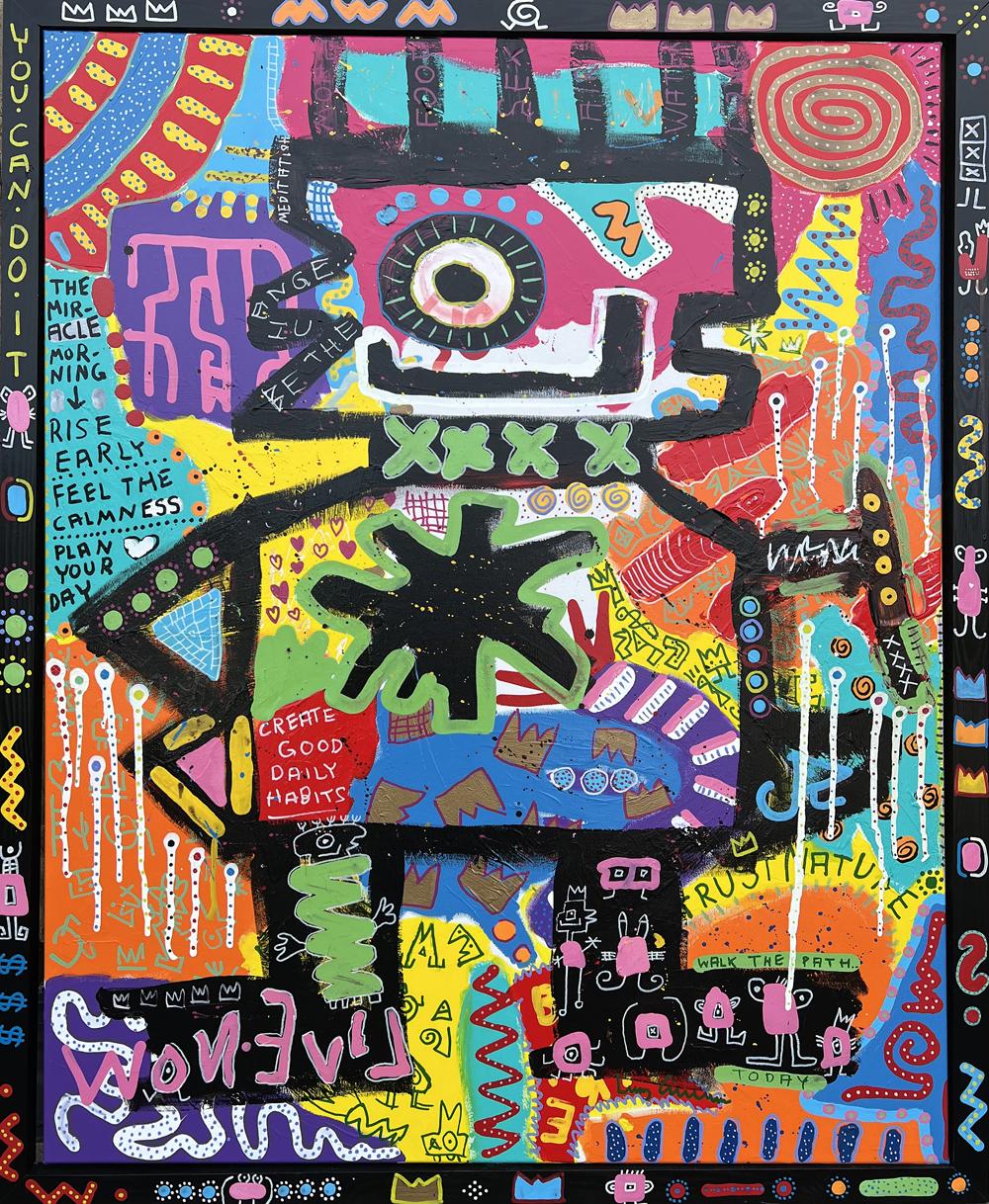
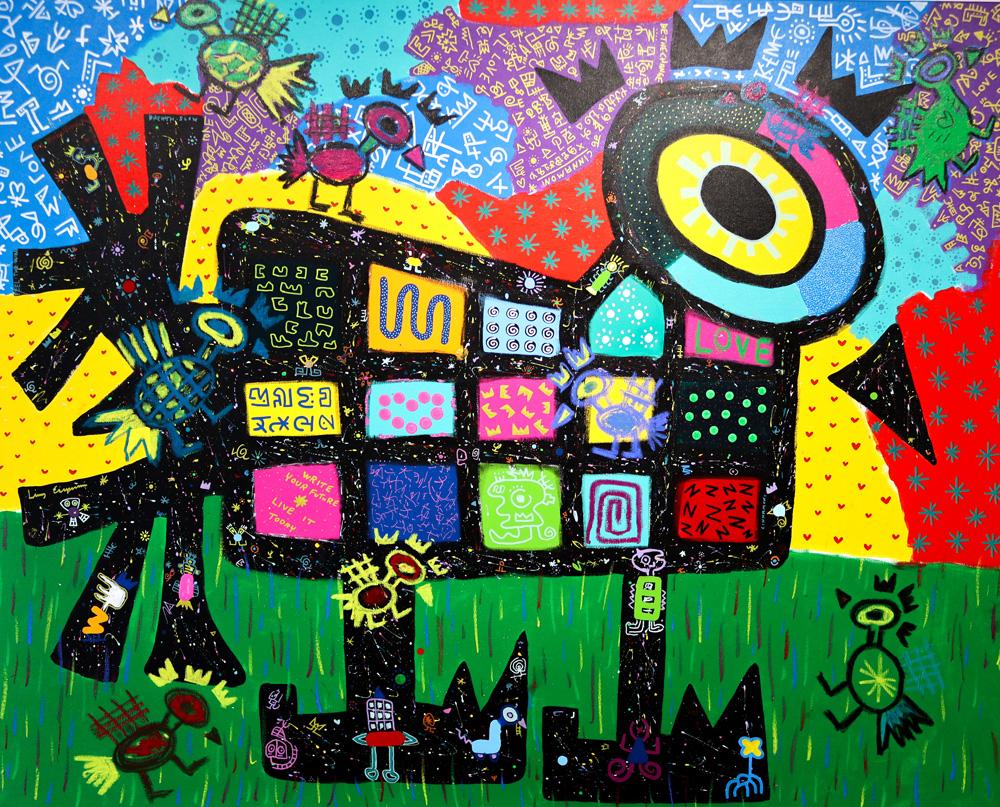
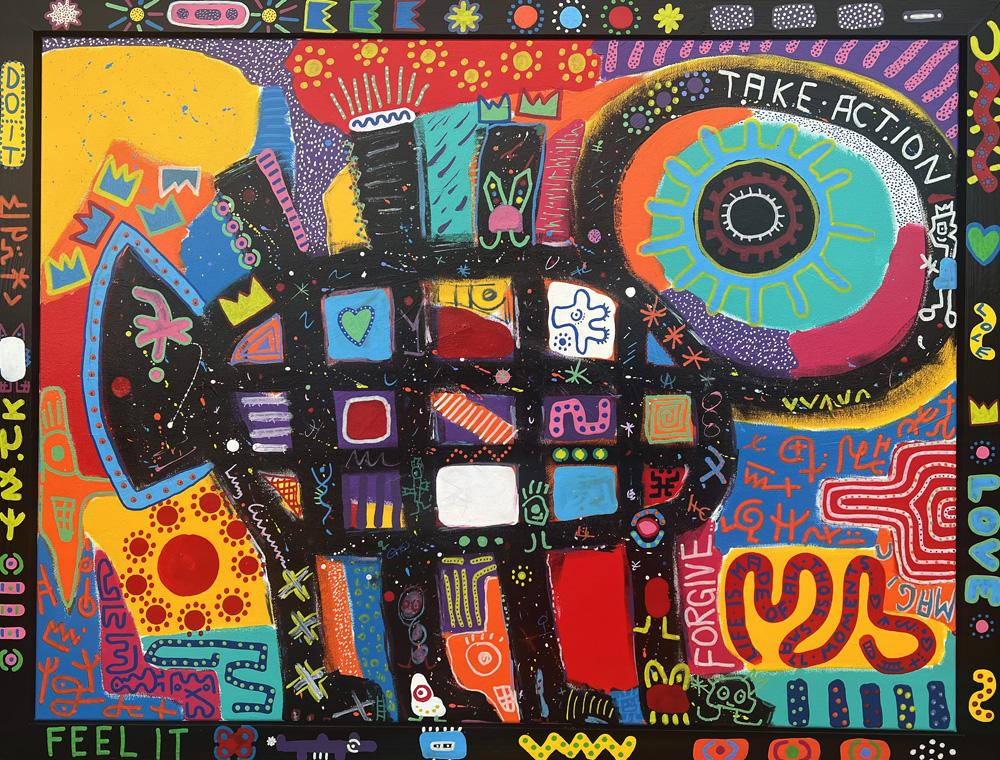
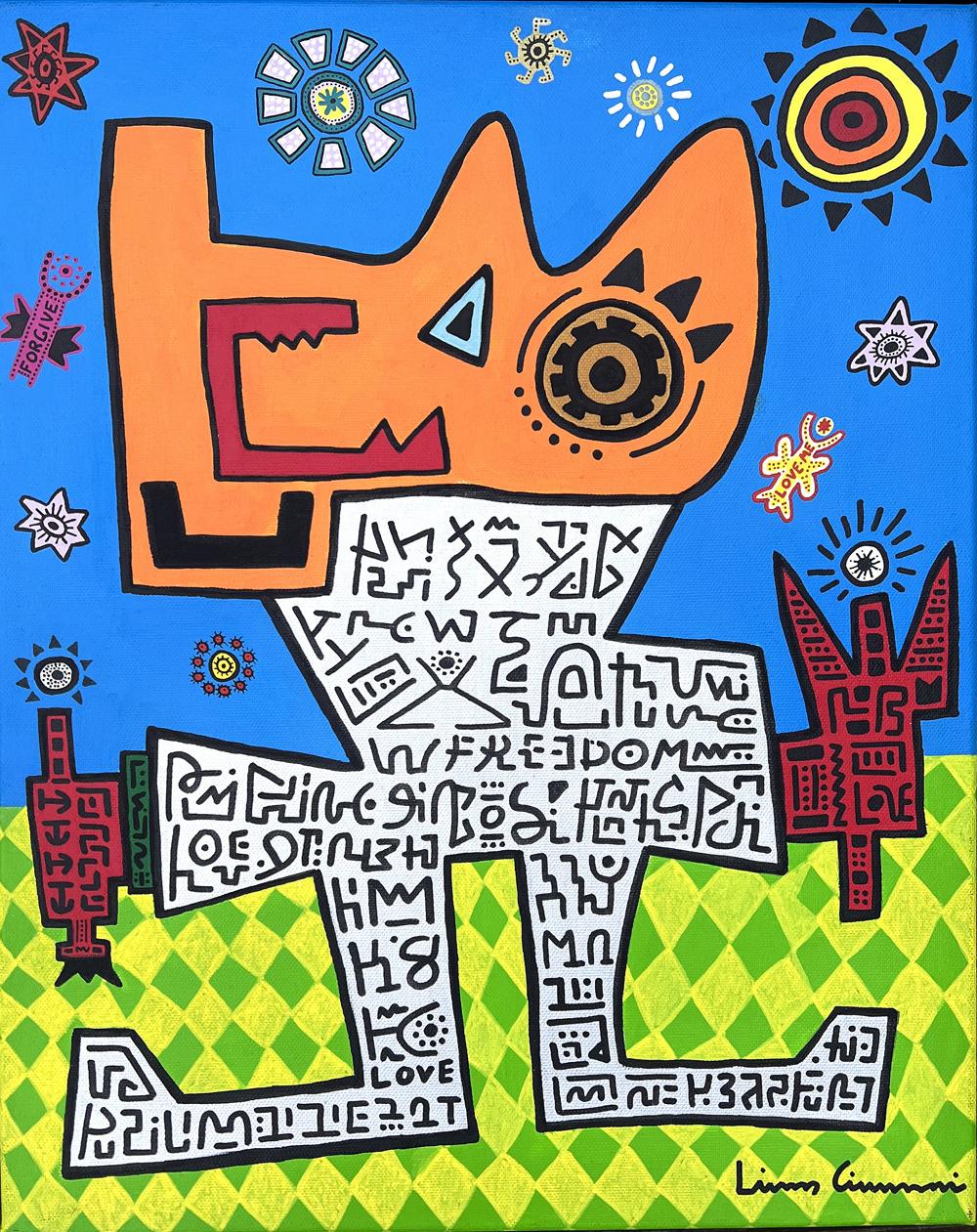
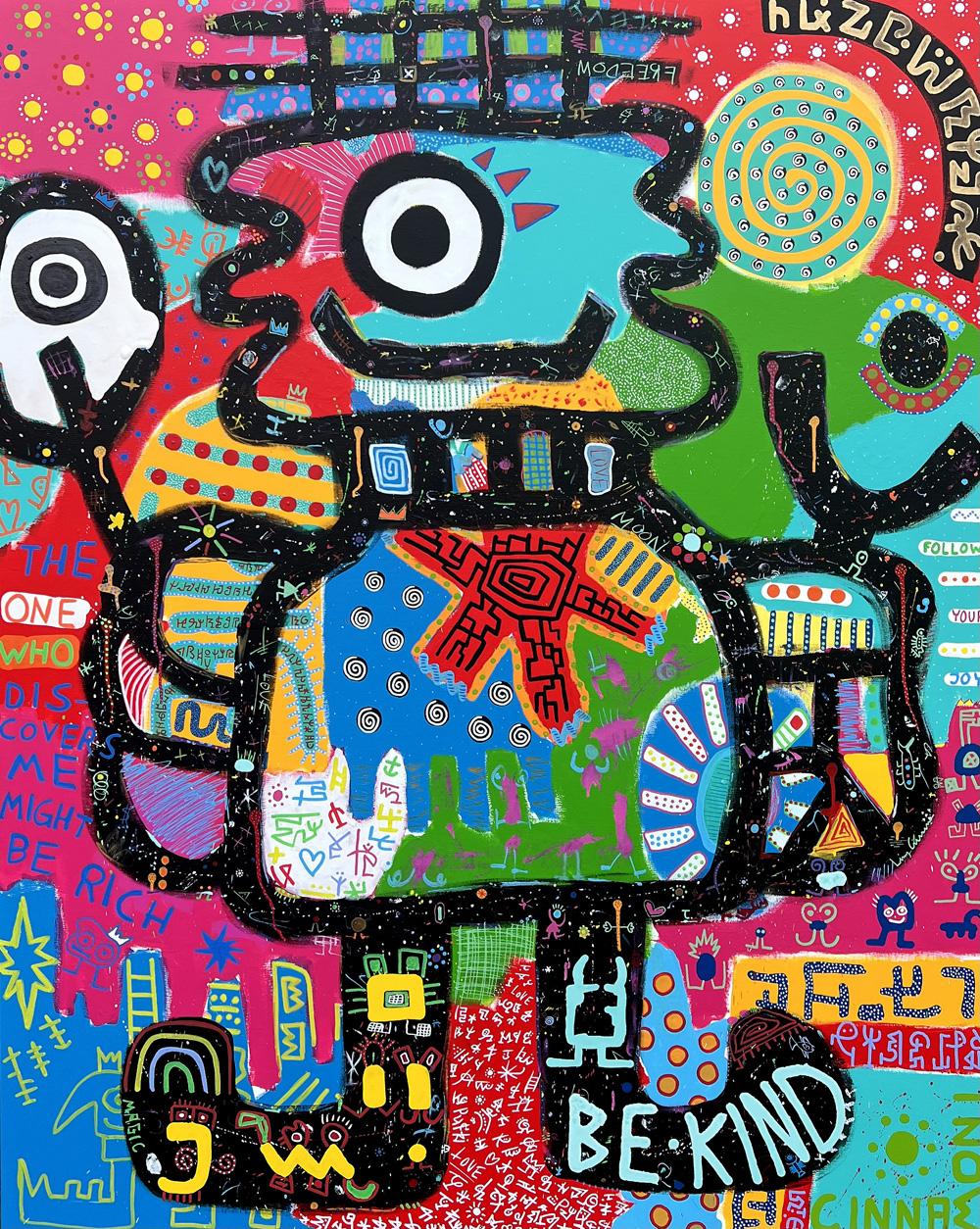
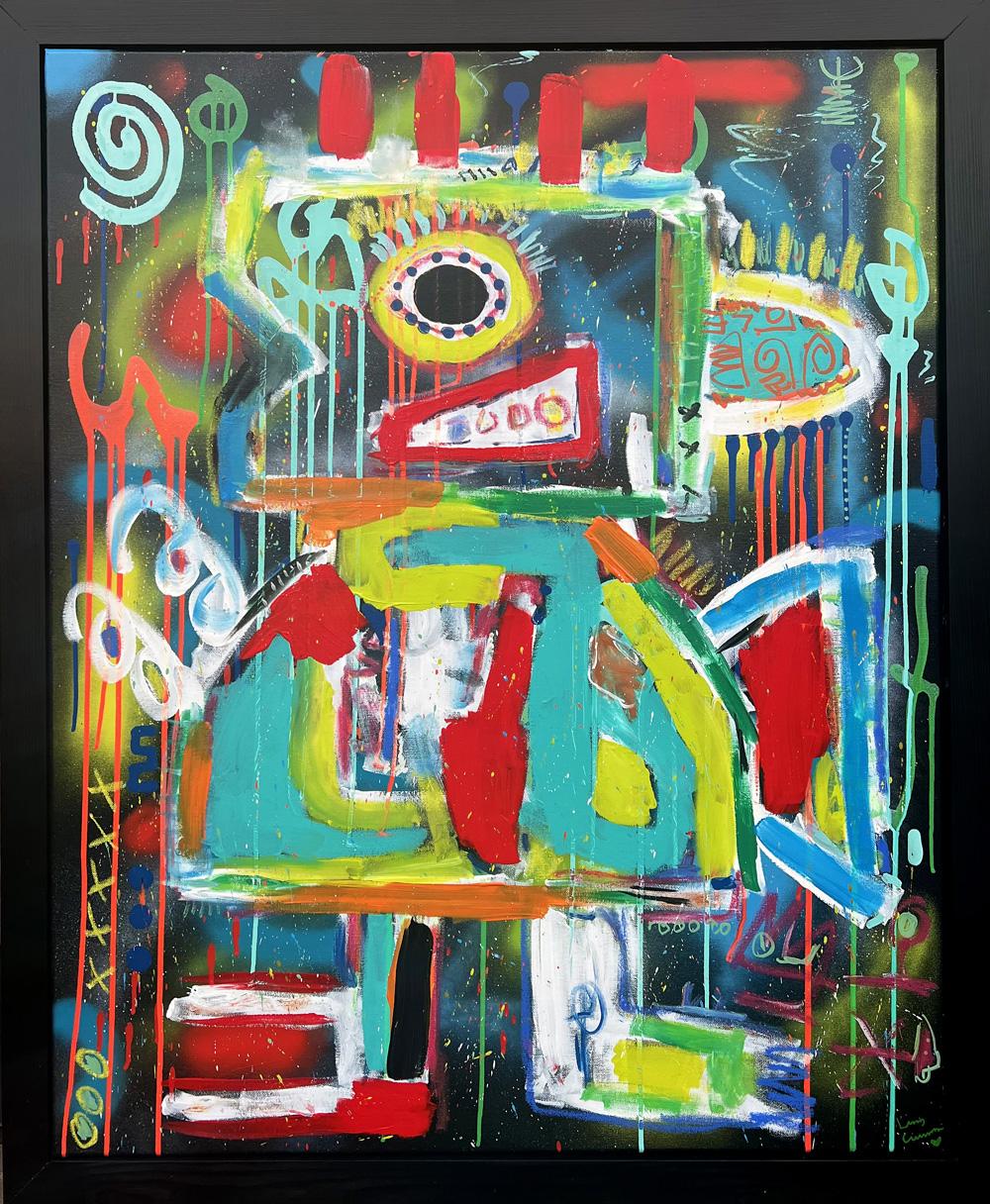
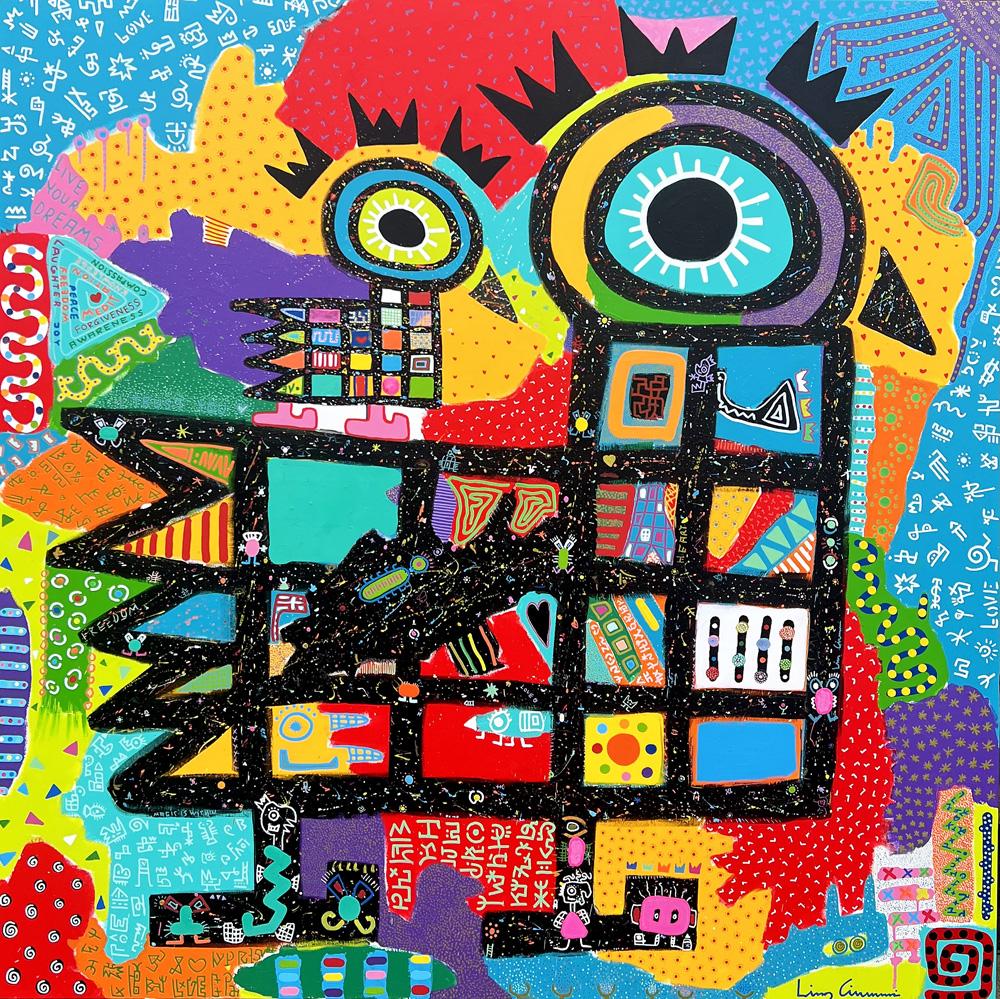
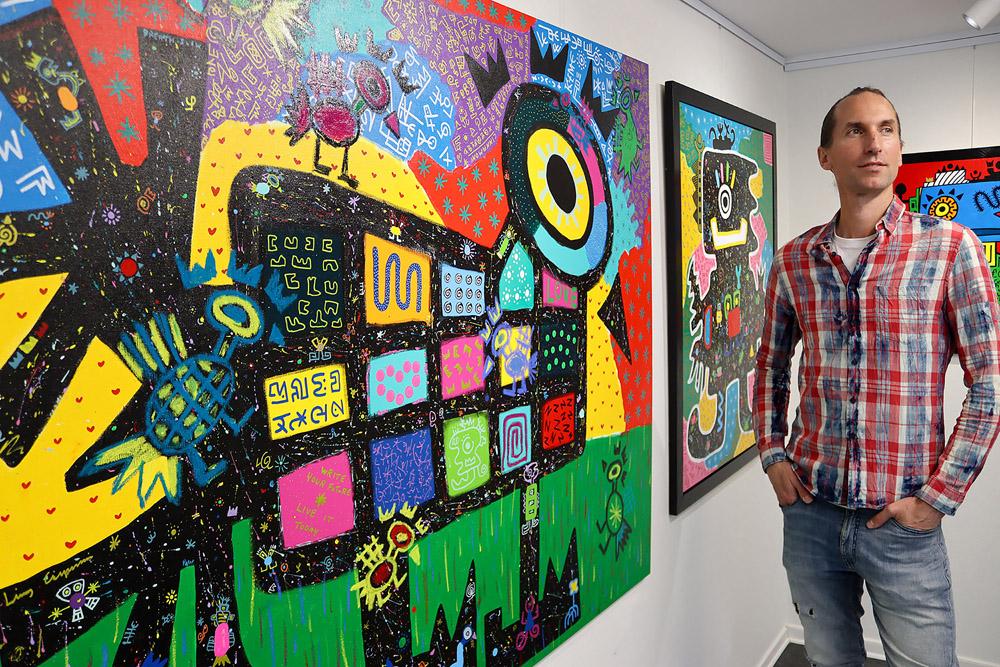
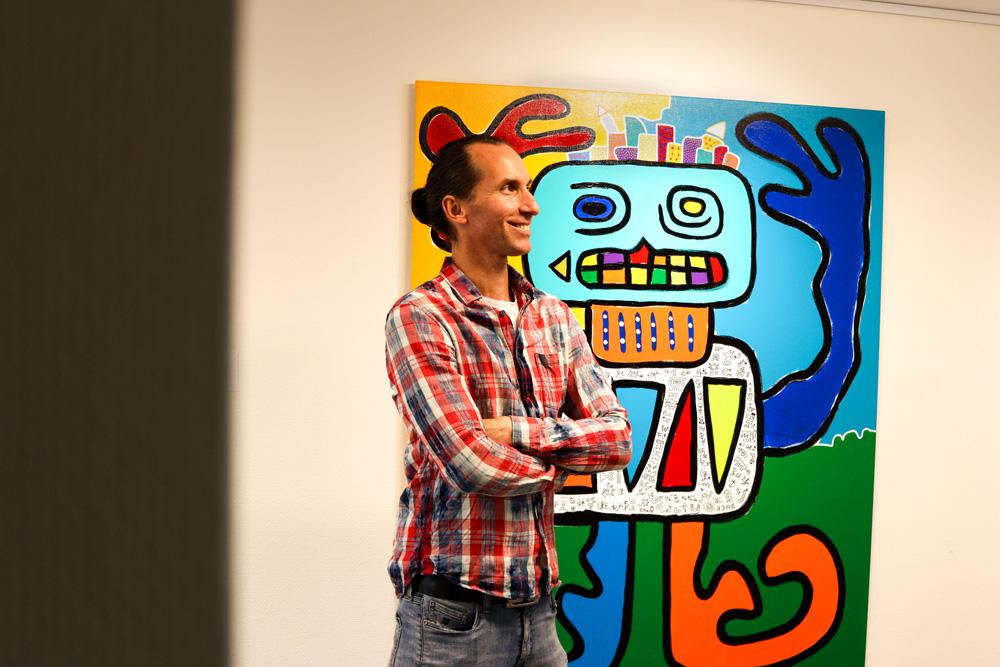
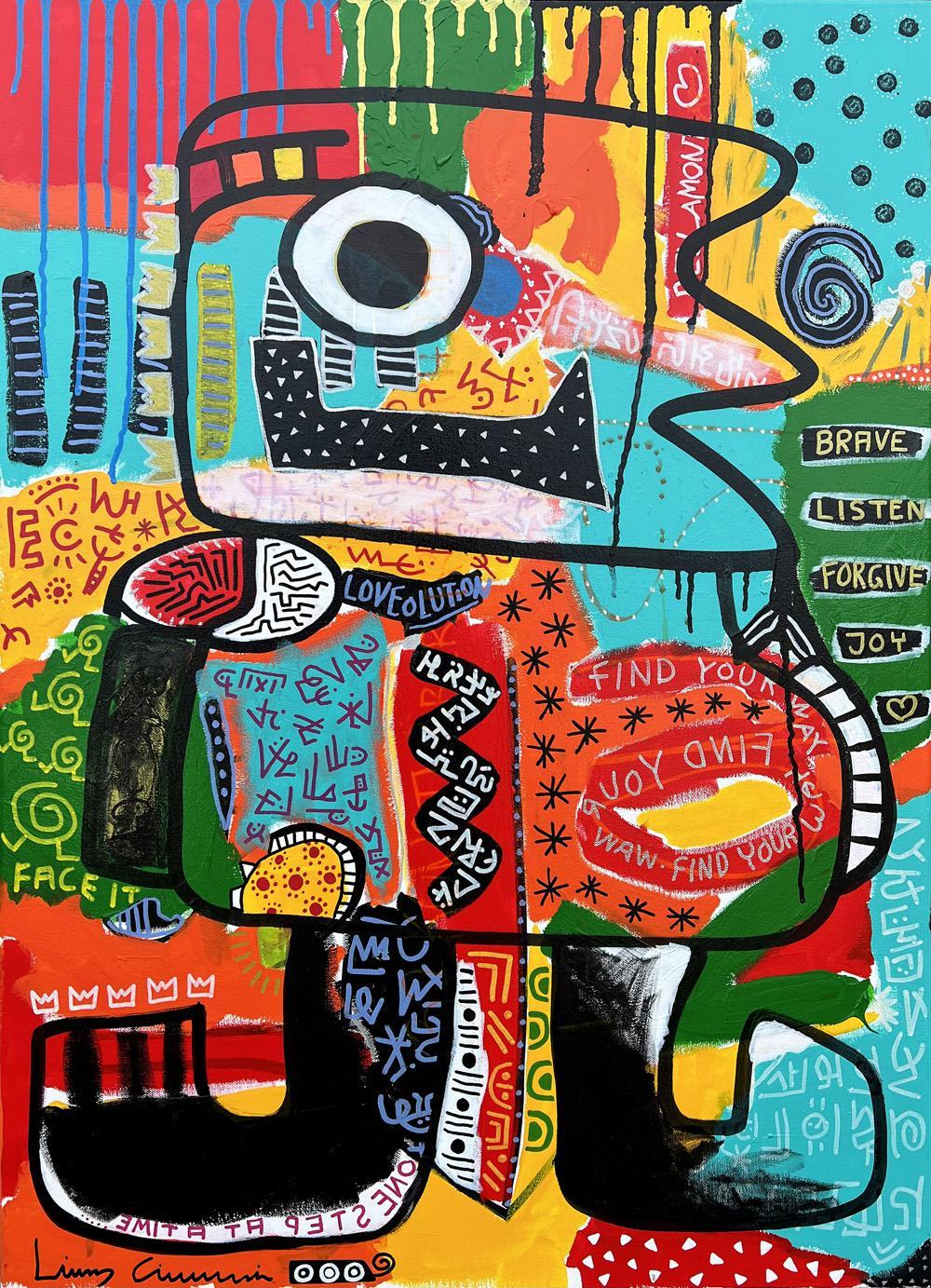
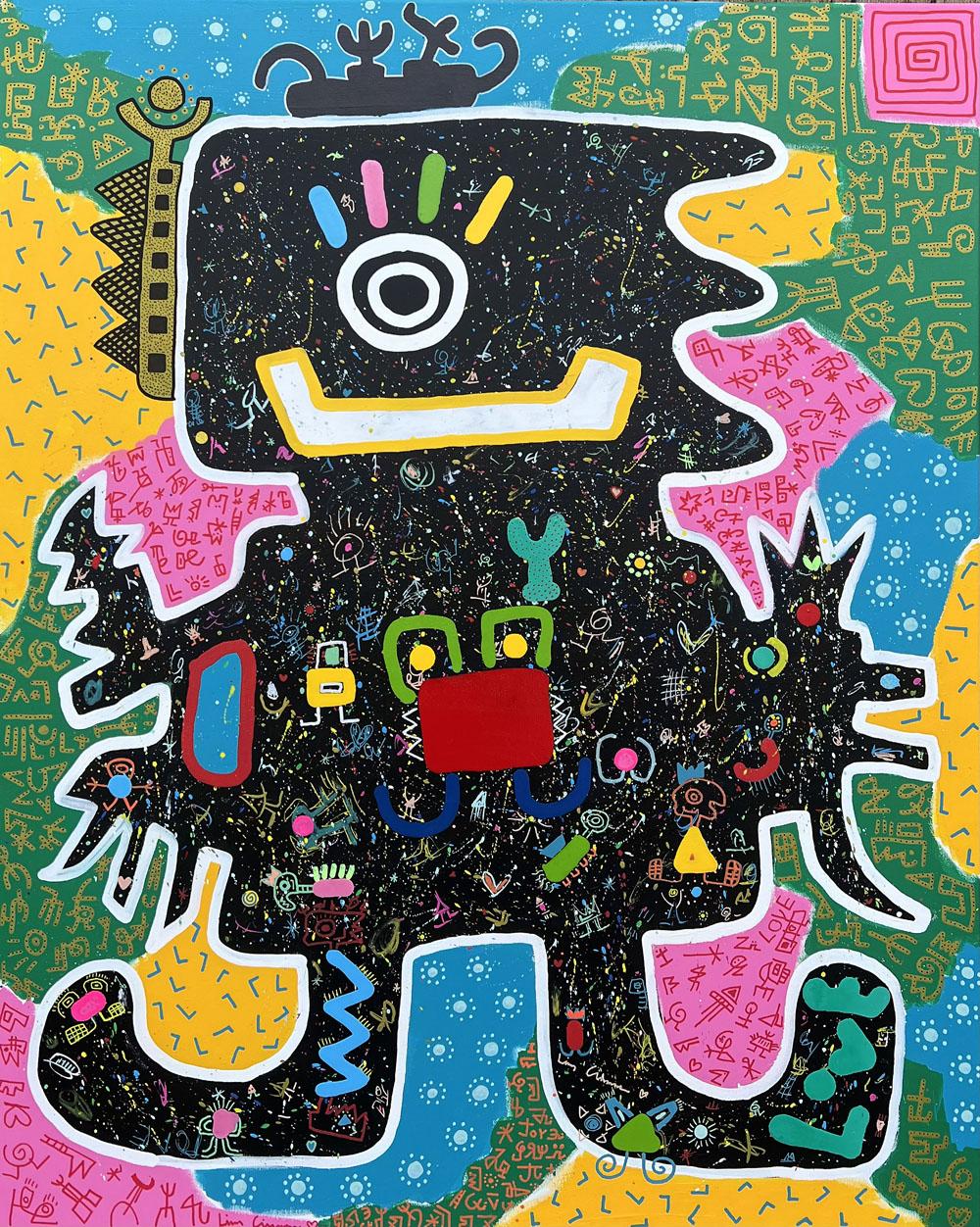
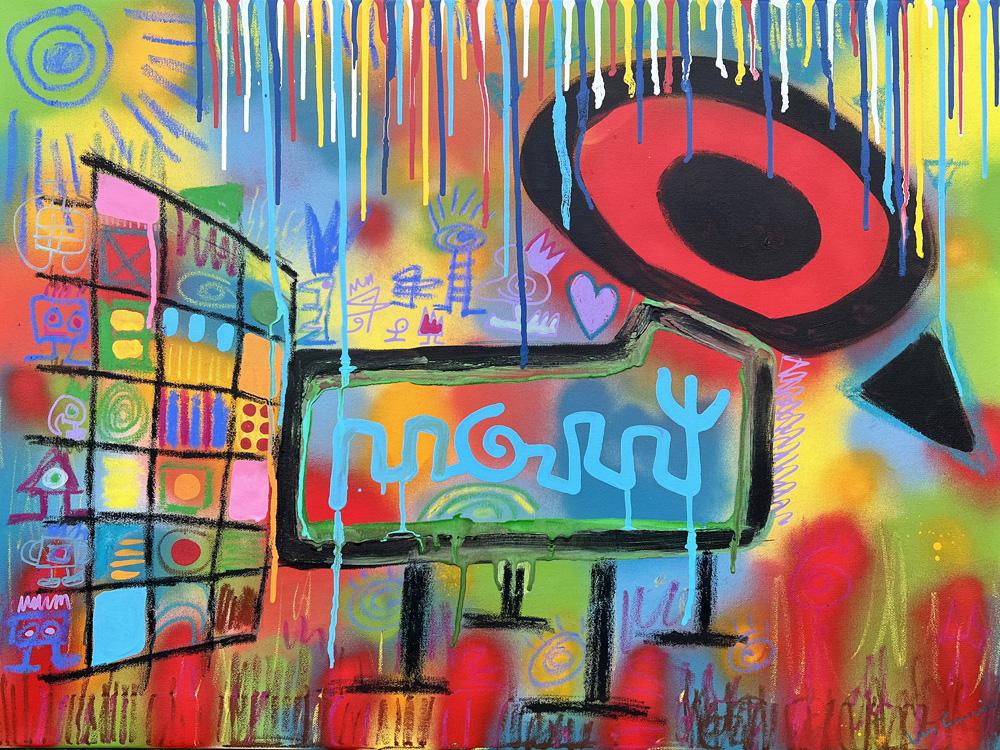
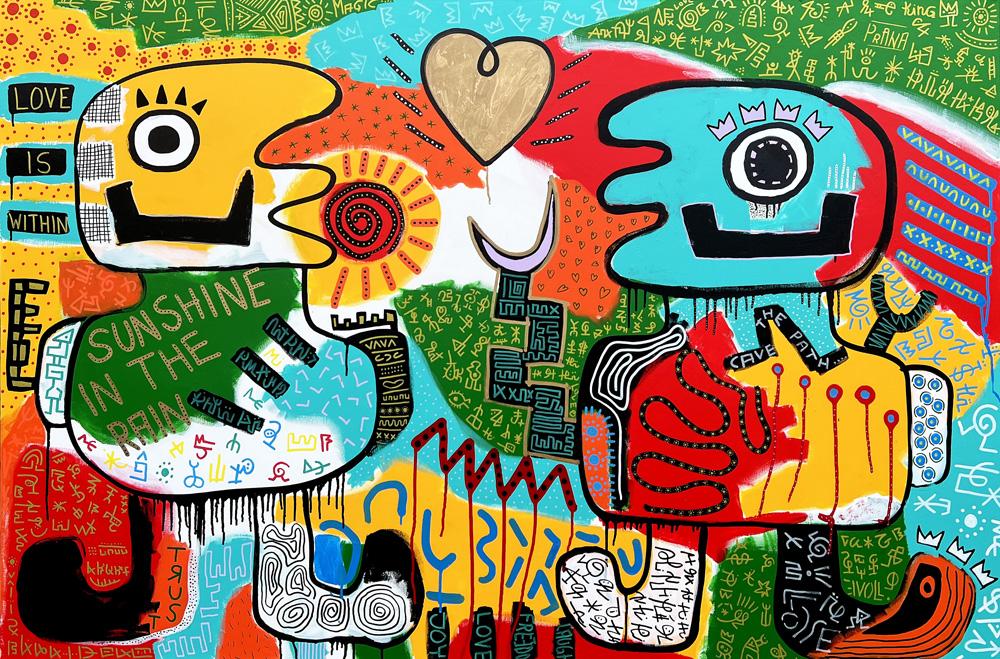
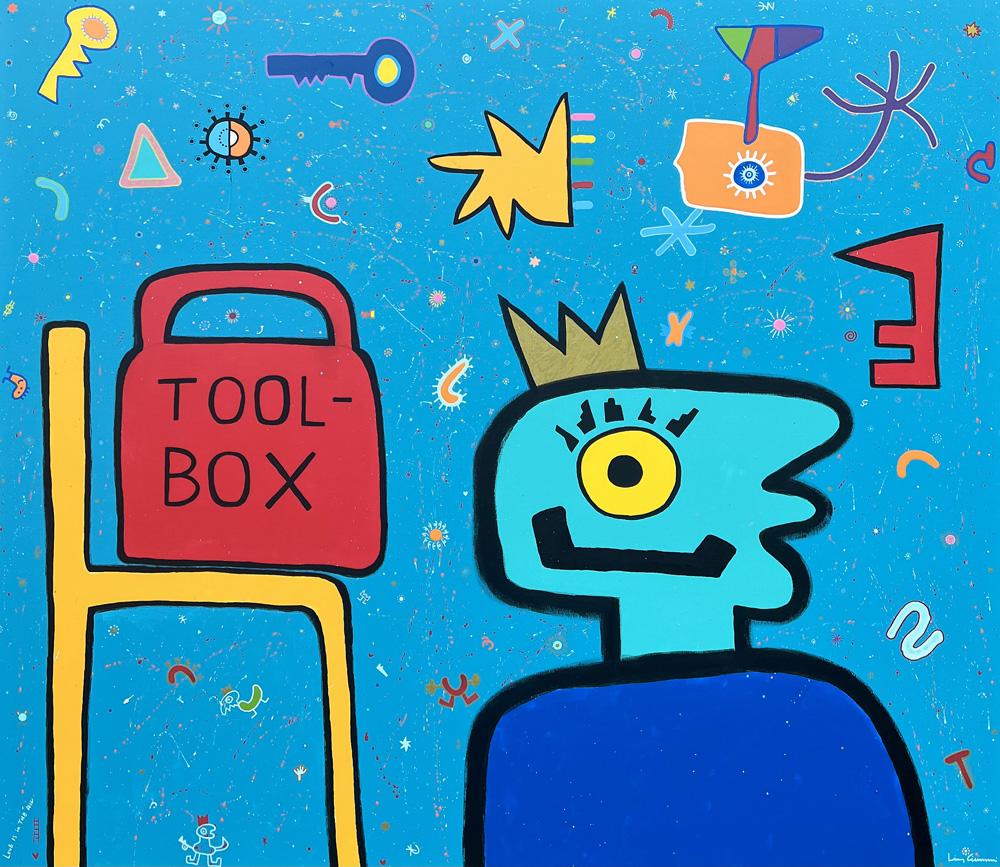
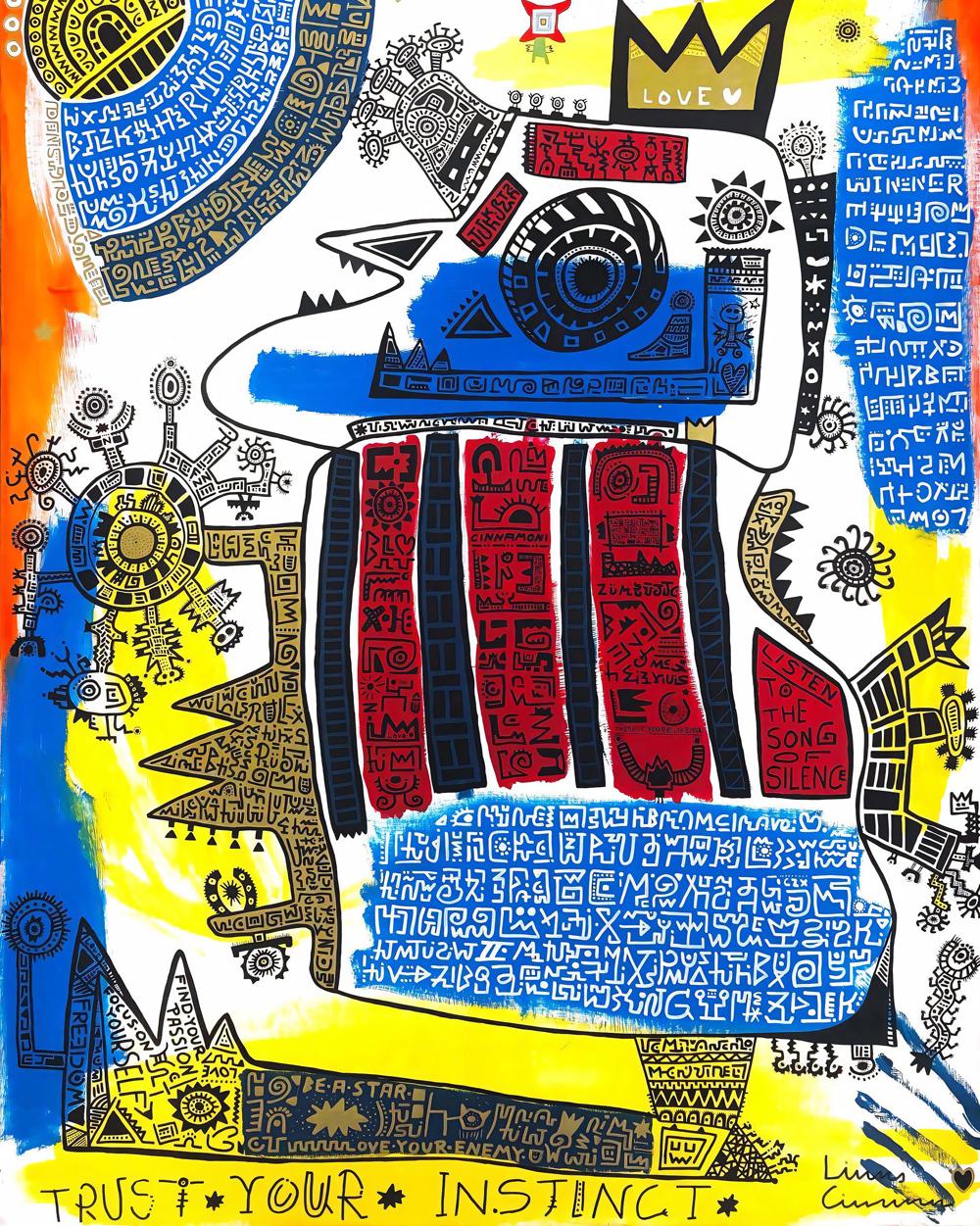
4. What is the inspiration behind your paintings?
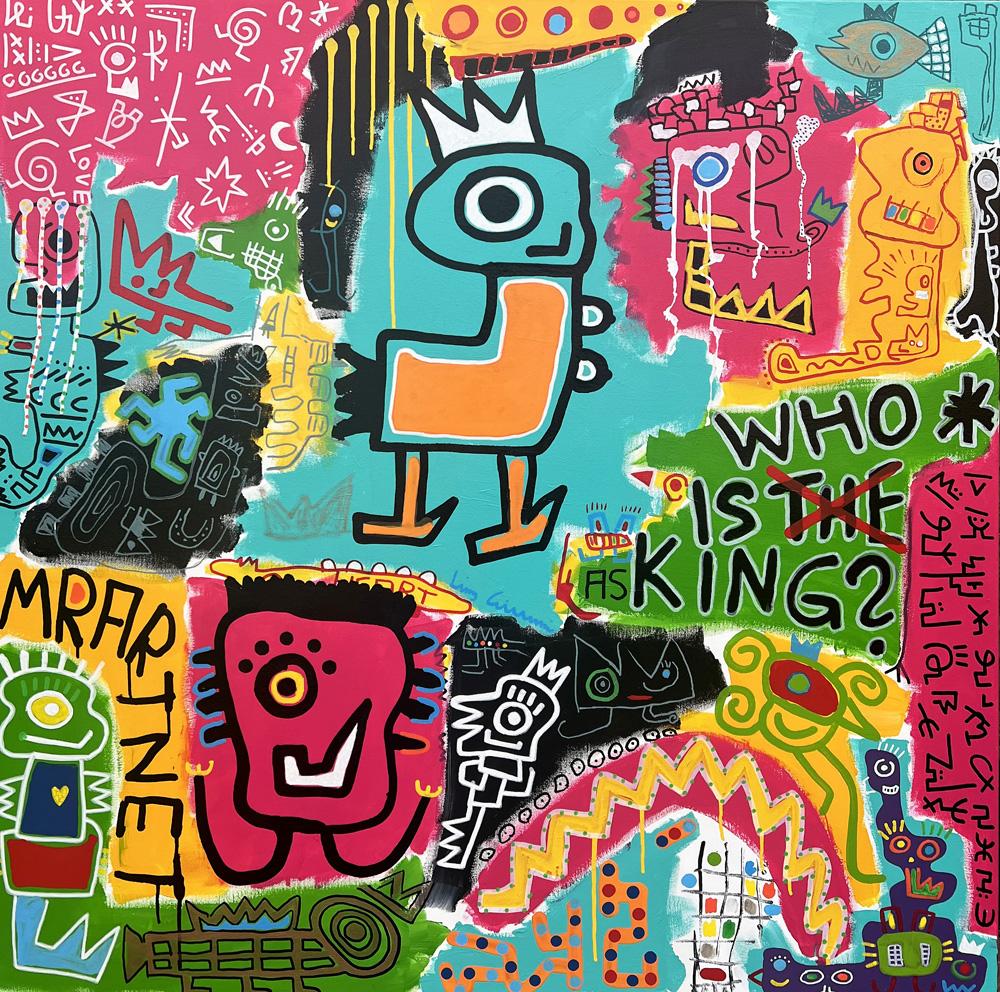
My inspiration comes from two main sources. One is an ongoing, playful process in my sketchbooks, where I experiment freely with figures, shapes, and patterns, often in black and white. New characters grow out of earlier ones, creating a continuous visual dialogue within my own work.
The second source is everyday life. Inspiration often appears suddenly—patterns in the street, architectural details, or fleeting visual impressions. These moments arrive as quick flashes, and I try to capture them immediately. I work with several sketchbooks at the same time: one in my studio, one with me, and one by my bed, so ideas can be recorded wherever they emerge.
I can be inspired by other artists, or by knowledge and ideas, but it happens quite rarely. My process is less about referencing existing sources and more about responding to shifts, both internal and external, as they occur.
Nature also plays an important role—not as a direct subject, but as a way to recharge and reset my rhythm, allowing ideas to flow more freely.
5. Is there any reality behind the characters in your paintings?
Each character I paint has its own life, message, and inner world. They are all unique, with distinct qualities and strengths. In that sense, they mirror people. We are all different, we all carry different abilities, and we all have something unique to contribute.
Because of this, different characters tend to attract different viewers, depending on what that person needs at a given moment. Whether that connection is literal or symbolic is less important. What matters is that each character has a purpose and a meaning, just as each of us does.
6. How would you describe your work to someone encountering it for the first time?
I would describe my work as playful, expressive, and emotionally driven. At first glance, the characters may appear naive or lighthearted, but beneath the surface there are layers of symbols, messages, and inner worlds. Each painting feels like its own universe, with a visual language that invites curiosity rather than offering immediate answers.
Color plays a central role in my work—not as decoration, but as energy and communication. The figures are bold, imperfect, and intentional, reflecting human complexity rather than idealized forms. My work is less about telling a fixed story and more about creating a space where the viewer can connect, interpret, and recognize something of themselves.
7. What advice would you give putative collectors?
I would encourage potential collectors to trust their own response rather than trends or expectations. If a work speaks to you—if it creates a feeling or stays with you—that connection matters more than any external validation.
Collecting art doesn’t have to be about certainty or status. It can be about curiosity, intuition, and allowing a piece to grow with you over time. Live with the work, let it become part of your everyday life, and see how it continues to resonate.
8. How do you describe success as an artist?
For me, success as an artist has very little to do with money. It is about being able to express my true self as honestly and freely as possible. Success is when I can create without resistance, in a natural flow—when the work comes as effortlessly as wind carrying a leaf or waves moving toward the shore.
It is about rhythm rather than results: creating in alignment with my heart and my inner pace. There is never any guarantee that someone else will like what you create, and that is not the point. For me, success is being true to the process, trusting the flow, and allowing the work to exist on its own terms.
9. If you could live in a museum anywhere in the world, which would it be?
I haven’t visited an endless number of museums around the world, even though I’ve traveled quite a bit. But without hesitation, I would choose the Joan Miró Foundation in Barcelona.
Miró was the artist who made me realize that I was an artist myself, even if it took many years before I fully understood what that meant. His work opened something in me that has stayed ever since. If I were to live in a museum, that would be the place.
10. Do you have a routine when you arrive in your studio?
Because my studio is part of my home, routines tend to be fluid rather than fixed. I’ve never been particularly strong with strict routines, especially when it comes to creating. Instead, I work intuitively and adapt to the rhythm of both the work and everyday life.
Usually, I have several paintings in progress at the same time. When I enter a strong flow, I often want to stay with a piece until it feels resolved—not necessarily in one day, but without letting too much time pass. The work tends to unfold over a few days, guided by feeling rather than a predefined structure.
So rather than following a set routine, I follow the process itself, listening to what feels right in the moment and allowing the work to find its own pace.
11. Has your relationship to your work changed as your career has developed?
Yes, absolutely. In the beginning, my work was driven almost entirely by emotion. Painting was a direct response to how I felt in the moment. Over time, my relationship to the work has matured. I’ve become more professional in how I approach my practice, working more consciously in series and with greater clarity and structure.
That said, the emotional core is still there—it has just become more focused. I’ve also grown in all the practical aspects of being an artist. While I don’t find social media to be the most enjoyable part of the process, I understand its role and continue to learn.
Overall, I’ve become more committed to developing myself on every level: artistically, practically, and personally. I believe growth is necessary, not only to keep the work alive, but also as a human being. For me, those two things are inseparable.
12. How do you decide when a painting is complete?
For me, this has always come quite naturally. As I get closer to the end of a painting, I experience a distinct sense of emptiness. That feeling makes it clear—and surprisingly easy—to stop.
I can almost feel exactly when the work is finished. Of course, it’s always possible to question whether something could have been added or taken away, but I trust that moment of emptiness. When it arrives, the painting is complete.
13. Do you work on one canvas at a time or multiple?
When I’m in a strong flow, I prefer to focus on one painting and bring it to completion as efficiently as possible—sometimes within a day, sometimes over a few days. In those moments, staying with one work feels natural and focused.
That said, the reality is that I often have several paintings in progress at the same time. New ideas can appear suddenly, and when they do, I sometimes begin a new canvas and allow another to rest until the timing feels right. I rarely leave works unfinished for long, but it’s common for me to have two, three, or even four paintings developing in parallel.
14. Do you have a place, person, or thing that you visit for inspiration?
I’ve learned that I’m a very sensitive person, especially to energies from other people, places, and my surroundings. Because of that, I consciously seek out environments that allow me to recharge and reset. Nature plays a crucial role in this. Being in the forest, by the sea, or in quiet natural spaces helps clear my energy and restore balance.
When it comes to inspiration itself, my sketchbooks are essential. That’s where ideas, thoughts, and visual impulses are collected—often quickly and instinctively—so they can be revisited later. I see them as an ongoing archive rather than a linear process.
Ideas can also appear unexpectedly in everyday moments, sometimes while doing something completely ordinary with my children. I don’t rely on a specific person for inspiration. Instead, my process is shaped by attentiveness—staying open to what arises, wherever I am.
In the end, taking care of myself both physically and mentally is what matters most. That is what allows inspiration to flow in a natural and sustainable way.
15. If you could have dinner with three artists, living or dead, who would be at your table?
I would choose Joan Miró, Jean-Michel Basquiat, and Salvador Dalí—or rather, someone like Dalí, but from a much earlier time, if possible.
16. Name three things you can’t live without in your studio.
The first would be my Molotow acrylic markers; they are absolutely essential to my process. The second is my larger markers and pens, which allow me to work freely with lines, details, and rhythm. The third is my sketchbooks. They are where ideas begin, where thoughts are collected, and where everything quietly takes shape before moving onto canvas.
17. How would someone find you on social media?
@linuscinnamoni on Instagram
18. Please name the first thing that comes to your mind while reading the following:
Art = Creation.
Food = Eating what grows in nature, in its purest form.
Sport = A big part of my life.
Politics = Should be thinking more about the future of the Earth.
Poor = Even if you are poor, you can always be creative.
God = The living energy present in everything on Earth.
Rich = A feeling rather than an achievement.
Luxury = Never underestimate everyday luxury.
Sex = A spiritual act.
Picasso = A truly great artist, however slightly overrated.
Interview by Jimon
