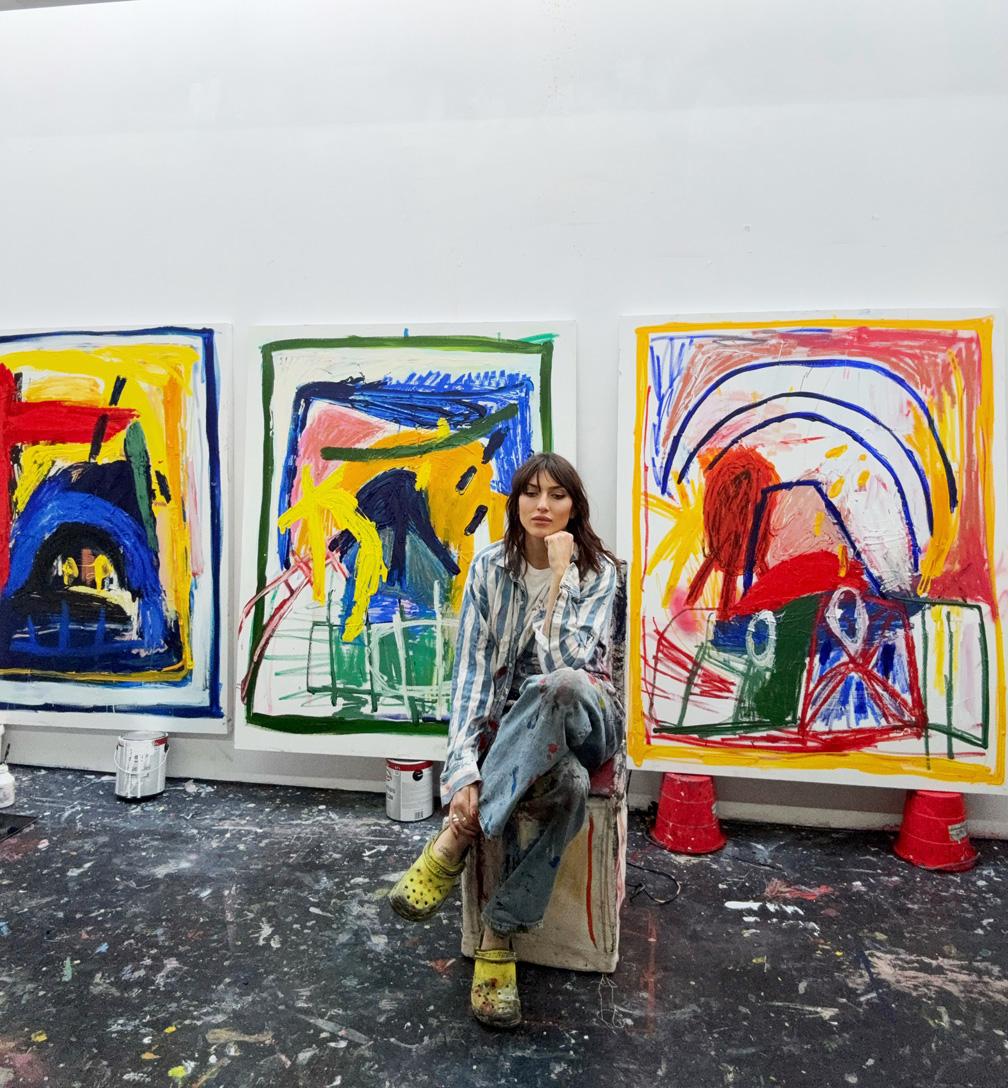
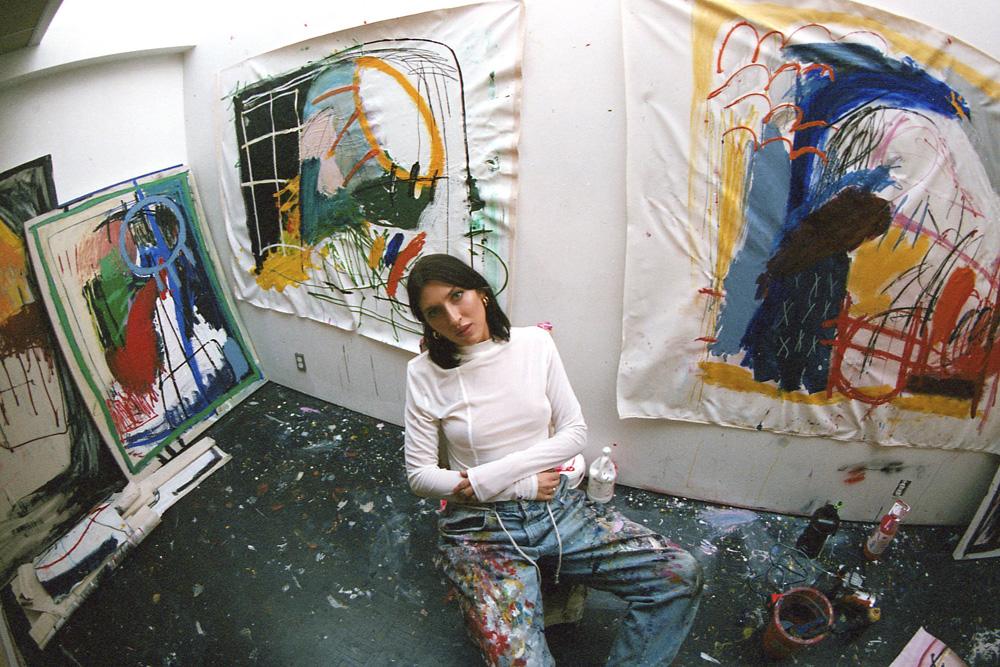
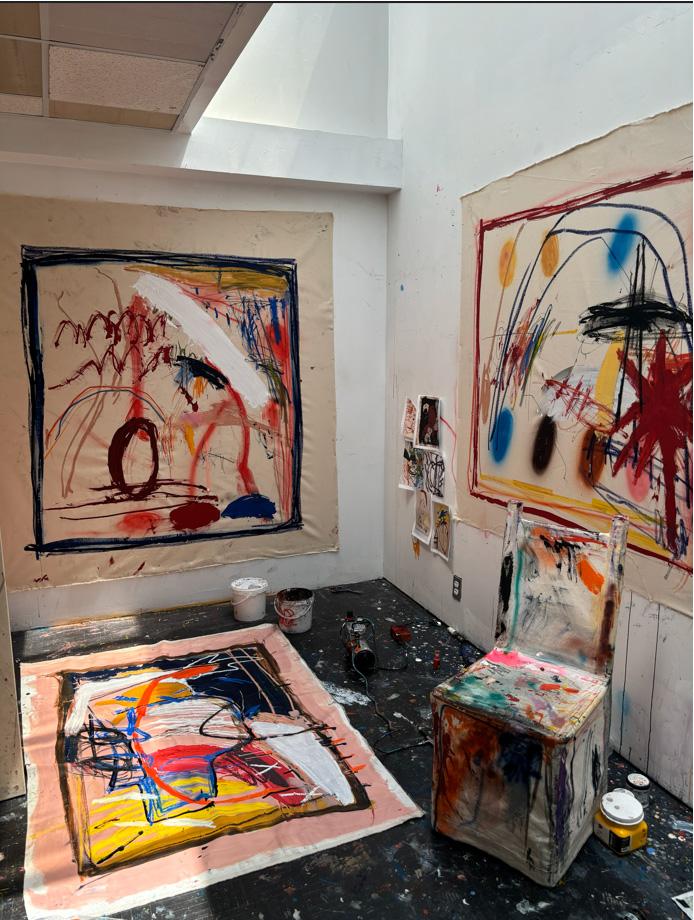
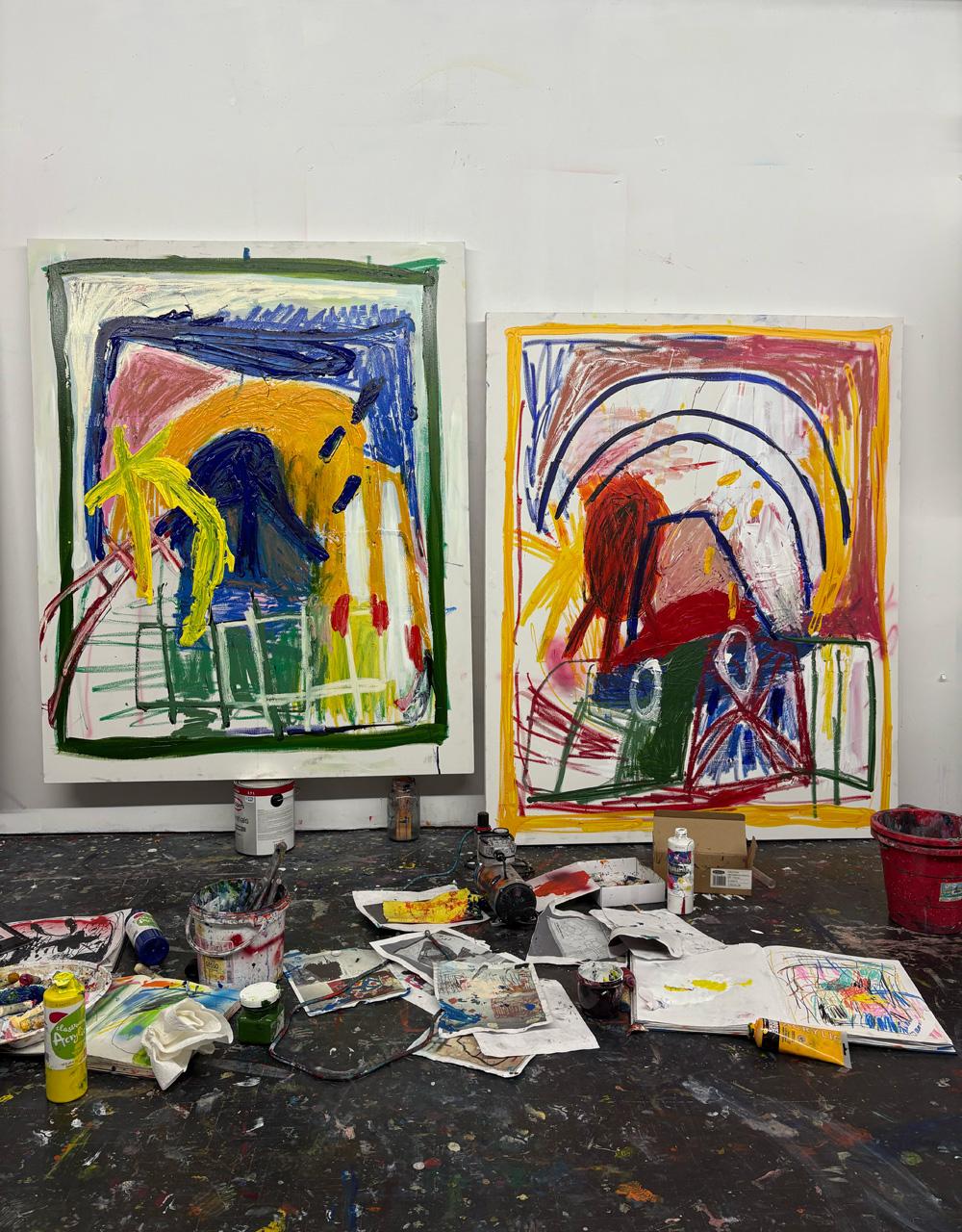
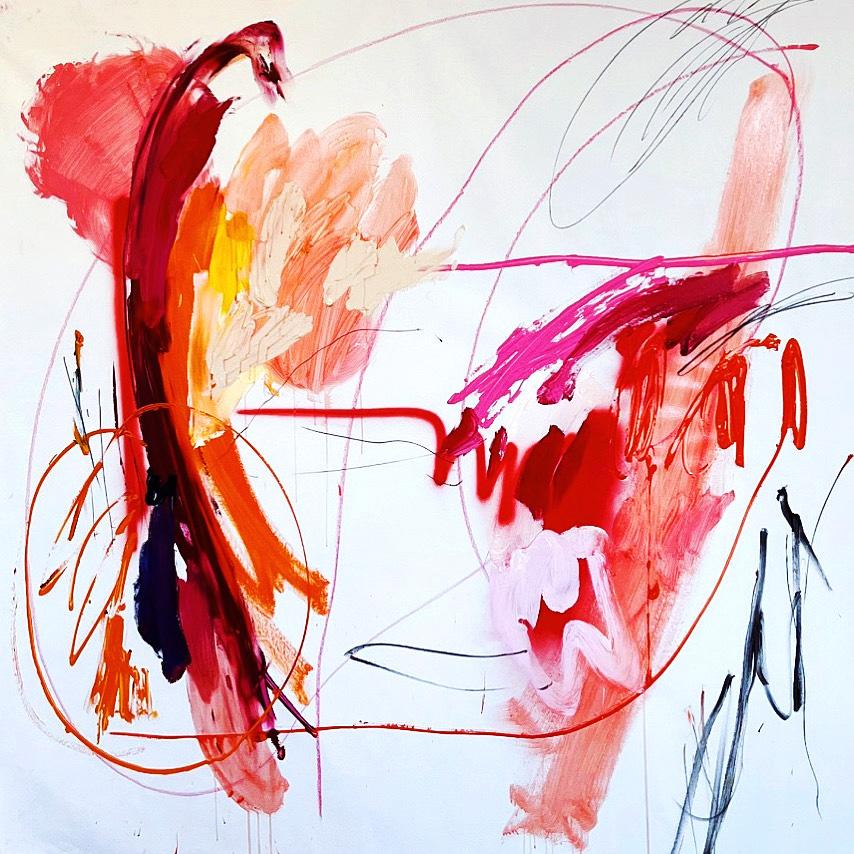
Where do you currently call home, and how does your environment influence your studio practice? I currently live in Toronto, but “home” for me is layered. I’ve lived across different countries and cultures, and I’ve come to understand home as something internal rather than fixed to a place. The studio functions as an extension of my internal space. It’s a place of practice and solitude—where I explore, refine, and come to understand myself through the work. It allows for focus, repetition, and sustained attention without external demand.
Can you describe your earliest relationship with making art? Was there a defining moment when art felt inevitable? Art started as instinct before it became language. I was always drawing, marking, arranging—not with a plan, but with urgency. One of my earliest memories is from when I was six. My mother brought me a bowl of pomegranate seeds to my room. I felt an urge to throw them against the walls. When they hit, they burst and left small red marks—scattered, rhythmic, irreversible. I didn’t understand it then, but that impulse—to act, to mark, to leave evidence—has quietly defined my relationship with making. Art never felt like a decision. It was a compulsion I’ve learned to recognize, refine, and stay in dialogue with over time.
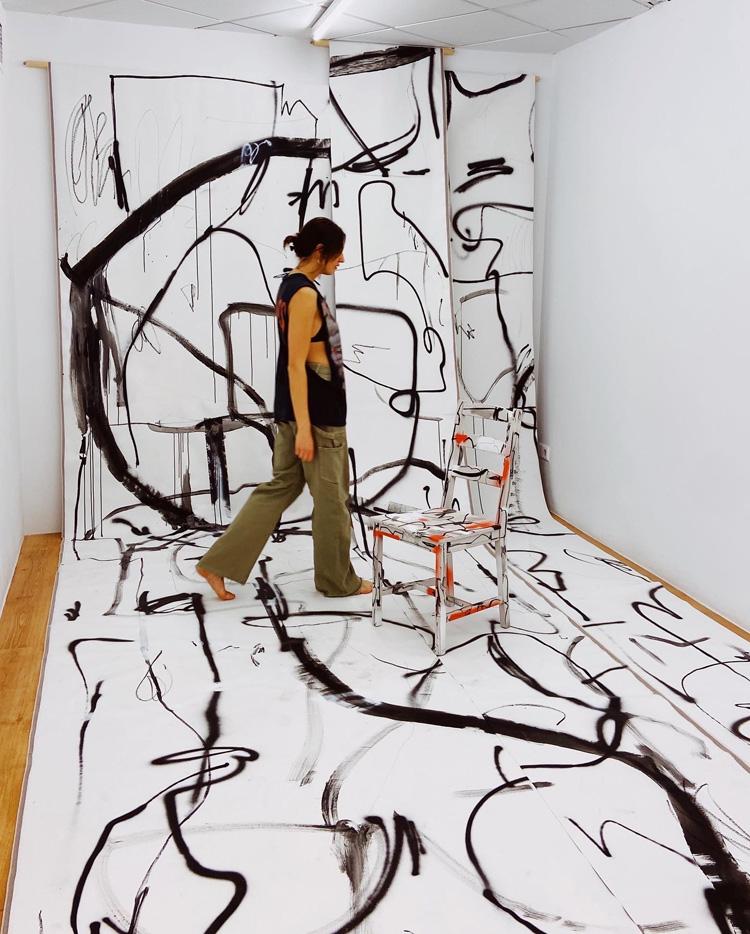
How would you describe your practice to someone encountering it for the first time, without relying on categories or labels? My practice is about listening to memory, impulse, and the quieter parts of myself that existed before language or intention. I work through repetition and return, allowing meaning to surface rather than directing it toward an outcome. Trust is central to the process, rooted in an early, instinctive way of engaging with the world. The work unfolds across painting, sculpture, film, and textile as a way of thinking through identity—how it forms, shifts, and resists definition. Rather than resolving ideas, the practice stays open, using attention and persistence as a means of understanding myself in relation to the world.
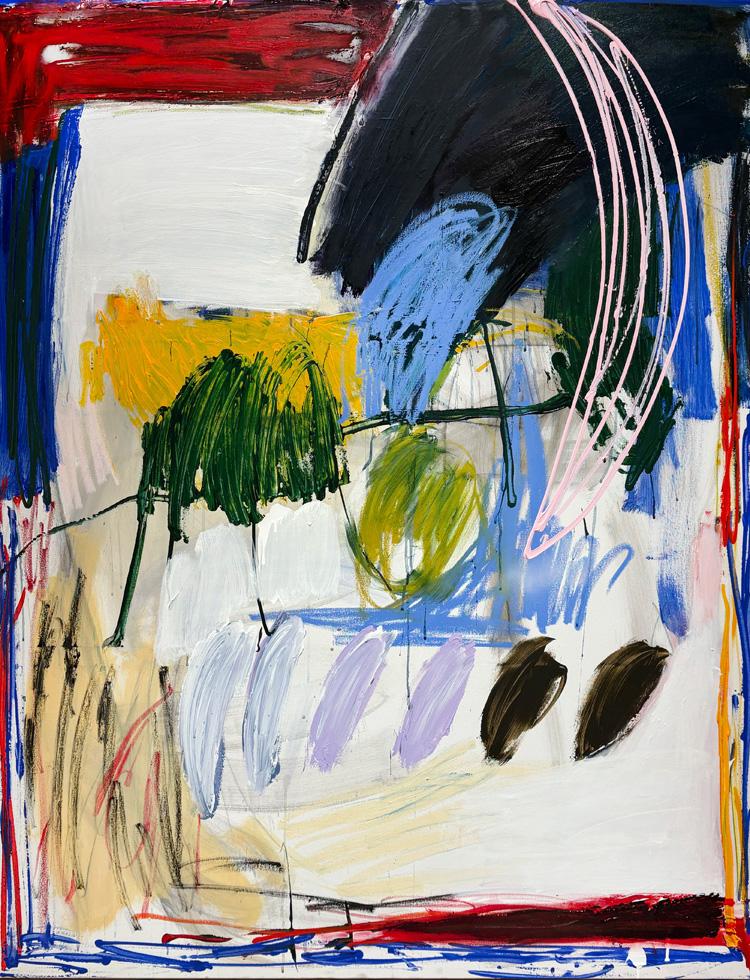
What role does color theory play in your work, and how do you select the palette for a new piece? Color comes from sensation rather than theory. I respond to emotional temperature—what feels heavy, playful, tense, or quiet in the moment. Palettes often emerge through layering and correction rather than preselection. I trust the painting to tell me what it needs.
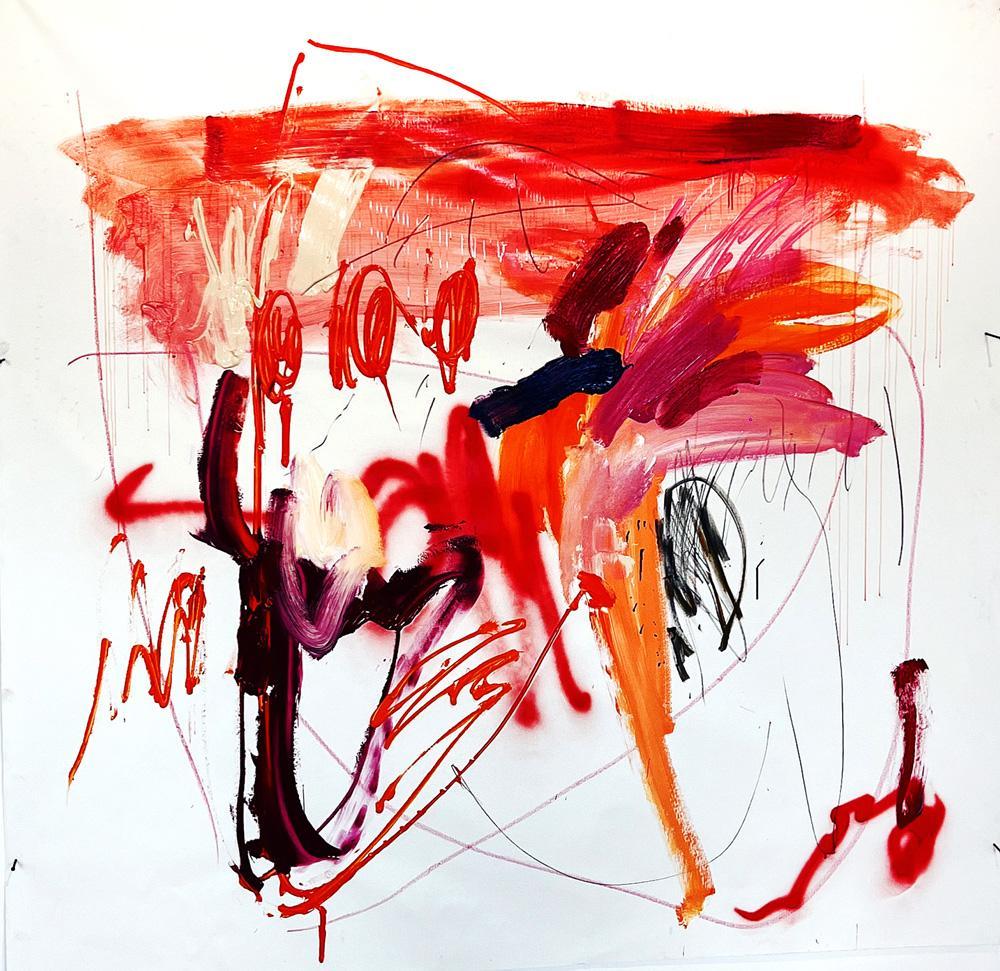
What role does intuition play in your work, and how do you balance it with intention or control? Intuition leads. Control enters later, if at all. I allow the first stages to be messy and unresolved, and only step in with intention once the work has its own internal logic. Too much control too early feels dishonest.
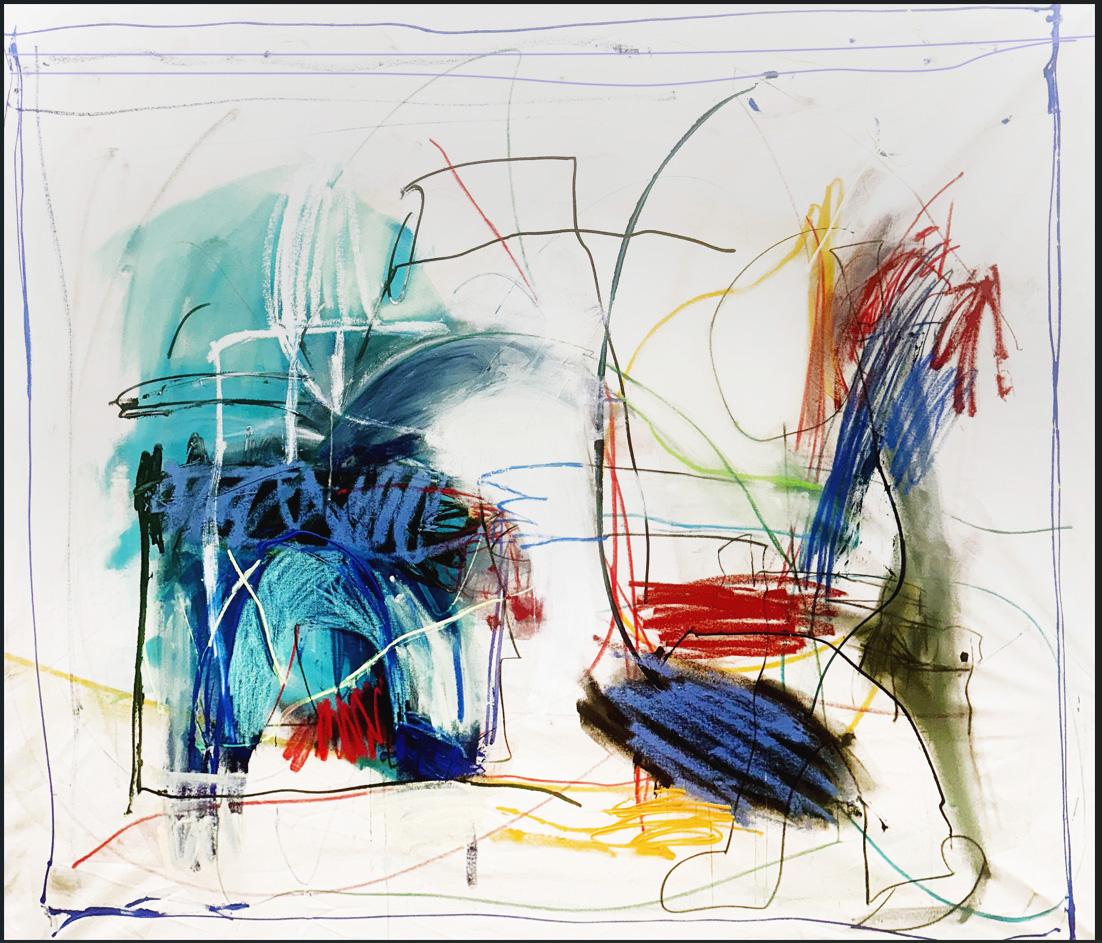
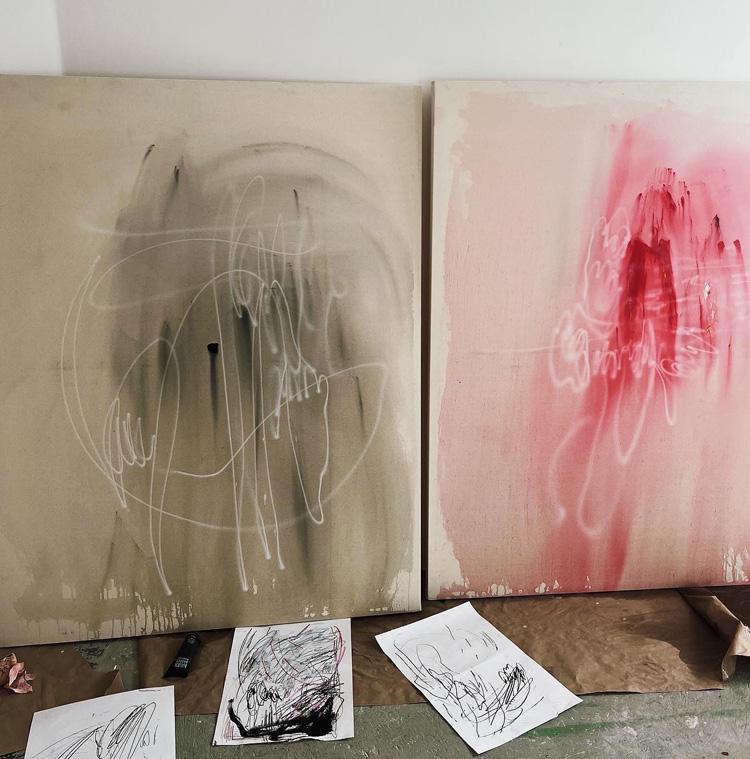
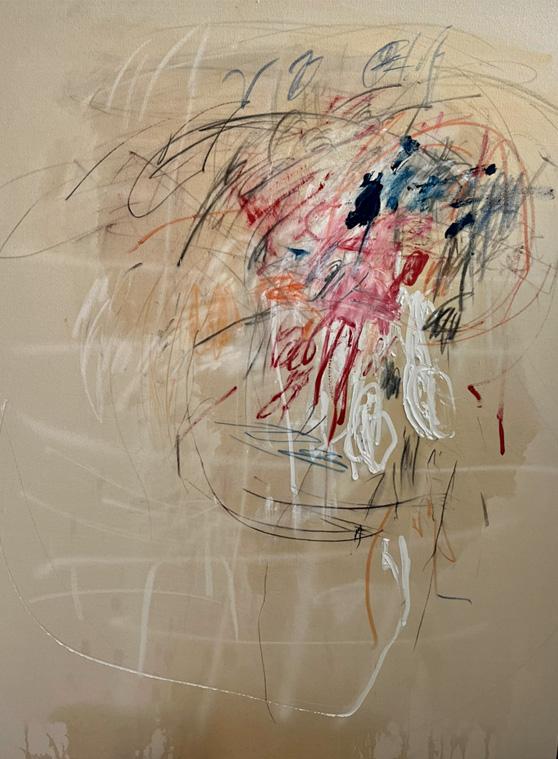
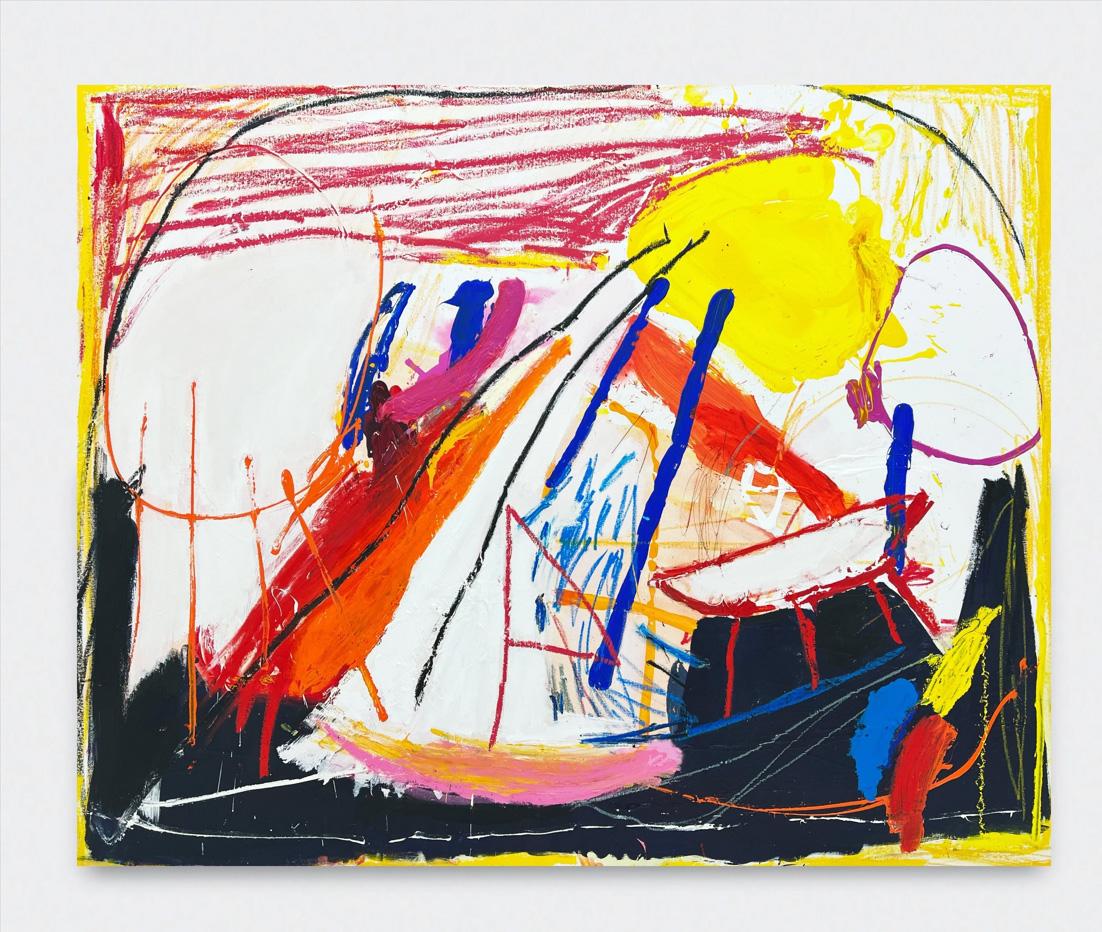
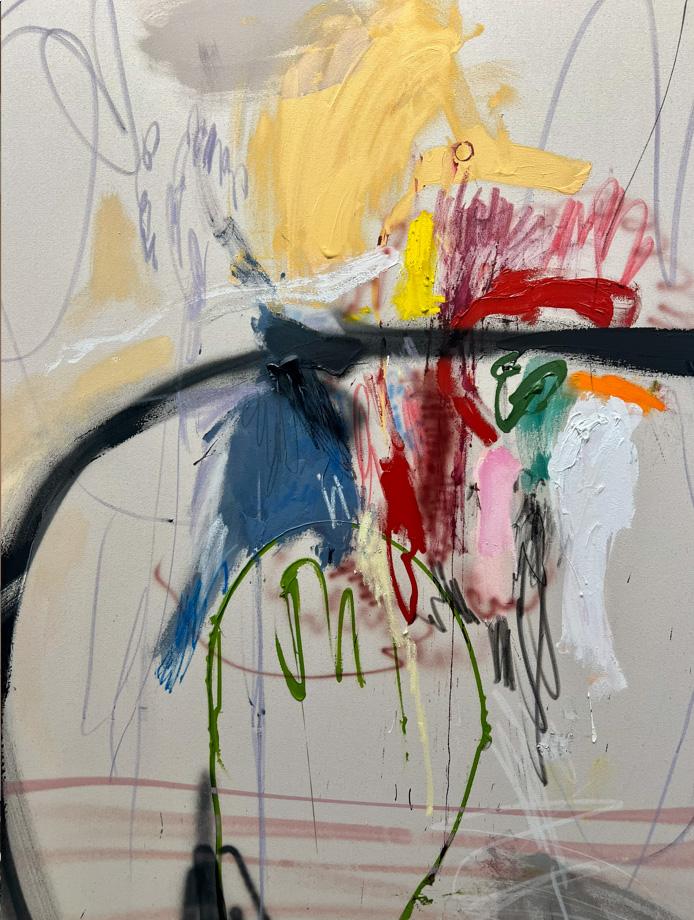
Are there specific materials or processes you return to repeatedly? What do they allow you to express? I return to canvas, repetition, and physical mark-making. Thick paint, scratching, erasing—these processes allow time and decision-making to remain visible. They hold evidence of struggle, hesitation, and change in a way cleaner approaches cannot.
How does time function in your work, both in the act of making and for the viewer? Time functions in different ways across the work. Some pieces are made quickly, driven by impulse and immediacy, while others unfold through prolonged return and resistance, becoming a kind of negotiation over time. Both approaches leave distinct traces on the surface.
I’m interested in how that energy remains embedded in the work—how speed, hesitation, and persistence are felt rather than described. Ideally, the viewer senses these temporal shifts intuitively, through the tension and rhythm held in the piece.
Do personal narratives or emotional states consciously enter the work, or do they emerge only in retrospect? I don’t treat personal narrative as content, but as a condition the work passes through. Emotional states operate quietly, shaping decisions without announcing themselves. The work moves ahead of conscious interpretation. Only later do those influences become legible, when distance allows patterns, repetitions, or preoccupations to surface.
What artists, writers, or experiences have quietly shaped your way of thinking? Spiritual practices such as Kabbalah and Buddhism have guided the way I think and move through the world—not as doctrine, but as long-standing systems of reflection that have shaped my relationship to attention, uncertainty, and inner responsibility. Film and filmmaking have also been strong influences in my life. The way stories unfold over time—through color, movement, rhythm, and silence—has deeply informed how I understand experience and narrative. That’s why artists like Julian Schnabel resonate with me, as his practice moves fluidly between painting and filmmaking. Painters such as Philip Guston and Cy Twombly have also had a profound influence, particularly in how they embraced vulnerability, doubt, and evolution within their work.
What has been the most challenging aspect of your career as an artist so far? Trusting slowness. In a world that rewards constant visibility and productivity, staying loyal to a process that unfolds over time and doesn’t always resolve neatly.
Can you walk us through one of your pieces from initial impulse to final form? It’s rarely the same process twice. Most pieces begin with music; it sets the rhythm and pulls me into movement. The work often starts as a kind of dance—a physical response rather than a plan. At times it feels fluid; at other times it becomes a fight with the canvas. Through that tension, the piece takes shape. I stay with it, pushing and pulling, sometimes returning over long periods. The final form arrives not through resolution, but when the energy feels held—when nothing is being avoided or forced.
How do you know when a work is finished? It’s a quiet realization. The urge to intervene disappears. The work no longer asks for anything.
Looking ahead, what feels unresolved or still searching within your work? I’m still exploring how far I can push vulnerability without explanation, allowing ambiguity to remain intact rather than resolving it for the viewer.
What is the significance of the rough or textured application of paint in your work? Texture carries memory. It records touch, pressure, hesitation. The surface becomes a document of time rather than an image alone.
Many of your paintings deal with memory, emotion, and human connection. Why do these resonate with you? Because they’re unstable. Memory shifts, emotions contradict themselves, and connection is fragile. Painting allows me to sit inside that uncertainty without needing answers.
What non-visual art forms inform your work? Life itself is the primary influence—moments encountered while walking, fragments of conversation, human interaction, and the repetition of daily practice. These experiences shape how I observe, remember, and respond. Music helps tune rhythm and attention, while film quietly informs how I perceive time, movement, and narrative as they unfold in everyday life. It’s less about reference and more about awareness.
Is there a specific historical artist or movement that influenced you? I’m more influenced by attitudes than movements—artists who treat making as devotion, endurance, or necessity rather than production.
When you begin a new series, what is the central question you’re exploring? The central question is usually about authenticity—how to stay in honest dialogue with myself without being pulled by trends or expectations. I’m interested in finding a voice that feels internally aligned rather than externally informed. Each series becomes a way of testing that alignment, asking what feels necessary in the moment and what can be stripped away. The work moves forward by staying attentive to that internal measure rather than aiming for relevance or resolution.
Where do you see your work evolving in the next five to ten years? I see the work moving toward a more integrated dialogue between film, sculpture, and other forms—not as separate practices, but as parts of a single language. I’m interested in building a continuous conversation across mediums, allowing each to inform the other. Expansion feels important, but it’s guided by trust rather than scale. The aim is to keep deepening the work while remaining open, letting it grow organically without losing its internal coherence.