
1. Where do you call home, and how would you describe M. Tobola? Home is a 576-square-foot box made out of repurposed barn materials. My partner and I built it on an empty lot in a small, tattered Texas town. Tobola is a painter recluse who lives within that rusty box.
2. How do you define abstraction within your own practice? I don’t. Categories serve the people trying to label art, not the ones making it.
3. What initially drew you toward abstraction rather than representational painting? I get bored with a painting when it approaches a more “finished” state. Immediately, more destructive impulses follow, scraping away or splashing paint across the canvas. Also, I never wanted to fill in the background..
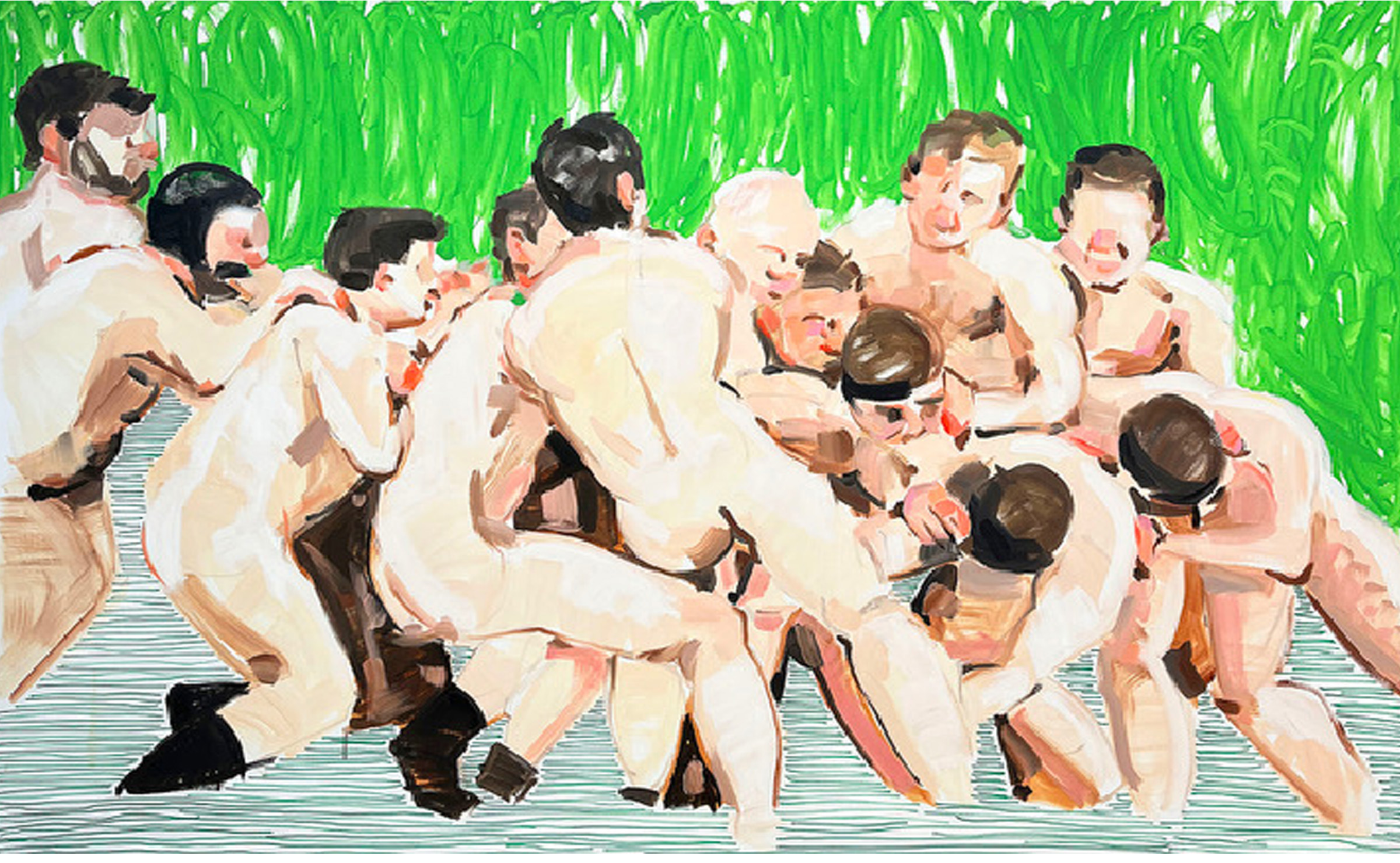
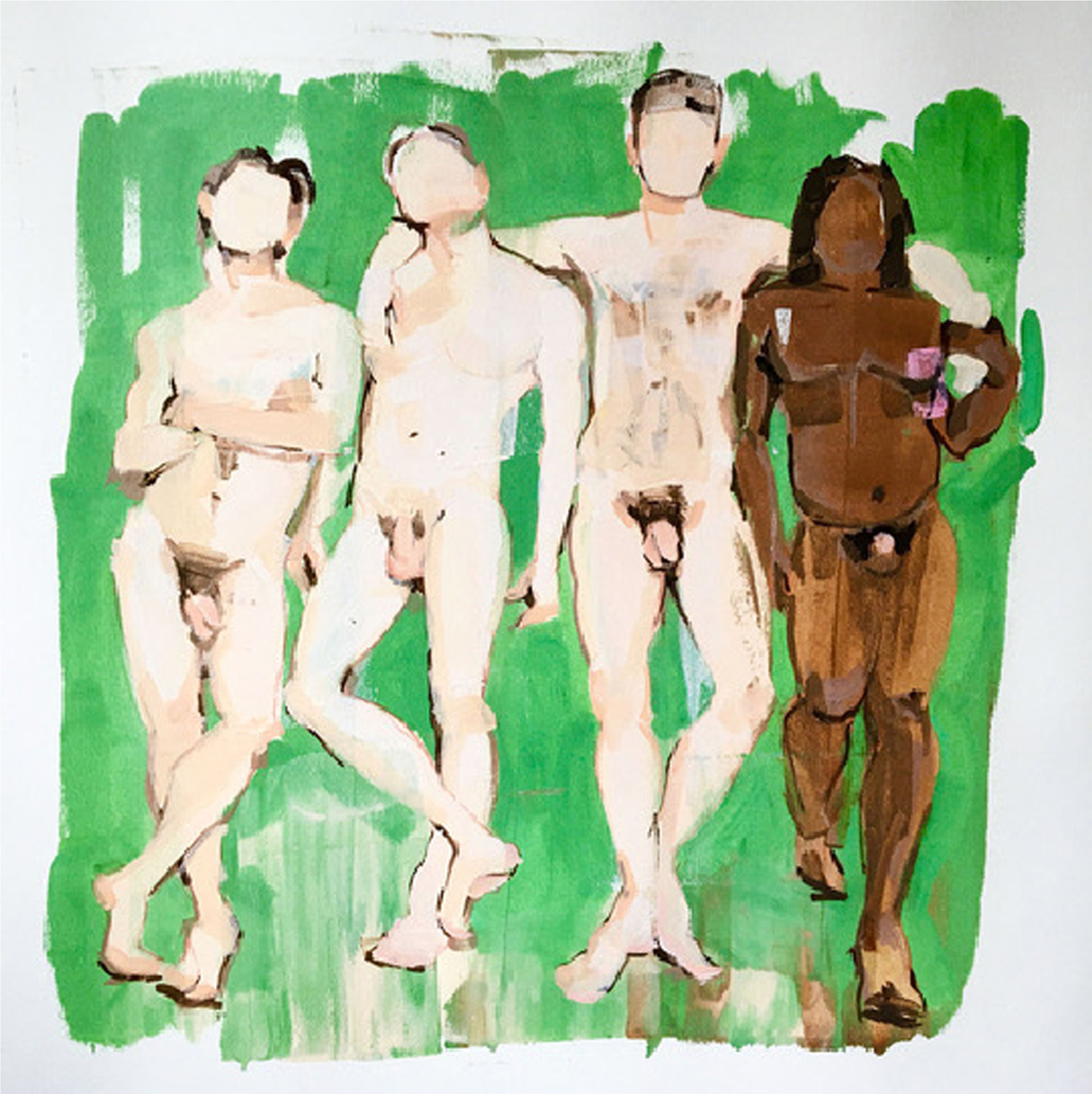
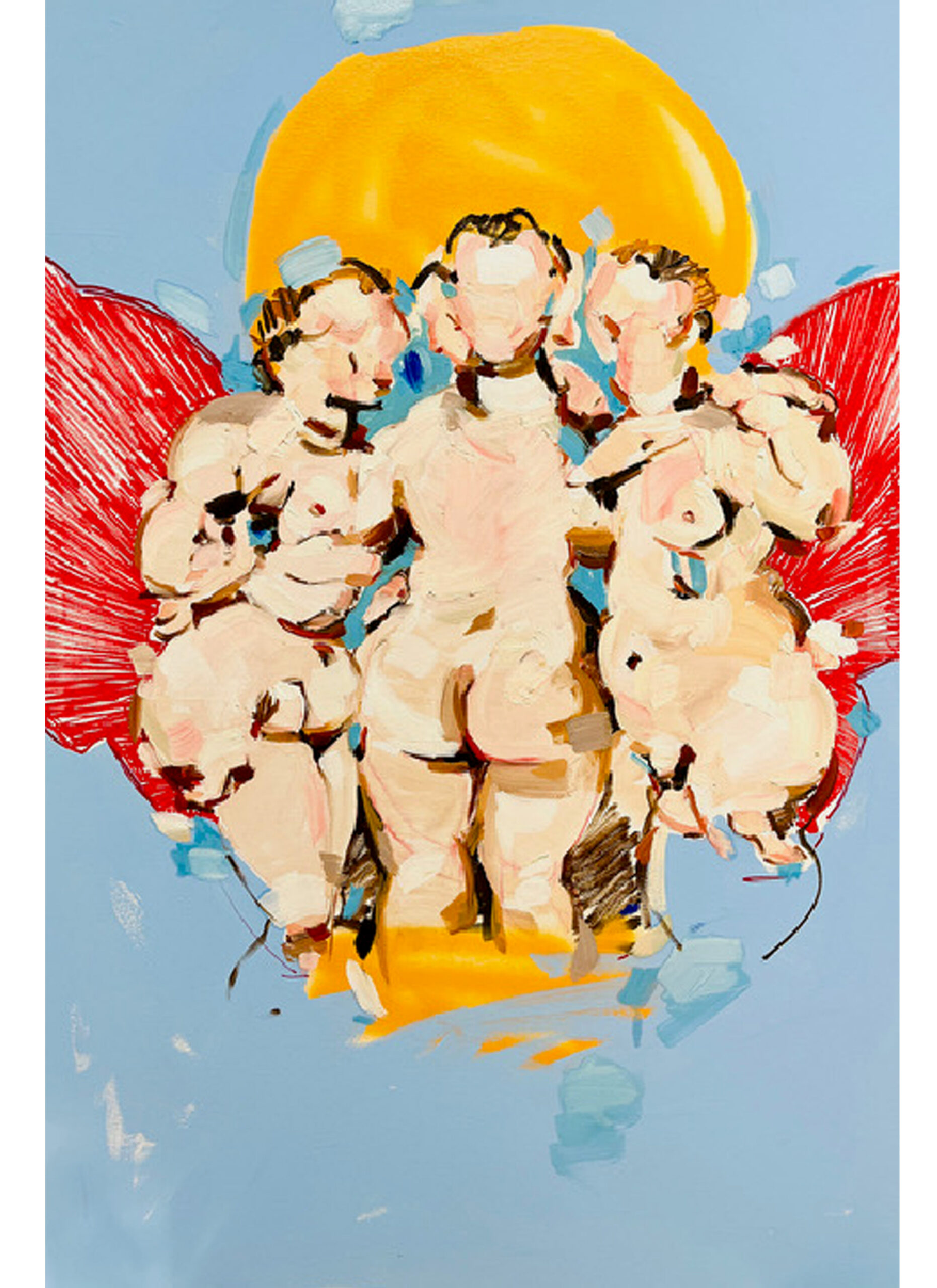
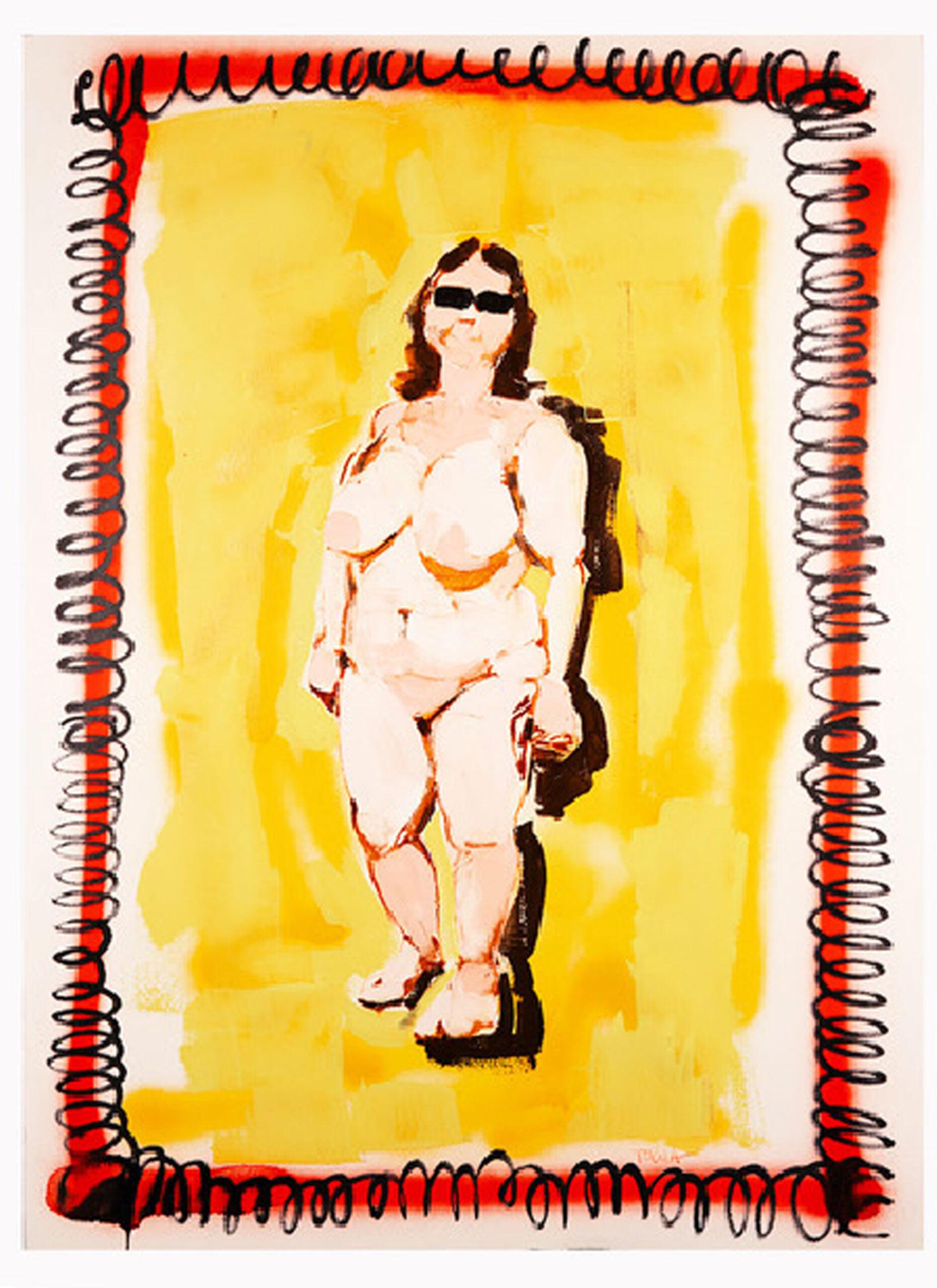
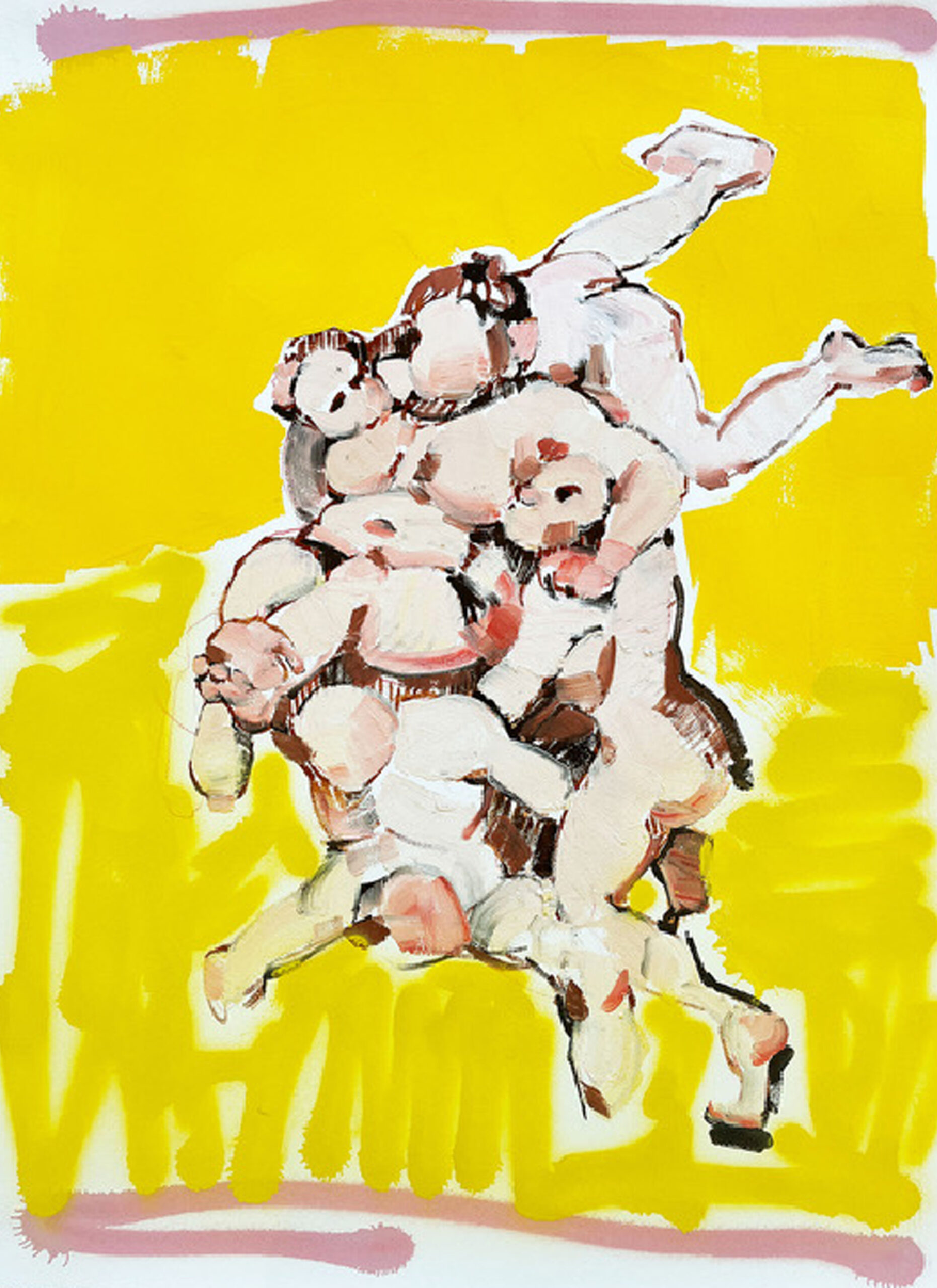
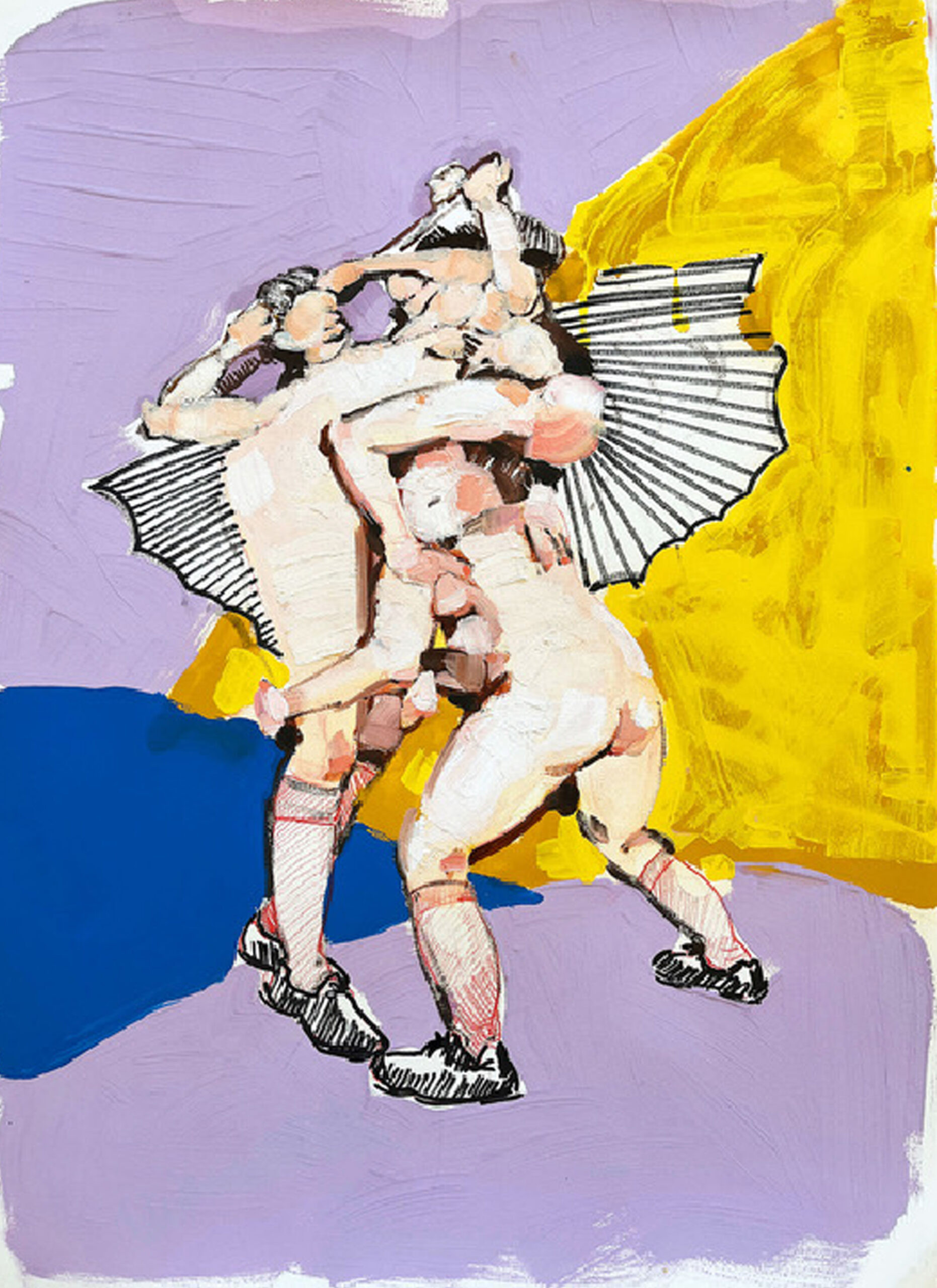
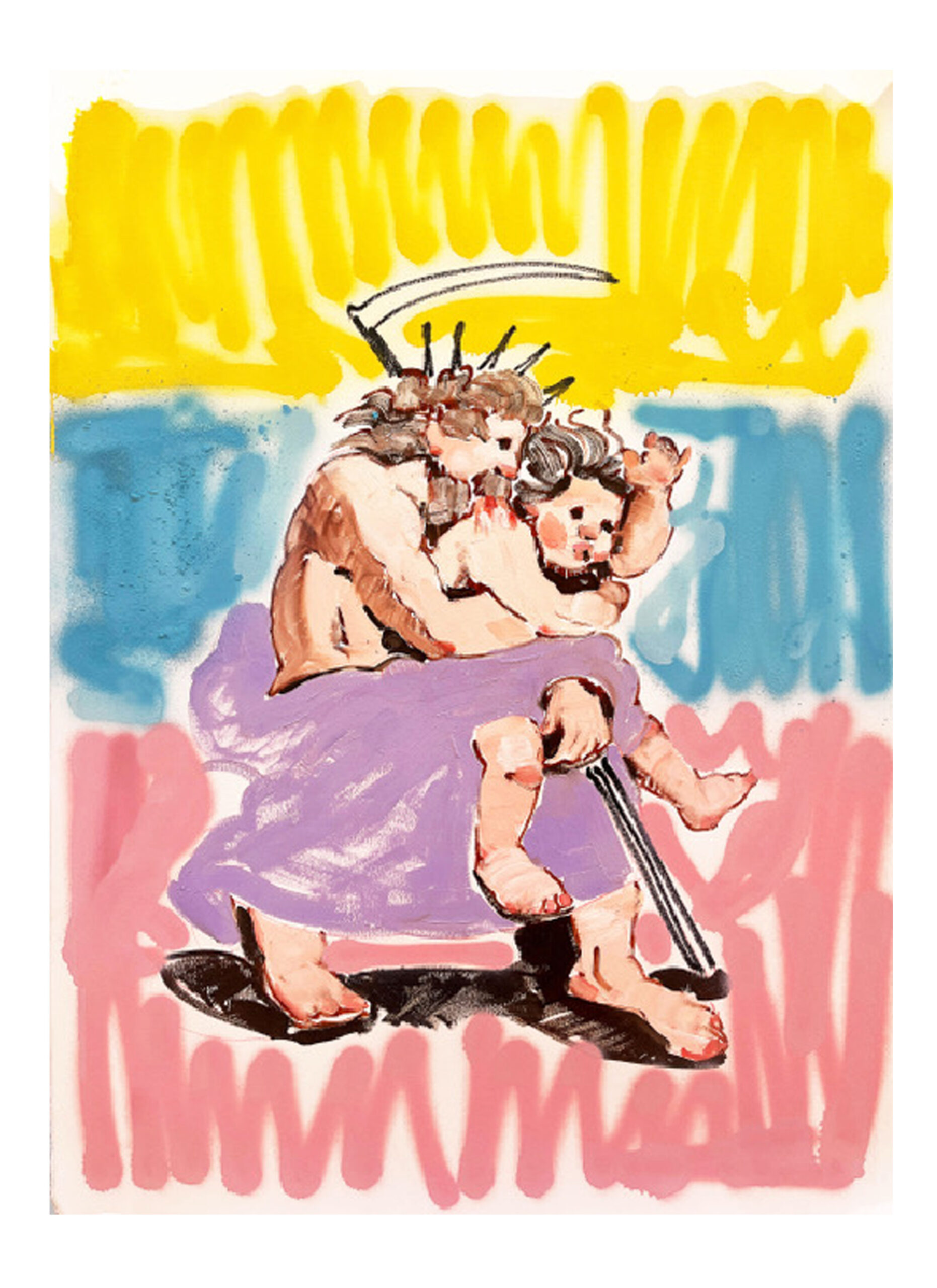
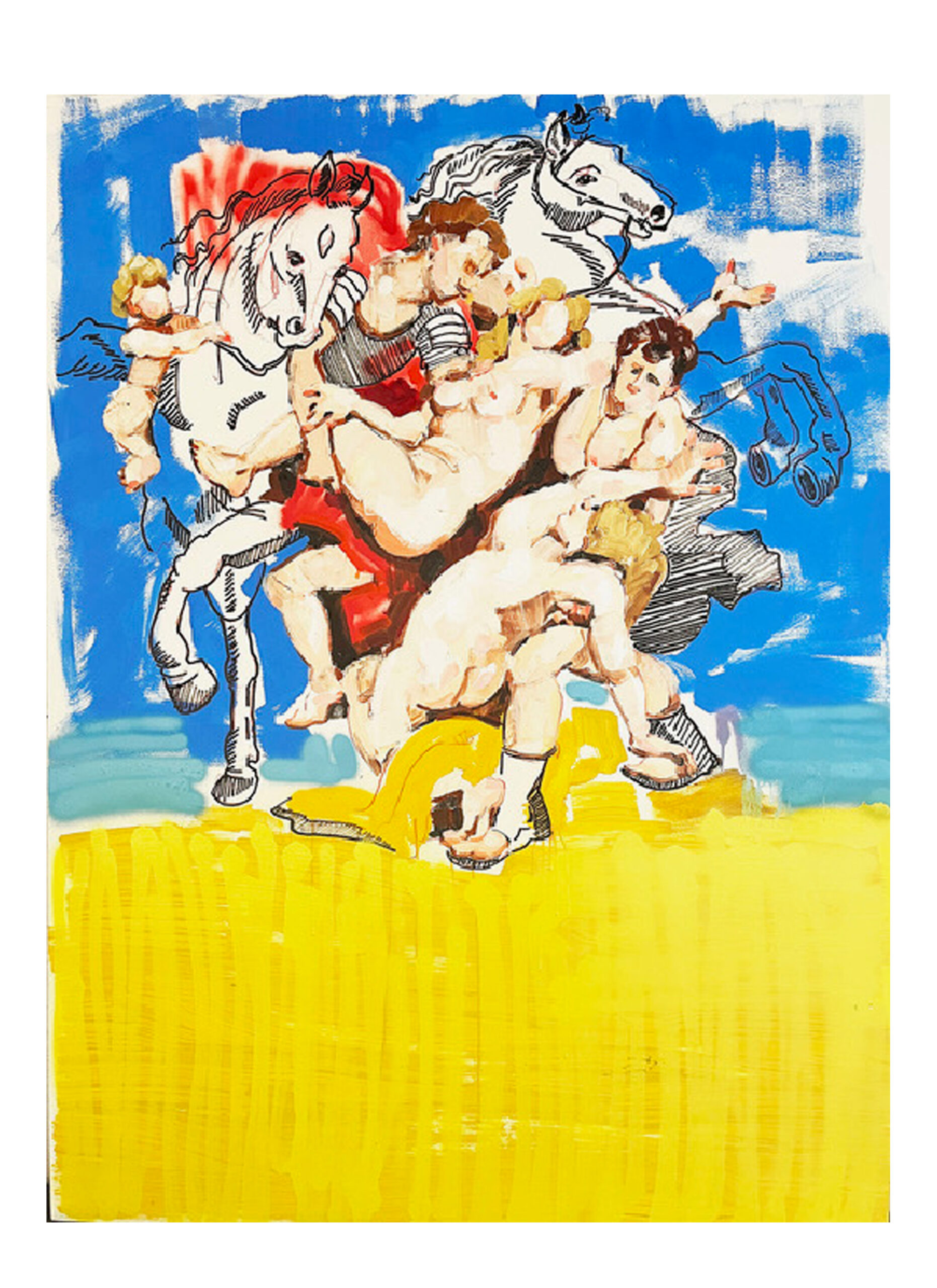
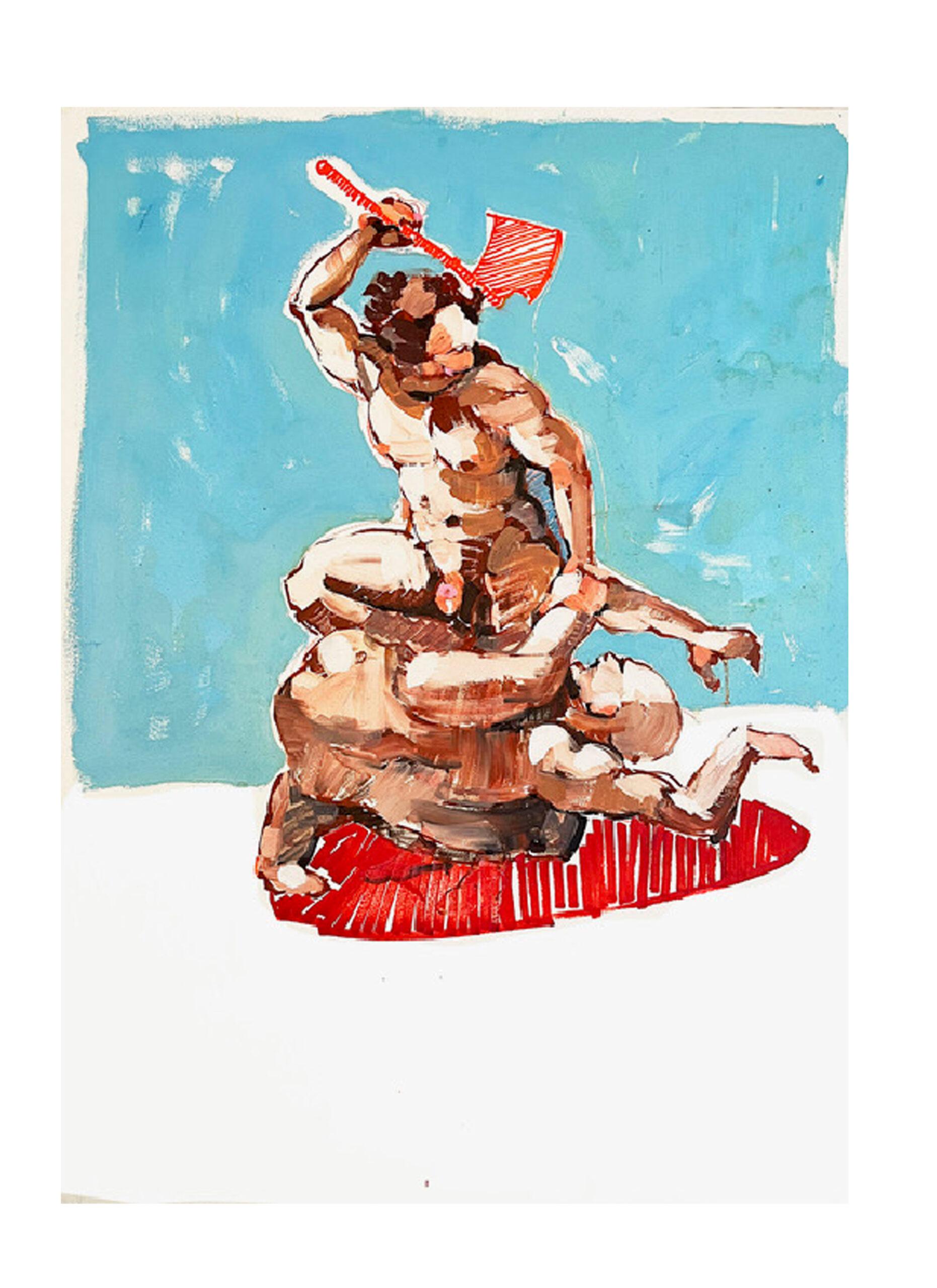
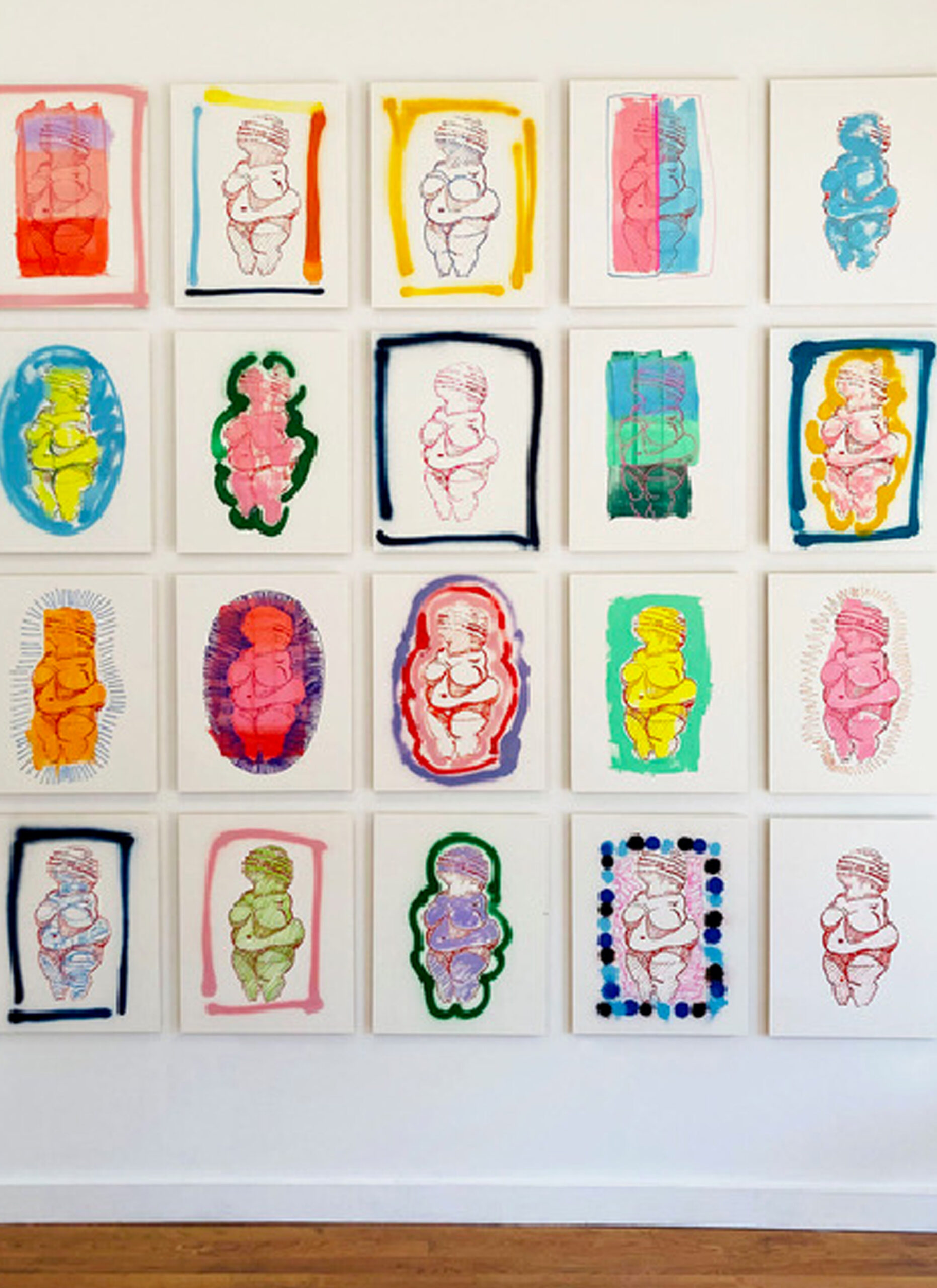
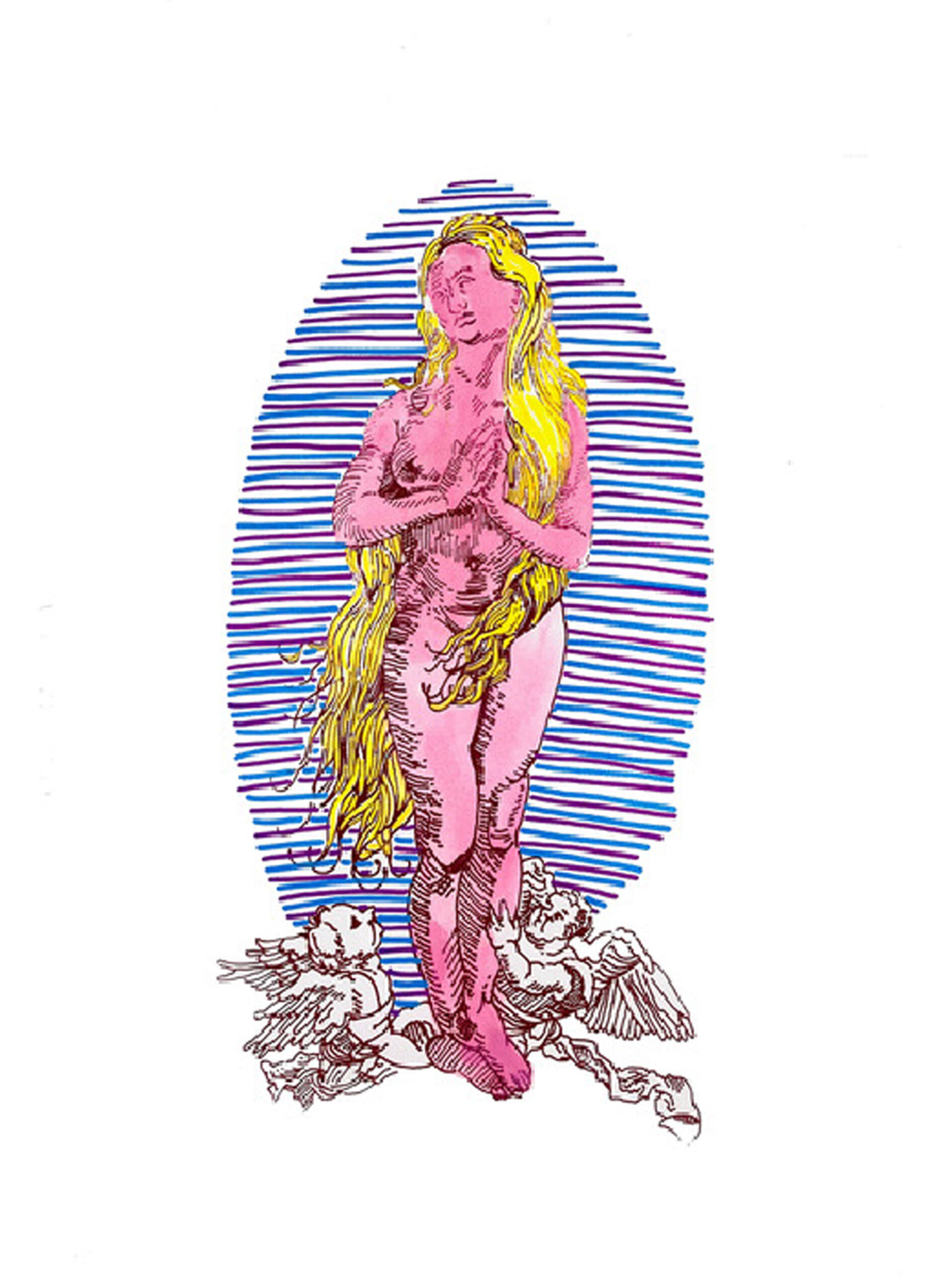
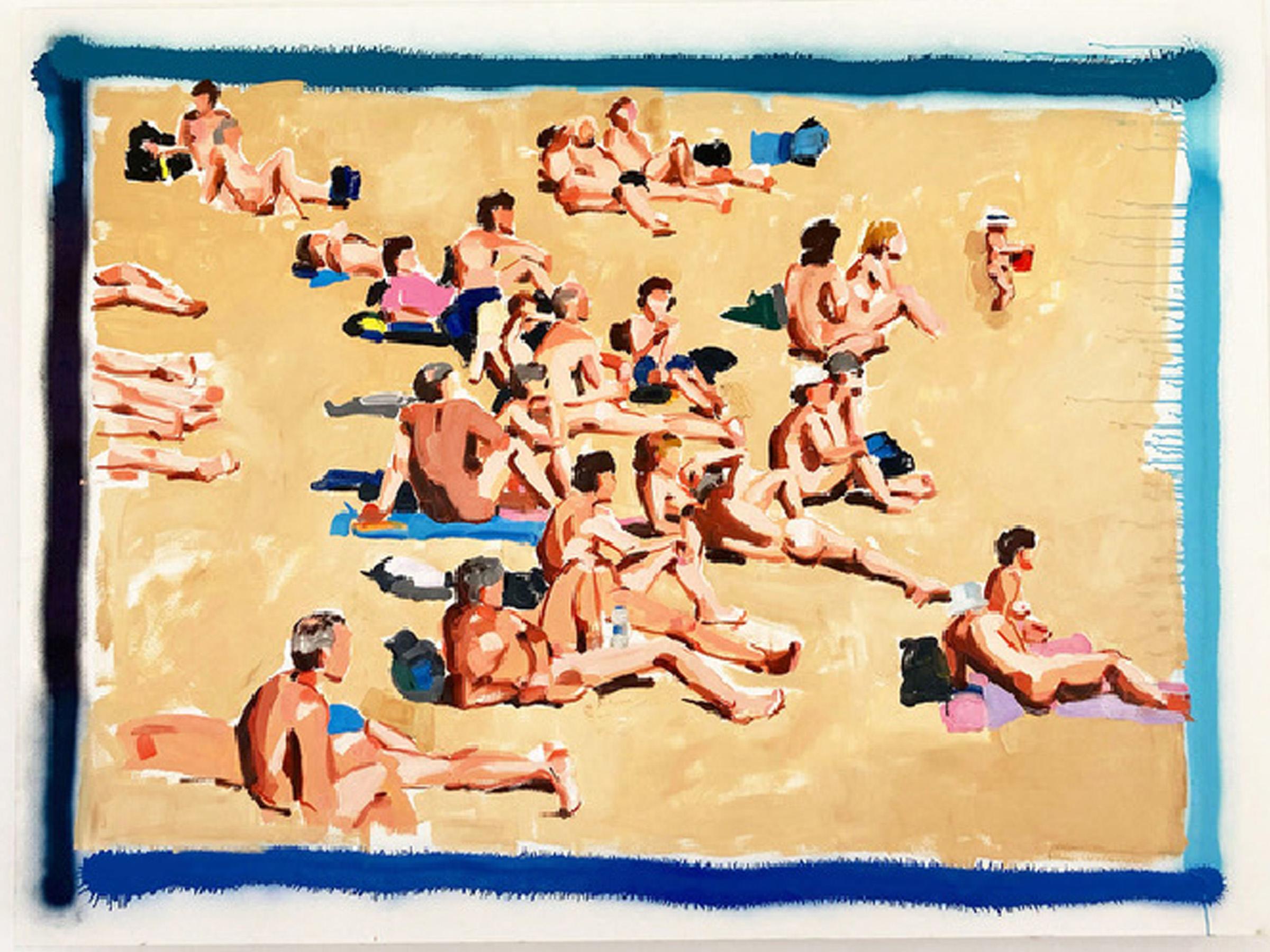
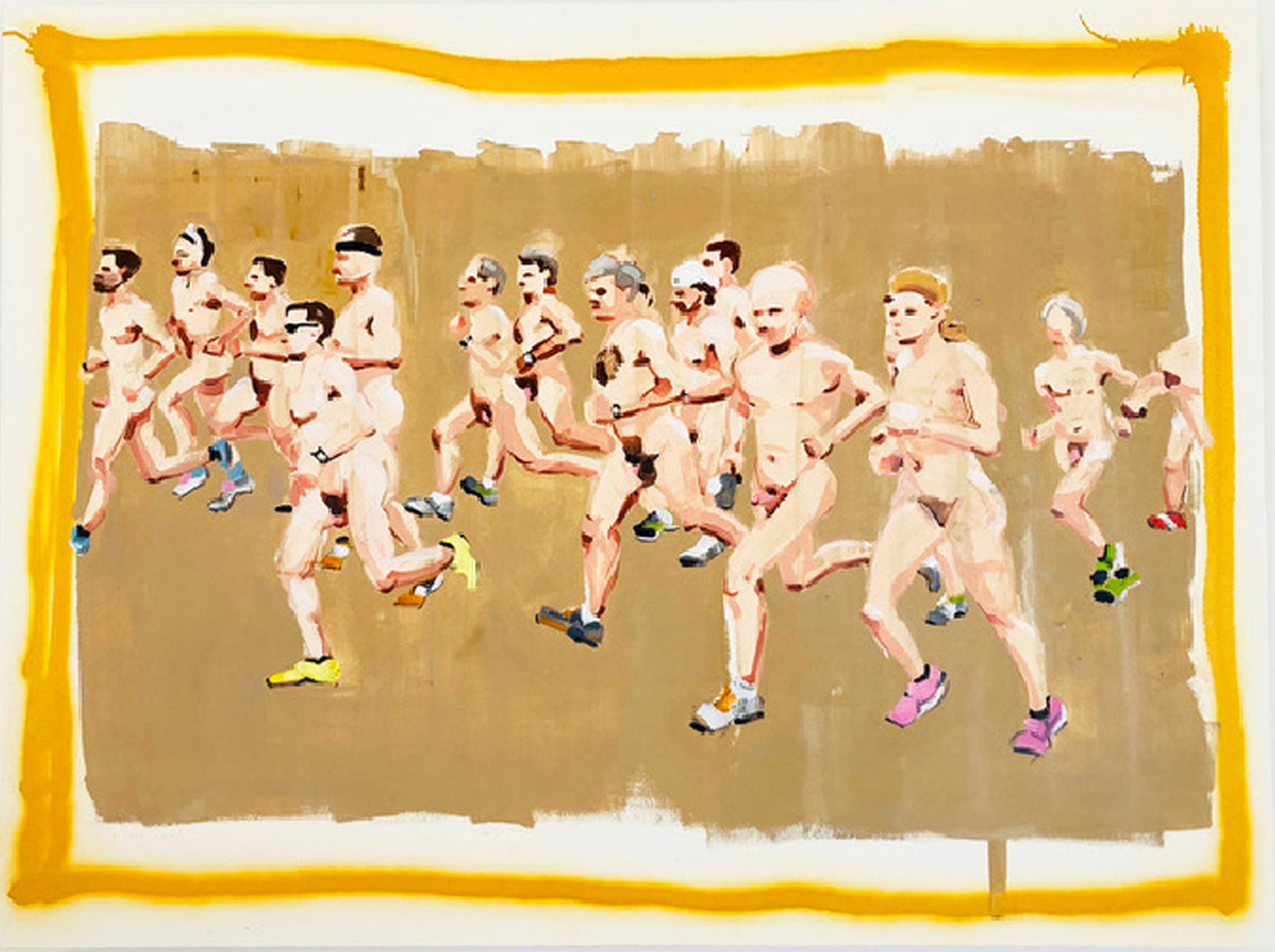
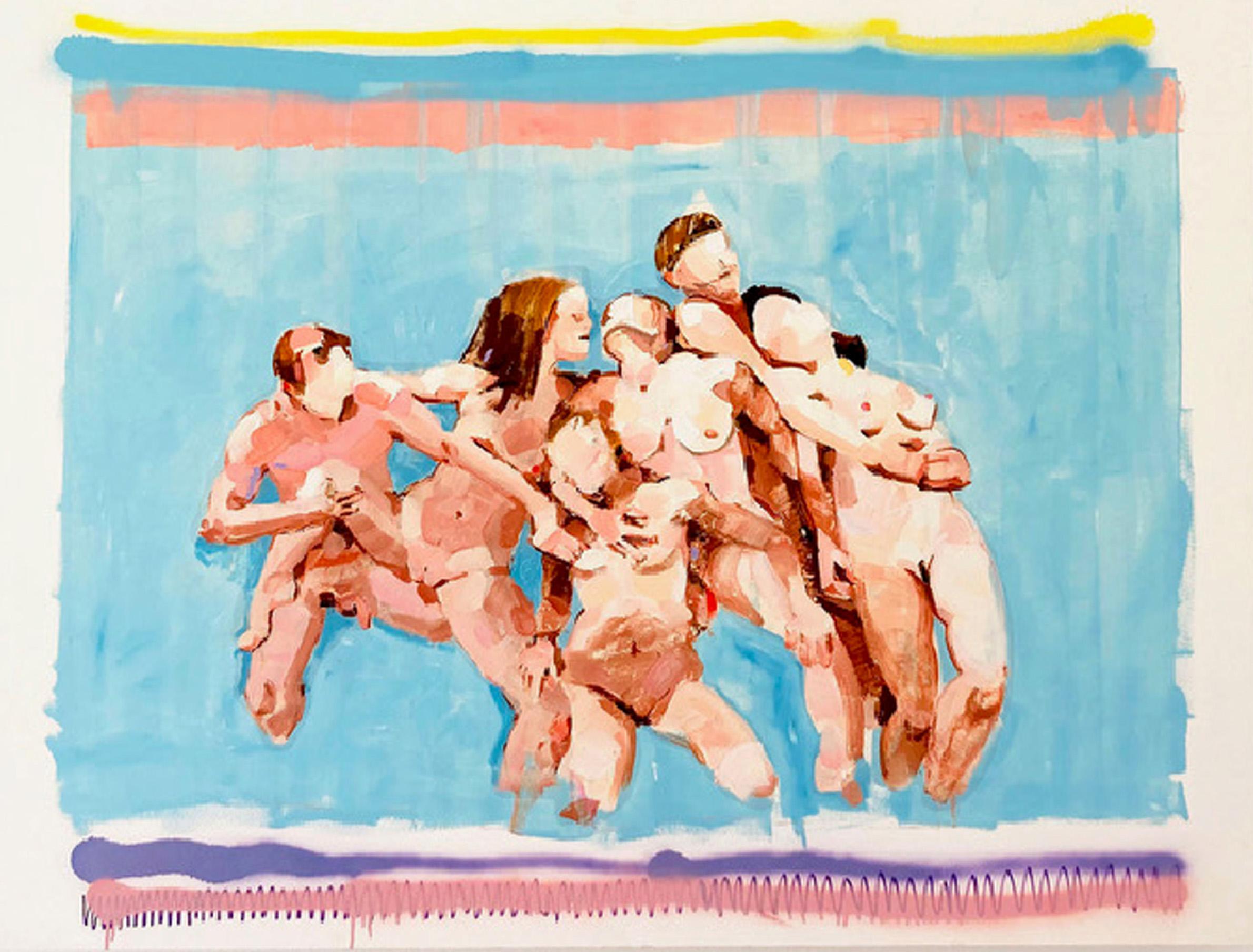
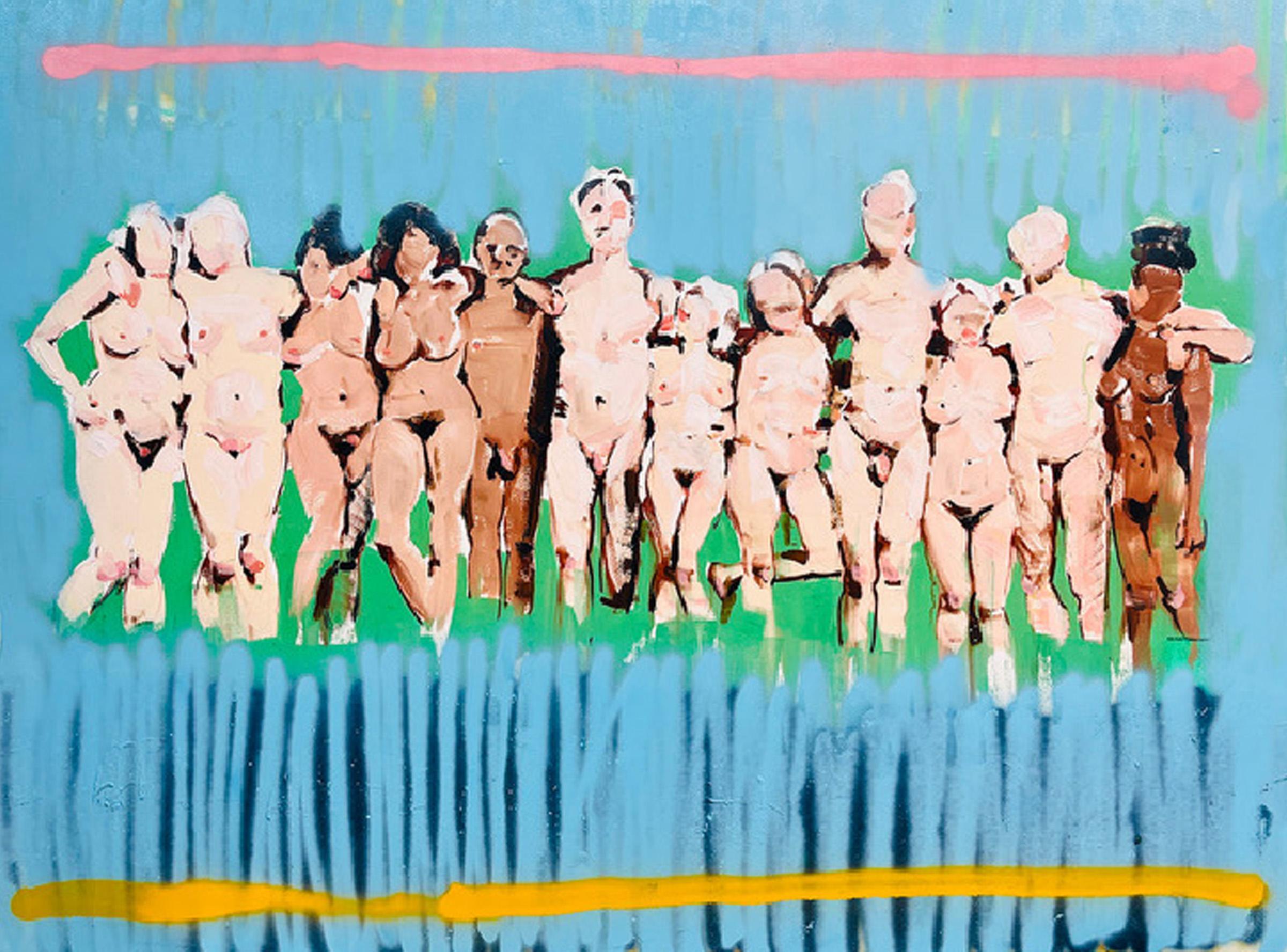
4. When beginning a new work, do you start with a clear intention, or do ideas emerge through the act of painting? I start with the figures, the composition, and a red pencil. I let that be the more rigid structure underneath. From there, it’s one clear move forward at a time. You can’t see the end until you arrive; each work needs to find its own mistakes and resolutions.
5. How do you decide when a painting is complete? When any more paint would turn it to mush.
6. Can you walk me through your studio routine? What does a typical painting day look like for you? I like to start with rituals: tea, incense, digging through books, staring out the window, anything to quiet my mind. I usually have several images I’m working through at once. I start with lots of sketches before tackling a larger surface.
7. Are there materials, tools, or surfaces that have become essential to your process? Oil paint is the great love of my life. In the last few years, I’ve brought Sharpies and spray paint into my work more and more. I like the droll effect it lends to the paintings.
8. How do you approach color—intuition first, or structure first? Always intuition. There is a lot of color play and sketching. I often pull from something I’ve seen out in the world. Color is the most impulsive part of my process, as opposed to the figures, which are slower and more decisive.
9. Do you follow any rules, or is your process more fluid? Art is not for rules. I think you have to find your own personal framework where your visual interests and comfort lie. Try everything and let it inform your work, there is lots of room to play within your comfort zone… but never rules.
11. Which artists, movements, or traditions have shaped your visual language? I am constantly looking, reading, and dredging up the visual past; it is a great resource for me. I saw At the Moulin Rouge on a card in a board game when I was in elementary school, and I don’t think that impression—or the influence of Lautrec—has ever left me. I’ve also had lifelong companions in the work of O’Keeffe, Giacometti, and Manet. Recently, I’ve been looking at a lot of Goya, Dürer, and Rubens.
12. Do influences outside of visual art—like music, literature, or memory—find their way into your paintings? I listen to music often when I work, but that’s the extent of it. I’m not fond of sentimentality, so I tend not to attach importance to memory. Literature, yes. I like to chew on residual words from books as I work. They influence the paintings and sometimes work their way into titles.
13. Are there recurring forms, gestures, or emotional themes that you return to over time? I think a lot about the body without all its guises—a raw, open, and honest form that is potent with life. Within its smelly folds, it holds pleasure, trauma, disease… The body is the vehicle through which we experience life.
14. How much interpretation do you want to leave open for the viewer? The work should take on a life of its own after conception. That is one of the tests of a good piece.
15. What is your approach to titles—do they guide, hint, or purposely obscure? I try to keep them short and related to my train of thought around the work. They hint, I guess, without eclipsing or changing how the viewer sees the painting.
16. Has the art market or contemporary discourse influenced the ways you work, if at all? Most definitely. Instagram has been such a great source for discovering and connecting with other artists and people in the art world. Although I tend toward isolation, having a tether to the outside world, to know I’m not alone, is reassuring.
17. How does your internal world—your emotions, memories, instincts—shape the work you make? Painting is a way to process all of the mental input; it’s a transference of energy into tangible form. It is not my internal world projected onto a blank canvas.
18. What do you find most challenging about being an abstract painter today? Time and money.
Interview by Jimon
